

Paul runs hot. Thirty-one years of marriage and it still surprises me every July. He falls asleep under the sheet, and somewhere around one in the morning the covers end up bunched at the foot of the bed, having been dragged off my side on the way down. Add a Tampa summer, one east facing window that goes bright at quarter to seven, and a snore I can hear through a pillow, and you have the reason I started treating sleep like the rest of my health routine. One change at a time. Test it for months. Keep it only if it earns the space it takes up in the house.
Bedsure Cooling Sheets were the fourth change, about seven months ago. King size, four pieces, the solid double brushed microfiber set. I bought them for a dull reason. I wanted a second set to rotate so I was not washing and remaking the same bed every Saturday morning, and a second cotton set in king size had gotten expensive. The cooling language on the listing was a bonus I did not put much faith in. I am 54, I have bought a great deal of bedding in my life, and I have learned that the word cooling on a package usually means the fabric is thin.
The Quick Verdict
Softer and less clammy than the cotton set they replaced, with a fitted sheet that stays on a king mattress. They are not air conditioning. In the worst August heat the fan and the AC still do most of the work, and I would rather say that plainly than sell you a fantasy.
Amazon Check Today's Price →The set that ended the 1 a.m. cover fight at our house
King size, four pieces, 14 inch fitted pockets, OEKO-TEX certified microfiber. Two sets, rotated weekly for seven months, each washed cold and dried low about fifteen times without pilling. Check today's price on Amazon.
Amazon Check Today's Price on Amazon →How I've Used It
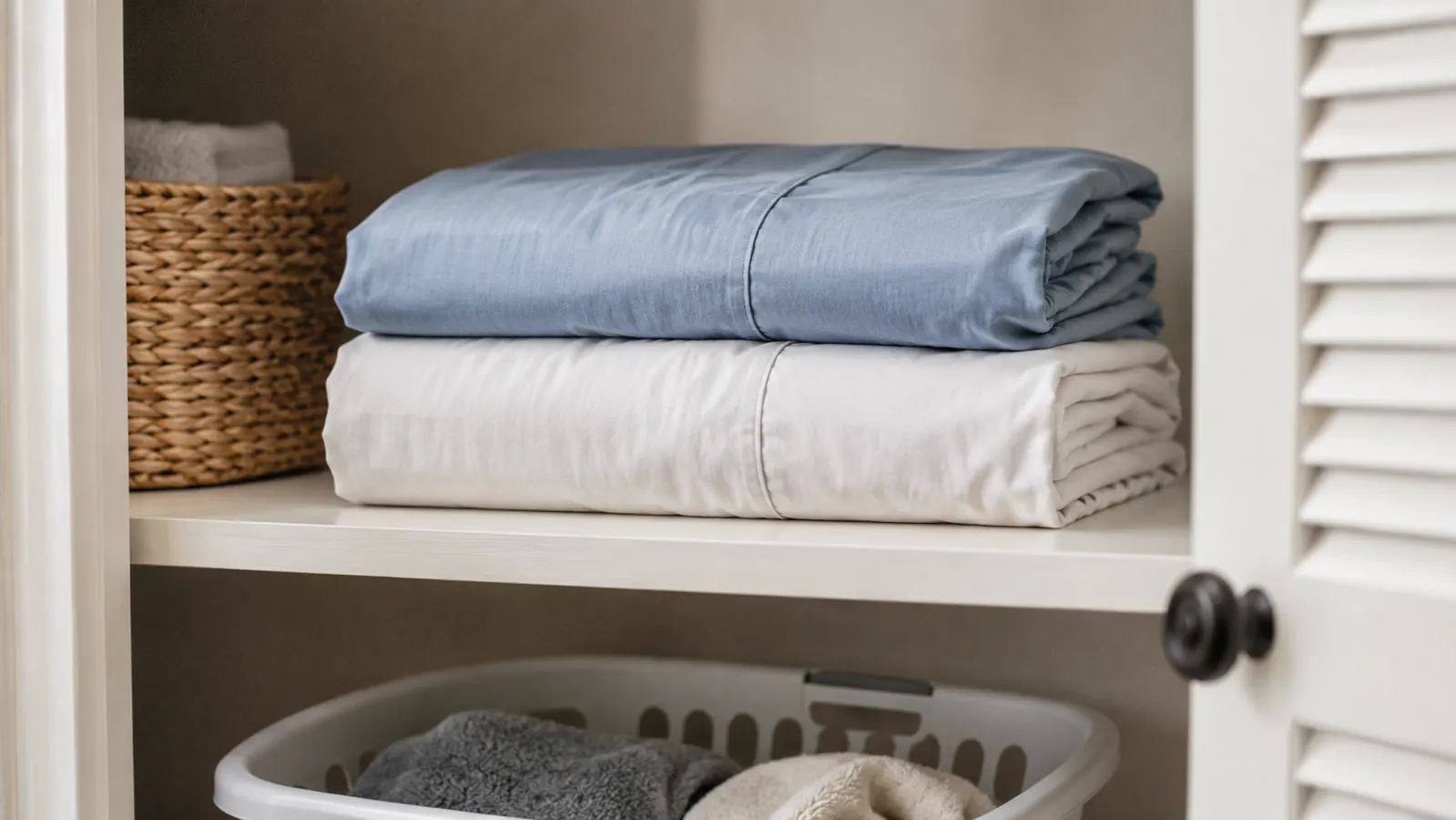
I bought two sets and rotate them weekly. One goes on the bed on Saturday, comes off the following Saturday, and the other takes its turn. That schedule means each set has been through the wash around fifteen times now, always cold, always dried on low, and no fabric softener because softener coats microfiber and I did not want to find out the hard way what that does to the feel. Both sets still look like the day they came out of the bag.
Before these, I tried the obvious thing first: a second cotton percale set, bought on sale at a big box store in the spring. It was crisp and it slept cool for about two months. Then the fitted sheet started pulling up at the top right corner, Paul's side, every third or fourth night. I would find it bunched under him at six in the morning when I got up for my walk. The flat sheet was cut narrow enough that we were essentially sharing one width of fabric. I gave that set to the guest room and started reading listings more carefully, which is how I ended up caring about pocket depth and flat sheet dimensions in the first place.
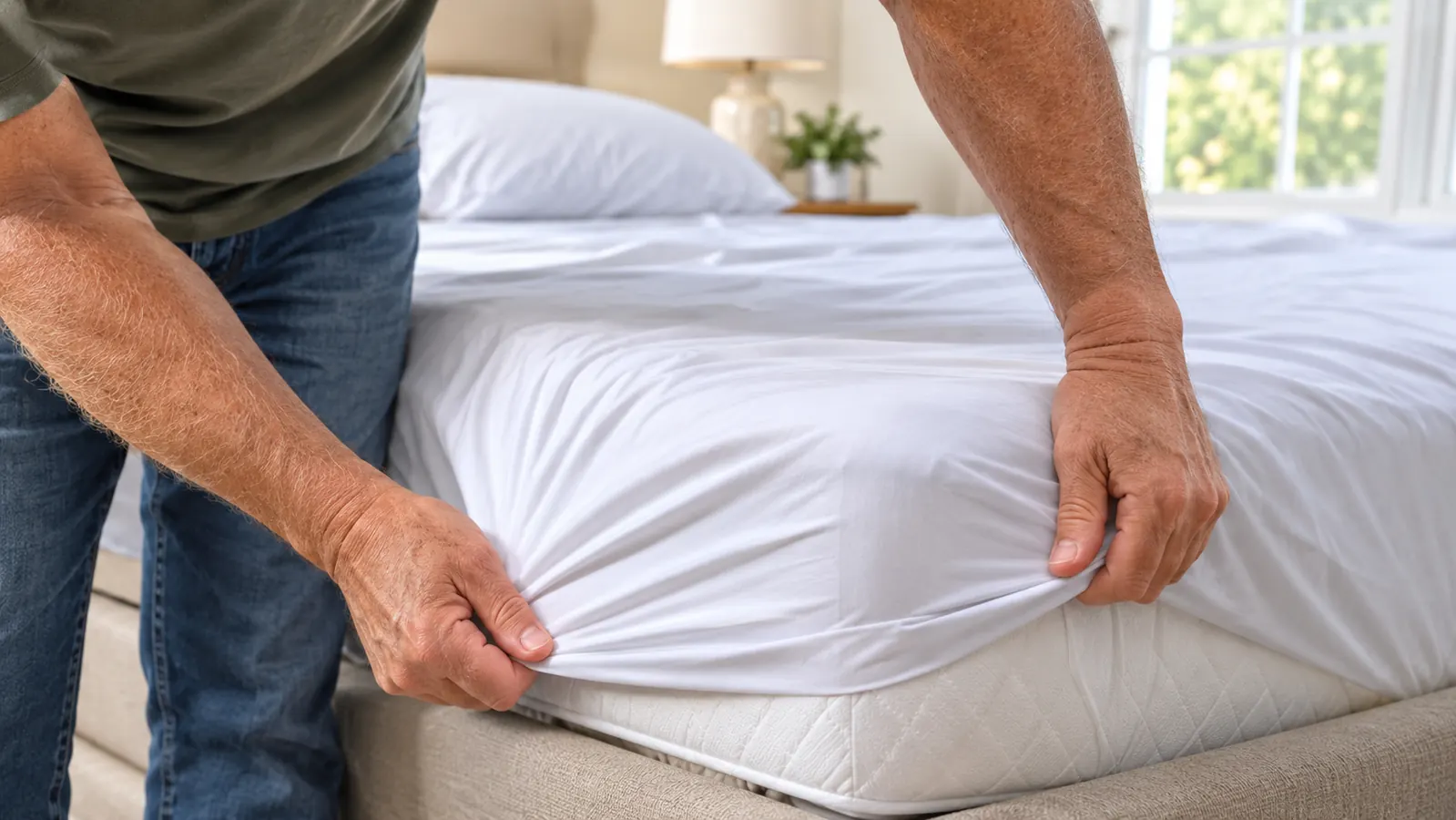
The bed is a standard king. The fitted sheet has 14 inch pockets and my mattress plus a thin mattress pad sits well inside that, so the corners go down without a fight. Paul is on the right, I am on the left, and neither of us has popped a corner in seven months. That sounds like a small thing. If you have ever woken at two in the morning and re-tucked a corner in the dark, you know it is not.
The flat sheet is listed at 108 by 102 inches, which gives enough overhang on both sides to tuck or not tuck without a tug of war. The pillowcases are 20 by 40 inches, and they fit our king pillows without that stretched, strained look at the seams. The whole set goes in the machine together on Saturday morning and is back on the bed before lunch. That is the entire routine. No special detergent, no line drying, no fuss.
What the Fabric Actually Is
It is polyester microfiber, brushed on both sides. That is the whole trick, and it is worth understanding before you buy, because microfiber and cotton behave differently against your skin. Cotton percale feels crisp and cool at first touch and then holds whatever moisture you give it. Brushed microfiber feels softer and slicker, and the Bedsure version is thin enough that it does not hold heat the way a heavier polyester will. Thin is doing more work here than the word cooling.
Take one night in particular. Middle of August, the humidity had not broken, the air was set to 72 and the fan was on medium. I got into bed at ten and the sheet felt cool, the way it always does for the first few minutes. What I paid attention to was quarter to three, when I woke the way I usually do. The sheet under my back was dry. With the cotton it would have had that faint damp give to it, and I would have rolled over and hunted for a cool patch. I did not have to hunt. That is a small, unglamorous difference, and it is the one I would pay for again.
The listing says the set is OEKO-TEX certified, which is a testing standard for harmful substances in textiles rather than a performance claim. It also says the dyeing process holds color after a year of washing. I can only speak to seven months and about fifteen washes per set, but nothing has faded and nothing has shrunk enough to notice. The seams at the pillowcase ends are still flat, which is more than I can say for a set from another brand that went thin at the foot after one winter.
Here is my honest read on the cooling claim. The fabric is breathable and it feels cool when you first get in, and it stays drier against the skin than the cotton I had before. It is not a phase change material and it does not chill anything. What it does is reduce that damp, stuck-to-the-sheet feeling at three in the morning, which is the actual problem most hot sleepers are trying to solve. That is a smaller promise than the listing makes. It is also the one that held up in our bedroom.
What changed was not that Paul stopped running warm. It is that the covers stayed on the bed, which means I stopped waking at one in the morning to fix them.
What Changed at Night, Month by Month
The first two weeks were not dramatic. I noticed the bed felt cooler when I got in and that the sheets did not have that slightly stiff, close feel the cotton had by the end of a humid day. Paul noticed the pillow. He said his face was not sticking to it, which from a man who describes most things as fine is close to a rave review. I made a note in the small notebook I keep on the nightstand and left it alone for a month.
By the end of the first month the cover situation had changed, and that was the part that mattered to me. Paul was still warm. He was just less likely to wake up uncomfortable enough to shove everything off the bed, which meant the flat sheet tended to stay where it started. I went from waking at three most nights to waking at three some nights. Not never. Some. At my age, some is a real improvement, and it came without a pill or a gadget.
One night in September the air handler stopped and we did not notice until nearly eleven. The house was at 79 degrees and climbing. I put the fan on high, and we slept under the flat sheet only. It was not a comfortable night, and I am not going to pretend the sheets rescued it. But I did notice that I was not stuck to the bed the way I would have been under the cotton, and Paul made it until about four before he got up for a cold shower. That night is my honest test of the cooling claim: uncomfortable, but not unbearable, and the fabric was not the reason it was uncomfortable.
Seven months in, the scoreboard looks like this. The bed is drier. The covers stay on. Paul sweats less on the pillowcase and I have not had to change pillowcases midweek since spring. On the hottest nights of the year, the ones where the humidity does not break until ten at night, the sheets do very little and the ceiling fan and the central air set to 72 do everything. I want to be clear about that, because anyone who tells you a sheet set replaces a fan is selling you something.
The Fit Details That Matter on a King Bed
King beds are where inexpensive sheet sets expose themselves. A fitted sheet that is an inch short will pop a corner the first time you roll over, and a flat sheet that is undersized leaves one person uncovered all night. The numbers here are 14 inch pockets on the fitted sheet, which handles a standard king mattress with a thin pad without strain, and a 108 by 102 inch flat sheet that gives real overhang on both sides. Those two measurements are the reason this set works in our room.
The first time I put the fitted sheet on, I did it the way I do everything, slowly, with the corners first. Top left, top right, then the bottom two. The elastic is sewn all the way around rather than just at the corners, so the sheet pulls itself flat across the mattress instead of leaving a ridge down the middle. I noticed that on the first night and I have noticed it every Saturday since. The other thing I did that first week was measure, because I did not trust a listing. The flat sheet came out at 108 by 102 inches on my own tape measure, and the pocket depth at 14.
The closure is listed as elastic, and in practice it holds. I have not had a corner come up in seven months of nightly use, including the weeks when Paul was going through his rotation of kicking and rolling. The pillowcases are the other quiet win. King pillows are long, and a 20 by 40 case that actually fits means the pillow does not fold itself in half inside the case by morning. Small detail. You notice it every single night.
What I Liked
- Soft from the first night, no break-in period
- Stays put on a king mattress, no popped corners in seven months
- Feels drier against the skin than the cotton percale it replaced
- About fifteen washes per set with no pilling, fading or shrinking
- OEKO-TEX certified and machine washable in cold water
Where It Falls Short
- Polyester microfiber will not satisfy anyone who wants the crisp feel of cotton
- Does very little on the hottest, most humid nights without a fan and AC
- 14 inch pockets will not cover a very deep mattress plus a thick topper
- Picks up a little static in dry air
Where They Fall Short
The biggest limitation is the material itself. Microfiber is polyester, and no amount of brushing turns polyester into linen. If you are a person who sleeps hot in that specific way where you wake up with your back damp and the sheet stuck to you, a breathable cotton or a linen blend may still suit you better. The Bedsure set is better than the cotton it replaced in our house. That is not the same as better for everyone. The second limitation is the pockets. Fourteen inches covers a standard king and a thin pad. Past that, the corners become a fight and you should look for deeper pockets.
The third thing is expectations. The cooling claim is a feel, not a temperature. If you are picturing a bed that actually gets cold, you will be disappointed, because no fabric does that. The static is minor and seasonal. In Tampa that is roughly three weeks in January, and it has not bothered me, but if you live somewhere dry you will notice it every time you pull the flat sheet up. None of these are reasons to return the set. They are the reasons I gave it 8.3 out of 10 instead of something sillier.
Who This Is For
This set is for the person who sleeps next to someone who runs warm, or the person who runs warm themselves and is tired of waking at three stuck to the sheet. It suits a standard king mattress, a humid climate, and a household that washes bedding weekly and needs it to survive that. It also suits anyone who wants a soft bed and does not want to buy a second cotton set just to have something to rotate. If you are rebuilding a bedroom one piece at a time, the way I did after I retired, this is a sensible place to start.
Who Should Skip It
Skip it if you want cotton. Real cotton percale has a crisp, cool hand that microfiber cannot copy, and no brushed polyester will satisfy that preference. Skip it if your mattress and topper together run past 14 inches. Skip it if you want something that lowers the temperature of the bed, because nothing in a fabric does that. And skip it if you already know polyester makes you sweat more, since that tendency does not go away because the listing says cooling. If you want the side by side on this, I wrote a full comparison of these sheets against cotton percale.
Seven months, two sets, fifteen washes each. Still on the bed.
King size, four pieces, soft double brushed microfiber with 14 inch pockets and a 108 by 102 inch flat sheet. If you sleep next to a furnace, this is the simplest part of the fix. Check today's price on Amazon.
Amazon Check Today's Price on Amazon →