
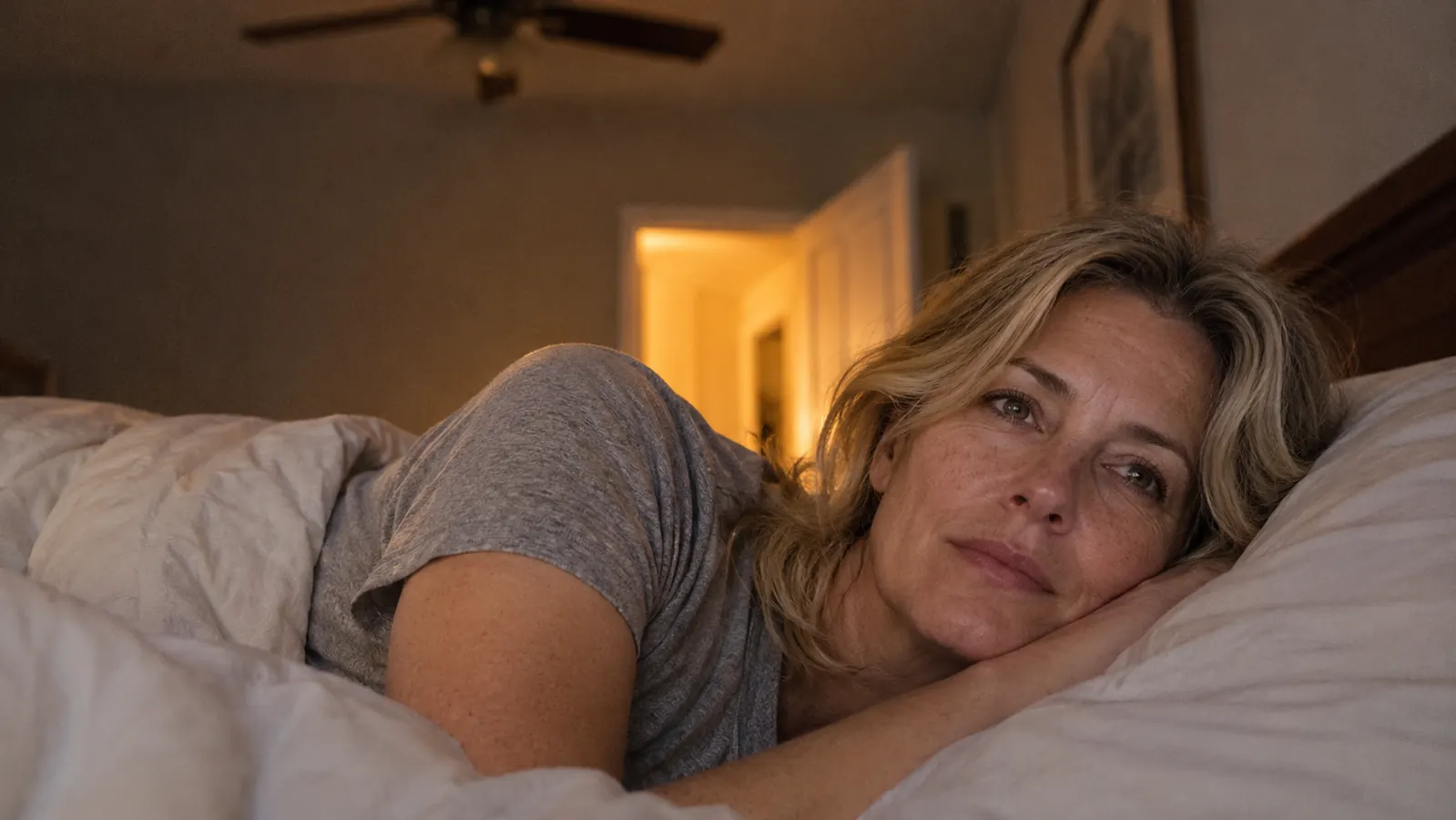
I slept well for most of my working life. Twenty-four years in an elementary school health office will do that to you. Then I retired, and somewhere in the following year my sleep got lighter and more broken. I would fall asleep fine and then be wide awake at 3 AM, listening to the ceiling fan and the neighbor's truck and Paul breathing on the other side of the bed.
I did what I always do with a problem. I treated it like the rest of my prevention routine and changed one thing at a time. The Homedics SoundSleep went on my nightstand about ten months ago, and it is the piece of that routine I would replace first if somebody took it away. Here are ten specific reasons it helps a light sleeper, in plain terms, without pretending it fixes anything.
The small machine that covers the 5 AM truck so I don't have to hear it
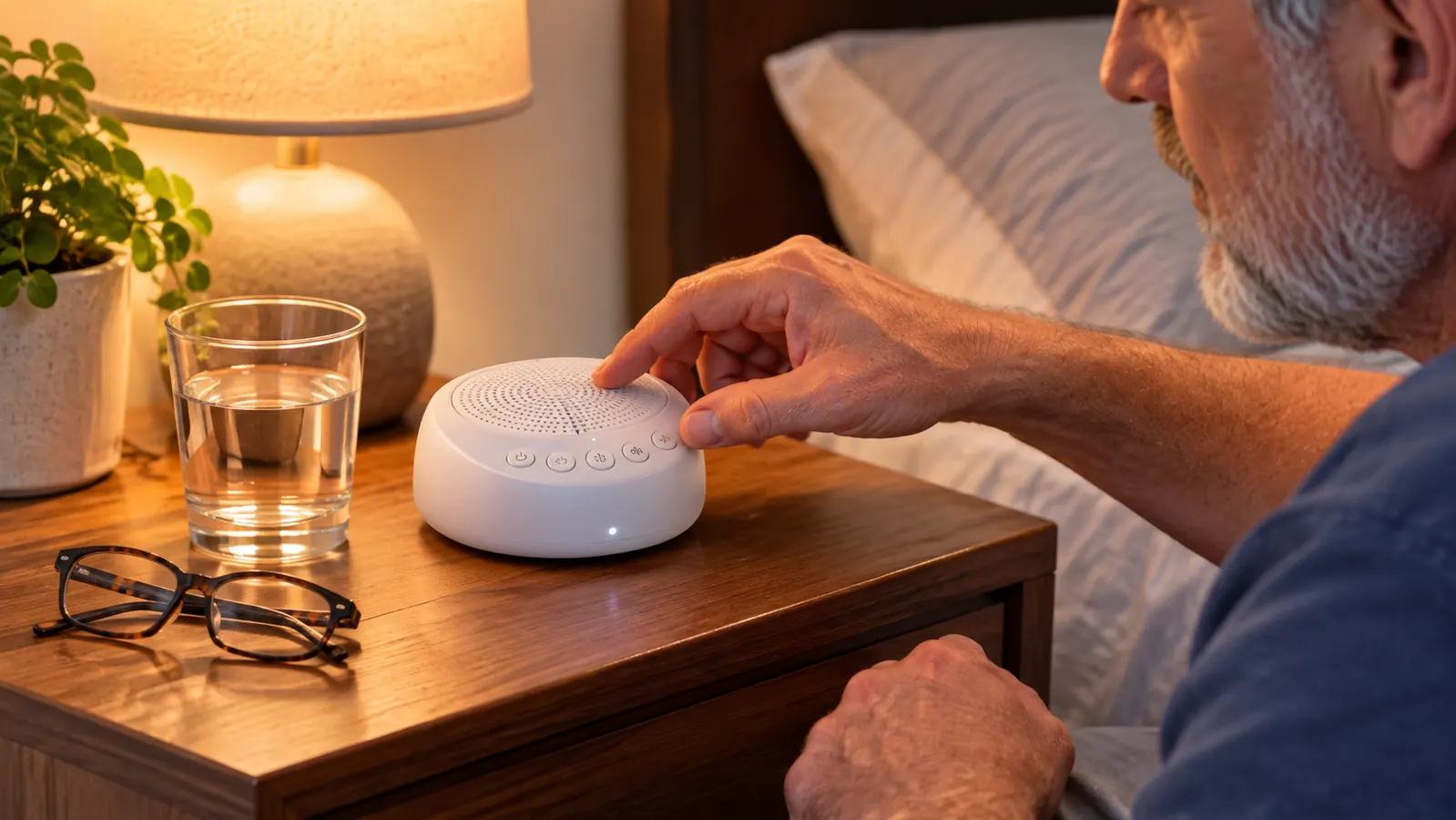
Six built-in sounds, an auto-off timer if you want one, and it runs on the included AC adapter or four AA batteries. This is the one on my nightstand.
Amazon Check Today's Price on Amazon →It gives your ears something steady to hold onto instead of a sudden noise
A light sleeper does not wake up because the room is loud. I wake up because something changed. A door, a truck downshifting, the air handler kicking on. A steady sound gives my brain a constant to measure against, so a small new noise does not register as an event. The white noise setting on the Homedics is even and unremarkable, which is exactly the point.
It covers a snoring husband without anybody having to sleep in the guest room
Paul snores lightly and rolls onto his back around 2 AM. I am not going to wake him every night and I am not moving down the hall. The machine sits on my side of the bed and does the one job I bought it for: it takes the edge off his breathing so it stops being the loudest thing in the room. It does not stop the snoring. Nothing on a nightstand stops snoring. It masks it well enough that I stay asleep.
It doesn't need my phone, so I'm not reaching for a screen at 3 AM
This is the reason I did not just use an app. If the sound comes from my phone, the phone is in my hand, and at 3 AM a phone in my hand is the end of the night. The Homedics has its own small speaker and its own power. I turn the volume, I press the sound, I put it down. My phone stays on the dresser across the room where it belongs.
The auto-off timer means I'm not listening to it all night out of habit
There is an auto-off timer on this machine, and I use it on the nights I want sound to fall asleep to and quiet afterward. Most nights I leave it running, plugged in, no timer, because I want coverage at 5 AM when the truck comes. But having the option matters. It means the machine serves the night I am actually having rather than the one I planned.
It's small enough to live on a crowded nightstand without a fight
My nightstand already holds a lamp, a glass of water, my reading glasses and the sunrise clock. The Homedics is 6.5 by 6 by 2 inches and weighs 8 ounces, so it took up the last corner without my having to rearrange anything. I have owned bedside devices that demanded their own real estate. This is not one of them.
It travels, which matters more at 54 than it did at 34
I visit my adult kids a few times a year, and hotel rooms and guest rooms are full of unfamiliar noises. The machine fits in a bag and runs on four AA batteries when there is no outlet within reach, so the sound I sleep to at home comes with me. I pack it with my sleep mask now. Both of them earn their space in the suitcase.
The ocean setting gives me somewhere to put a bad night
Six sounds are built in. White noise does the work most nights. On the nights my mind will not settle, the ocean setting gives me something with a little shape to it, and I find I stop following my own thinking and start following the sound. That is not a medical claim and I am not going to make one. It is just a small trick that works on me.
It doesn't need the ceiling fan or the air conditioner to be doing something
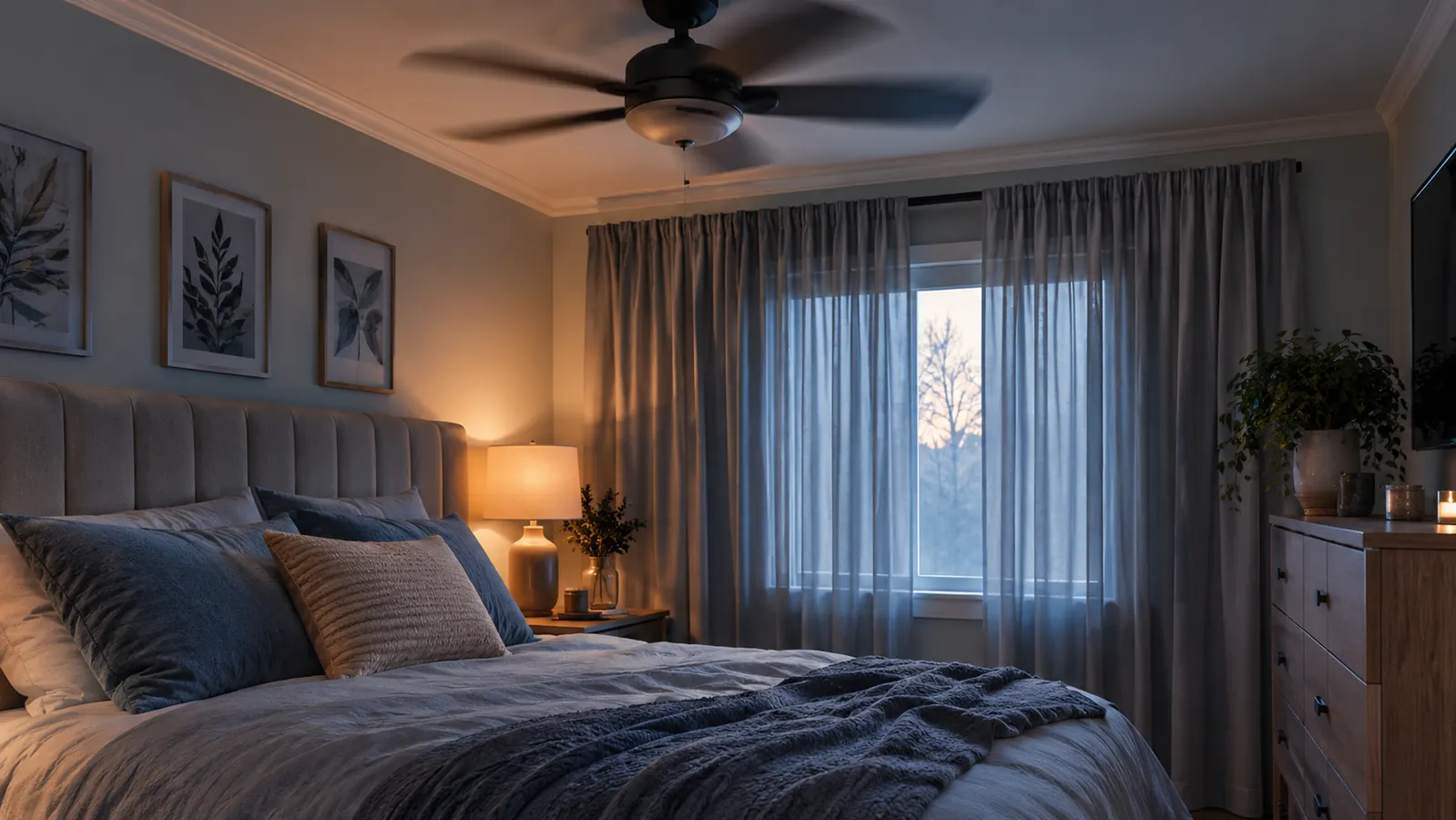
For a while my sleep depended on the AC cycling in a particular rhythm. That is a bad thing to depend on, because the AC has its own schedule and the fan has a wobble. The machine gives me a steady sound that is not tied to any appliance in the house, so a mild night when the AC barely runs no longer means a quieter, more fragile sleep.
It gives Paul a reason to stop tiptoeing around the bedroom
Paul likes to read in bed with his small lamp on for about twenty minutes after I turn in. For years I could feel him trying to turn pages quietly, which meant I was lying there listening to him try. With the machine running, he reads normally and I am not tracking his every movement. It solved a small tension neither of us had named out loud.
It's a fixed part of a routine, and a routine is most of the battle
This is the least glamorous reason and the truest one. Turning the machine on is the last thing I do before I put my book down. It is a signal, the same way brushing my teeth is a signal. Sleep got better for me not because of any single device but because I built a short, repeatable sequence and stopped improvising at bedtime. The machine is step one of that sequence.
What I'd Skip
I would skip anything that promises to fix insomnia, and I would skip the fancy versions with apps and sleep tracking. My sleep did not improve because a device measured it. It improved because I stopped changing things every week and let one setup run for months. I would also skip expecting the machine to do work the curtains should be doing. It covers sound. It does not cover light, and my east window needed the blackout panels before anything else in that room made a difference. If your problem is 6:45 AM sun rather than 5 AM noise, start there instead.
It does not stop the snoring. Nothing on a nightstand stops snoring. It masks it well enough that I stay asleep.
One thing I would tell anybody starting this: give it two weeks before you decide. The first few nights I found the sound conspicuous because I was listening for it. Somewhere in the second week it stopped being a sound and became the room. That is the whole trick, and it does not happen on night one.
Ten months on my nightstand and I still turn it on first
The Homedics SoundSleep runs on the included AC adapter or four AA batteries, has six built-in sounds, a volume control and an auto-off timer. It is the least interesting thing in my bedroom and the one I would replace fastest.
Amazon Check Today's Price on Amazon →