
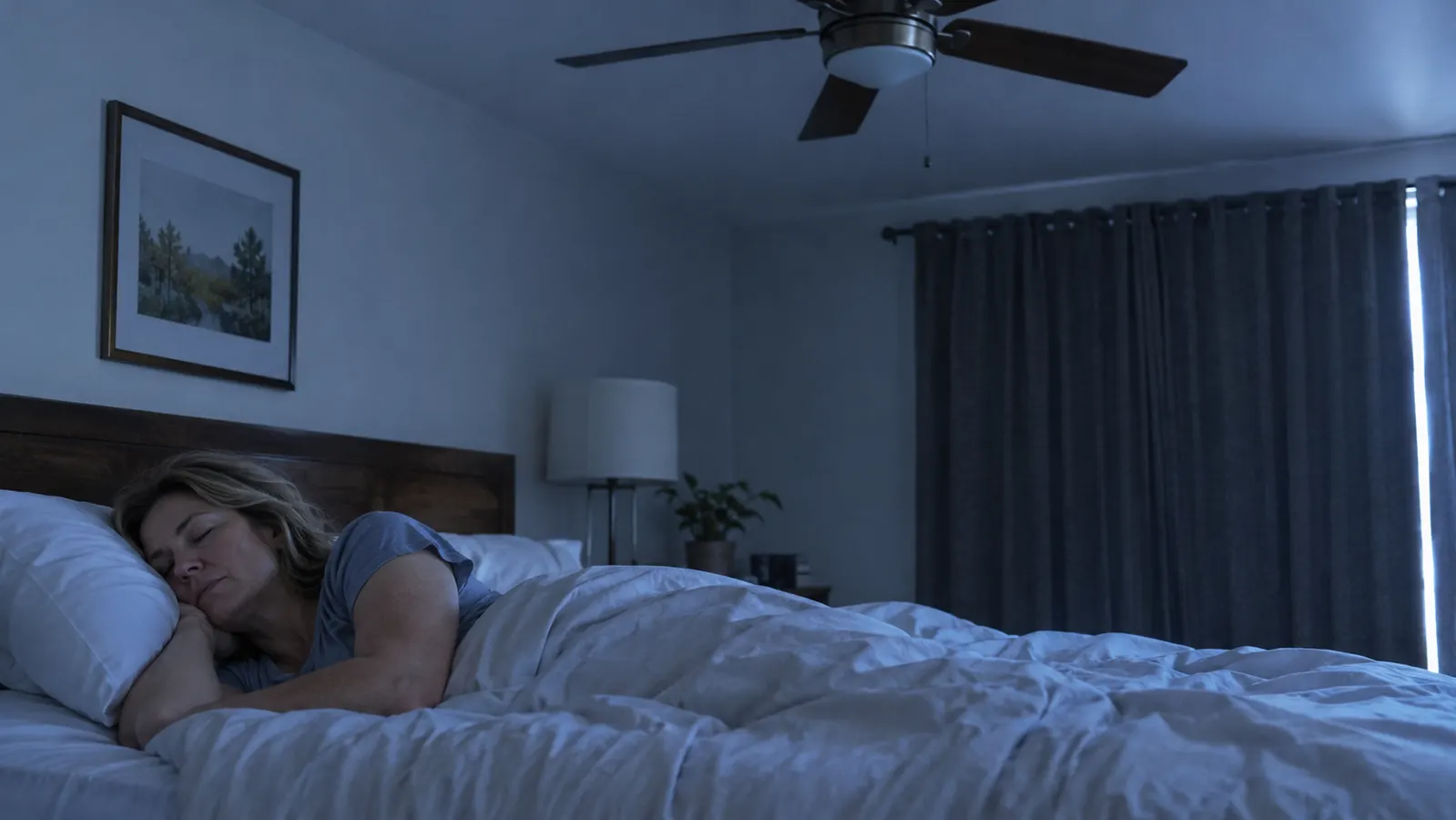
I know the exact pitch of my neighbor's truck. Not because I have ever stood outside at that hour, but because for the better part of two years it started up at 5:40 every morning and pulled me out of sleep like a hook. Add Paul's light snoring on the far side of the king bed, the ceiling fan clicking on its low setting, and the sun hitting the one east-facing window at 6:45, and my nights had turned into a series of small interruptions I could set a clock by. I am 54, a retired school nurse, and I spent 24 years telling other people to get their sleep. I was not doing a very good job of it myself.
After I retired, my sleep got lighter and more broken. I would wake around 3 AM and stay half awake until the light finished the job. So I started treating it like the rest of my prevention routine: one change at a time, give it a month, keep what moves the needle. The Homedics SoundSleep landed on my nightstand about ten months ago and it has not left. I plugged it in with the included AC adapter, set it to the white noise, and turned it up until Paul's breathing sat underneath it instead of on top of it. This is what ten months of that has actually been like, including the parts I do not love.
The Quick Verdict
Ten months in, it does one small job well: it gives my ears a steady floor so the truck and the snoring stop arriving as events. It will not make Paul stop snoring, and the volume tops out sooner than I would like.
Amazon Check Today's Price →One steady sound, ten months, and a truck I finally stopped hearing
The Homedics SoundSleep is a small box with six sounds, a volume control and an auto-off timer. That is the entire pitch. It runs off the included AC adapter or four AA batteries, and it has sat on my nightstand for ten months without asking anything of me.
Amazon Check Today's Price on Amazon →How I've Used It
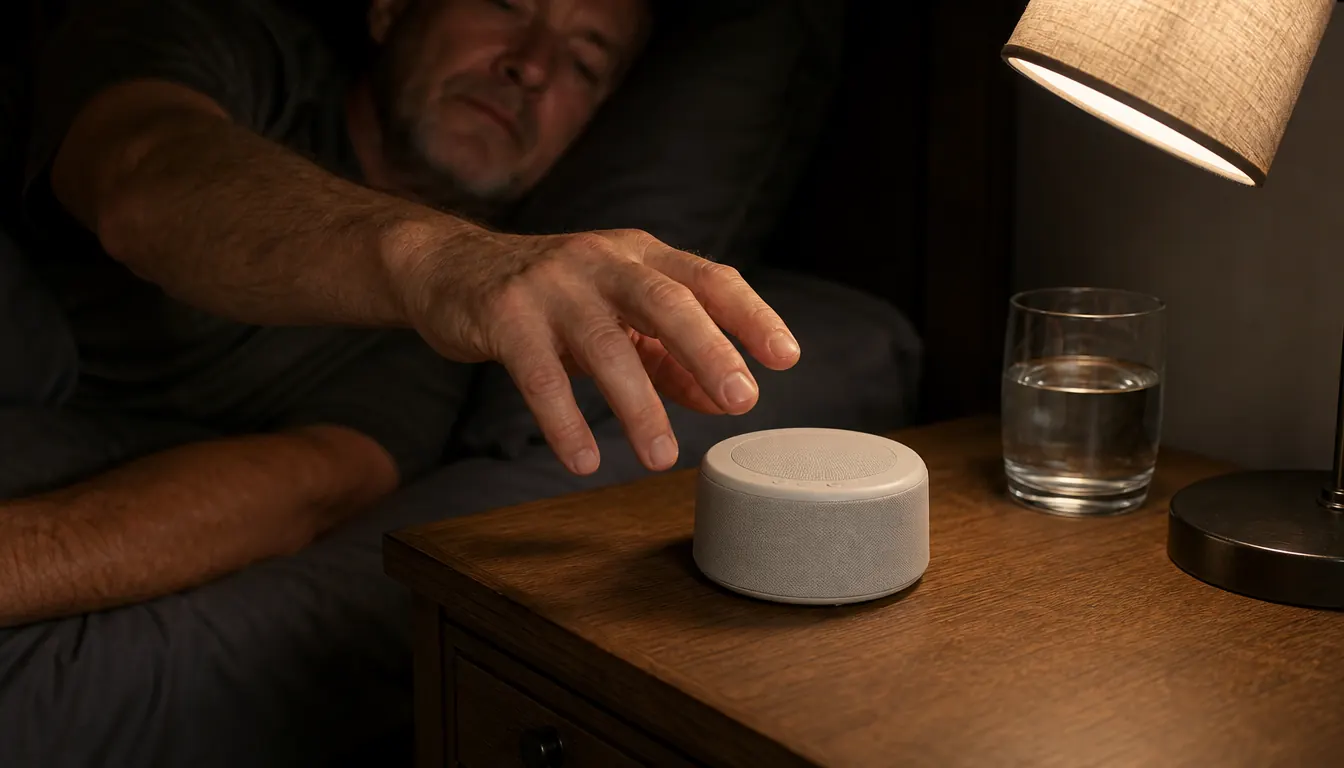
The Homedics machine is 6.5 by 6 by 2 inches and weighs 8 ounces. It sits on my nightstand on the left side of the bed, between the reading lamp and my water glass, and it has not moved in ten months except when I lift it to dust underneath. It came with an AC adapter, which is how I run it, and it will also take four AA batteries if I want it away from an outlet. There is one volume control and an auto-off timer. That is the whole interface. I did not have to read the quick-start guide twice.
My routine is boring on purpose. I get in around 10:15, set the machine to the white noise, and turn the volume up until Paul's breathing drops below it. He falls asleep before I do, so I am usually adjusting to whatever his breathing is doing that night. On the nights his snoring gets going, I switch to the ocean setting, not because it covers more but because the rise and fall gives my brain something to follow instead of something to fight. Then I read for ten minutes and turn off my own lamp. Paul keeps his on for about twenty minutes more.
That is the entire ritual. No app, no programming, nothing to charge overnight. I still wake around 3 AM some nights the way I always have, and the difference is what I hear when I do. Before, I heard the truck, or the fan, or Paul. Now I hear a flat, even wash of sound, and my brain files it as nothing and lets me back down. Some nights that takes a minute. Some nights I am awake for forty. It is not a switch. It is a smaller room.
What the Six Sounds Actually Do
The machine comes with six digitally recorded sounds. I have used two of them with any regularity. The white noise is flat and even, with no pattern to latch onto, which is exactly why it is my default. The ocean has a slow rise and fall. I like it on bad nights and find it distracting on good ones, because my brain will start waiting for the next wave the way it waits for a song to come back around. I tried the others in the first week and went back to white noise inside a month. If you need variety, six is plenty. If you are like me, you will pick one and never touch the rest again.
I am not going to tell you this lowers your heart rate or resets your nervous system. I do not know that, and neither does a plastic box. What I can tell you is what I notice: my attention stops jumping at every small change in the room. A sound that stays the same stops being information. The truck starts, the snoring changes pitch, the fan clicks, and none of it registers as a change because there is a steady floor underneath it. That is the whole mechanism as far as I am concerned, and for me it has been enough to be worth the nightstand space.
Volume matters more than I expected. The control is small, and on Paul's louder nights I keep it close to the top, which means the white noise itself is fairly loud in my ear. It is not uncomfortable, it is just the ceiling of the thing. If your partner snores hard, this machine has to shout a little to do its job, and there will be nights when it cannot shout loud enough. That is the honest version, and it is why I gave it four stars instead of five.
The Timer, the Volume, and Two Things That Bug Me
There is an auto-off timer, and I understand why people use it. I do not. I tried it once, set for an hour, and the click and the sudden silence woke me at the exact moment it shut off. That is my sleep, not the machine's fault. If you fall asleep fast and stay there, the timer is a sensible way to keep from running it all night. If you wake in the small hours the way I do, leave it running and let it work the whole night.
Two things bother me. The first is the volume ceiling. To cover Paul's snoring I run it near the top, which leaves me no headroom on the nights he is worse. On those nights I switch settings and wait it out, and sometimes I am still awake at four. The second is that the box is light enough to slide when I reach past it for water in the dark, and I knock it out of place about once a week. The same 8 ounces that make it good for travel make it easy to shove around a nightstand.
Neither of those is a reason to send it back. They are the tradeoffs of a small, simple, lightweight thing, and I would rather have small and simple than a bigger unit with settings I would never learn. But if you are choosing between this and something with more room at the top of the volume, and you sleep next to a serious snorer, that ceiling is worth knowing about before you order.
What I Liked
- Covers steady low-level noise: a light snorer, a ceiling fan, a truck starting up outside
- Six sounds and one volume control, so there is nothing to learn at 11 PM
- Runs on the included AC adapter or four AA batteries, and at 8 ounces it goes into a suitcase without a second thought
- Ten months of nightly use on my nightstand with no failure and no upkeep beyond a wipe down
- The auto-off timer is there if you want it and easy to ignore if you do not
Where It Falls Short
- The volume tops out. Against loud snoring it will not always be enough
- The ocean setting has a rhythm your brain can start waiting on, which is the opposite of what you want at 3 AM
- It is light enough to slide around the nightstand when you reach past it in the dark
- It only does one job. It will not touch light, heat, or a partner's reading lamp
Ten Months Later: What Held Up
The Homedics SoundSleep has run nearly every night for ten months, plugged in, and nothing has failed. No rattle, no drift in pitch, no dead speaker. The body has one small scuff from the time I knocked it off the nightstand and it landed on the rug, and it kept working without a complaint. It carries a one year manufacturer warranty, which I have not needed. Maintenance is a dry cloth and the occasional pass with a vacuum brush, because a flat top collects dust like any flat surface in a Florida bedroom with a ceiling fan running all night.
It traveled once, to my daughter's place out of state, and that is where the 8 ounces and the battery option earn their keep. It went into the side of my suitcase next to my sleep mask, took four AA batteries, and sat on a guest room nightstand for four nights. No adapter to pack, nothing to configure, no learning curve in someone else's house. If you travel and you are sensitive to unfamiliar hotel noise, that alone may be the reason to own one.
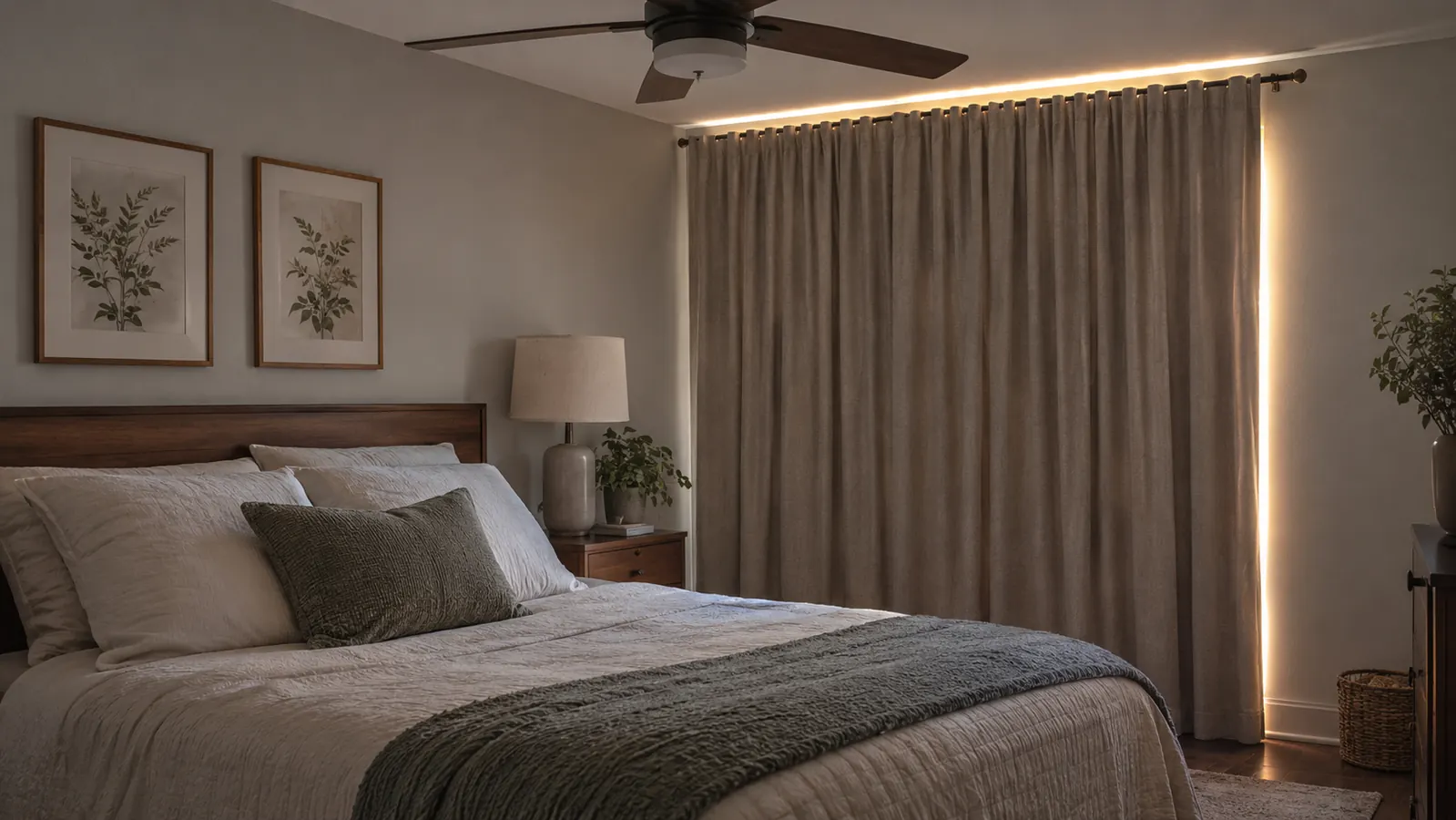
What has not changed is the size of the job it does. Ten months in, my sleep is better than it was, and I would not credit the machine with all of it. It handles noise. The curtains handle the 6:45 sun. The heavier sheets handle Paul running hot. The wake-up light handles the fact that once my room got dark, I was sleeping straight through my morning walk. Each piece does its own small thing, and none of them is doing the others' work. That is the honest accounting, and it is the reason I keep the Homedics on the nightstand rather than reaching for something bigger with more dials.
Ten months in, the white noise setting is the reason I no longer know what time my neighbor leaves for work.
Where It Fits in the Rest of My Routine
I want to be clear about one thing, because I see it blurred constantly. A white noise machine masks sound. It does not stop your partner from snoring, and it does not make your bedroom quieter in any measurable way. Paul still snores. If I switch the machine off at 3 AM to check, the snoring is exactly where I left it. What the machine does is give my ears a steady floor so the snoring stops arriving as a series of events I have to respond to.
That matters for how you set it. Match the volume to the specific noise that wakes you, not to the room in general. For me that is Paul's breathing and the 5:40 truck. If your problem is a neighbor's bass through a shared wall, this will struggle with the low end, because low frequencies go through a small speaker the way water goes through a screen door. If your problem is a dog two streets over, it will do fine.
Placement is worth thirty seconds of thought. Mine sits between the lamp and the water glass, angled slightly toward my side of the bed, which is where my ear is. When I first had it flat and facing the ceiling, I had to run it louder to get the same effect. Nobody mentions that, and it is the difference between the volume sitting in the middle of its range and sitting near the top of it.
Who This Is For
This is for the light sleeper with a specific, identifiable culprit: a partner who breathes audibly, a fan that clicks, a truck at the same hour every morning, a neighbor's routine. It suits people who want a box that switches on and stays on, who do not want to open an app at bedtime, and who would rather have one control that works than nine they ignore. It also suits anyone who travels and cannot rely on a hotel room, because it packs flat and runs on batteries. If you know which sound wakes you and roughly what time it happens, this machine is aimed directly at that.
Who Should Skip It
Skip it if you need total silence, because all this does is replace one sound with another steadier one. Skip it if your partner's snoring is genuinely loud, the kind you can hear through a closed door, because the volume ceiling will frustrate you and there are bigger machines with more headroom. Skip it if the noise bothering you is low and heavy, like bass or traffic rumble, since a small speaker will not win that fight. And skip it if you want programming, scheduling or app control. It has none of that, and it is not pretending to.
The truck still comes at 5:40. I just don't hear it anymore.
Six sounds, one volume control, an auto-off timer you can ignore, and a ten month track record on my nightstand. If your wake-up has a name and a time, the Homedics SoundSleep is the simplest way I have found to stop hearing it.
Amazon Check Today's Price on Amazon →