

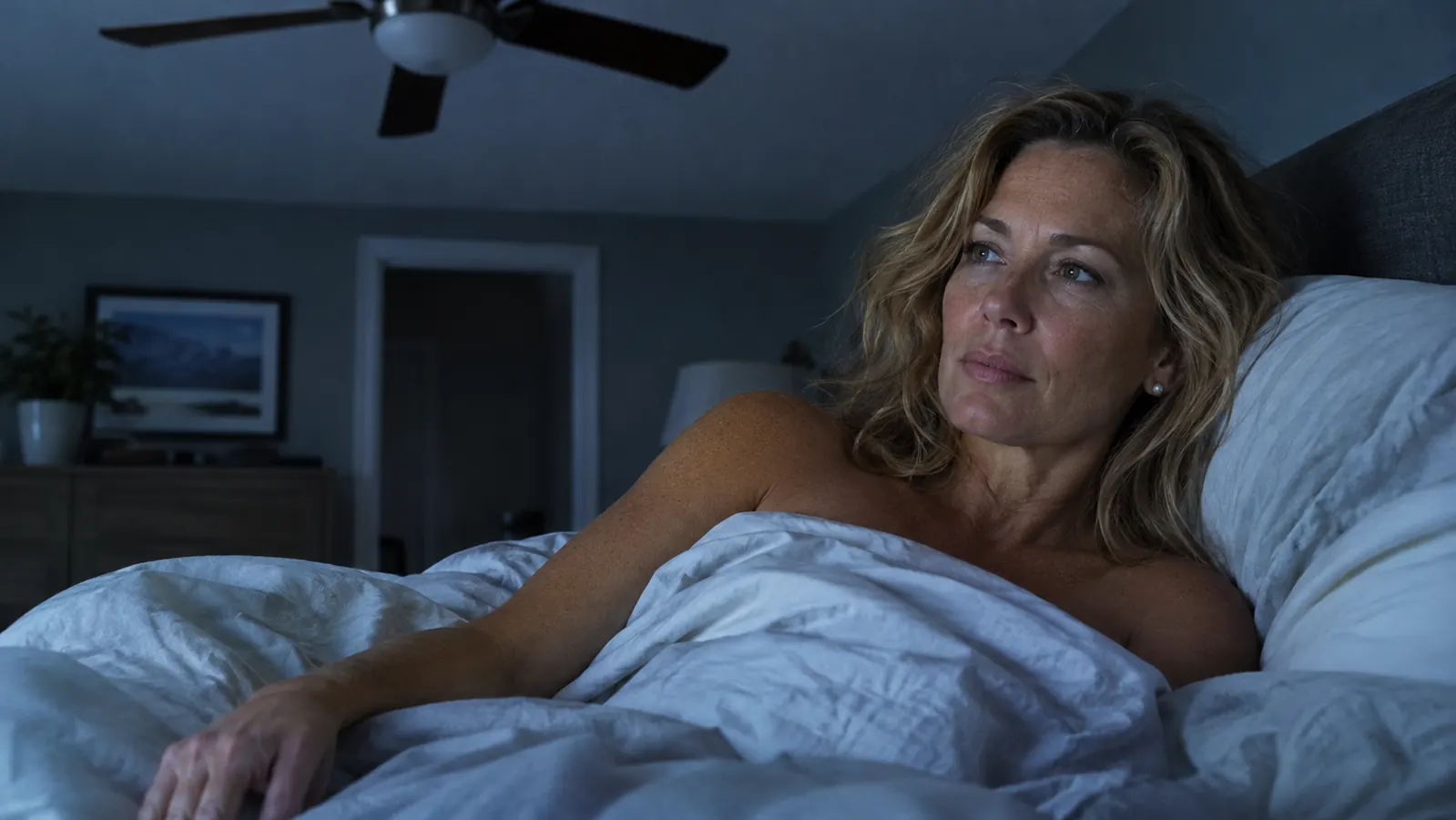
I slept badly for the better part of two years before I did anything useful about it. I would wake around 3 AM with the back of my neck damp, push the covers off my side of the bed, lie still listening to Paul breathe, and then get up at 6:30 too tired to do the walk I have done most mornings for twenty years. For a while I assumed the problem was me, some new thing about being 54. It was mostly the room.
I am not going to tell you a set of sheets fixed my sleep. What I will tell you is that cooling sheets are one layer of a stack of small, boring changes, and if you put them on top of a hot room with a heavy blanket, they will not save you. The Bedsure king set is what I bought about seven months ago. It is the layer closest to your skin, so it matters, but it comes after the air in the room and before the way you make the bed. Here is the order I would do it in, and the reasons.
The layer you actually touch for eight hours
Bedsure's king set is four pieces: a fitted sheet with a 14 inch pocket depth, a flat sheet, and two 20 by 40 inch pillowcases. Double brushed microfiber, OEKO-TEX certified, machine washable. It is the cheapest place to start, because it is the thing in contact with your skin all night.
Amazon Check Today's Price on Amazon →Step 1: Cool the Room Before You Touch the Bedding
The first thing I changed was not the bedding. It was the thermostat. We keep the central air at 72 overnight, and it has been at 72 for years, which is not the same as saying it stays at 72. On a Tampa night in August the unit runs almost constantly from June through September, and the bedroom still drifts up two or three degrees by two in the morning. I stopped fighting that with bedding and started paying attention to it. A ceiling fan on low moves air across your skin so moisture can evaporate, and it costs almost nothing to run. You do not need it on high. On high it dries my eyes out and makes a noise I cannot sleep through.
The other half of the room problem was our one east-facing window. It gets direct sun from about 6:45 in the morning, and before the curtains went up the room was already warm when I woke, which is a bad way to start a day you planned to walk three miles in. Paul and I put up blackout curtains about a year ago, in one afternoon, and it is the most effective single thing we did for both the first half of the night and the last hour of the morning. A little light still comes around the edges and over the top of the rod, and it always will. I am not going to pretend the room is a cave, because it is not.
So before you buy anything, do this. Stand in your bedroom at ten at night with the lights off. If it feels warm and still, no sheet on the market will rescue that night. Cool the air, move the air, block the sun that hits the glass in the morning. Then think about what goes on the mattress.
Step 2: Pick a Sheet for Moisture, Not for the Cold Feeling in the Package
Every sheet feels cool when you take it out of the bag. That is the problem with shopping for cooling sheets in a store or through a screen. The fabric is at room temperature, your hand is warmer than the fabric, and your hand reads that as cool. It tells you nothing about hour four. What matters across a night is how much moisture the fabric moves away from you and how much weight it puts on your body. A heavy, tightly woven sheet traps what your skin gives off.
The set I bought about seven months ago is the Bedsure king size, four pieces: a fitted sheet, a flat sheet, and two pillowcases. The fabric is polyester microfiber brushed on both sides, and that brushing is the detail that matters. Polyester has a bad reputation among people who have slept on cheap hotel sheets, and some of that reputation is earned, because unbrushed polyester feels slick and does not breathe the way linen does. The double brushing gives it a soft, dry hand, closer to a worn cotton than to the shiny stuff. It is OEKO-TEX certified, which is a chemical safety standard and not a cooling claim, and I want to be clear about that difference.
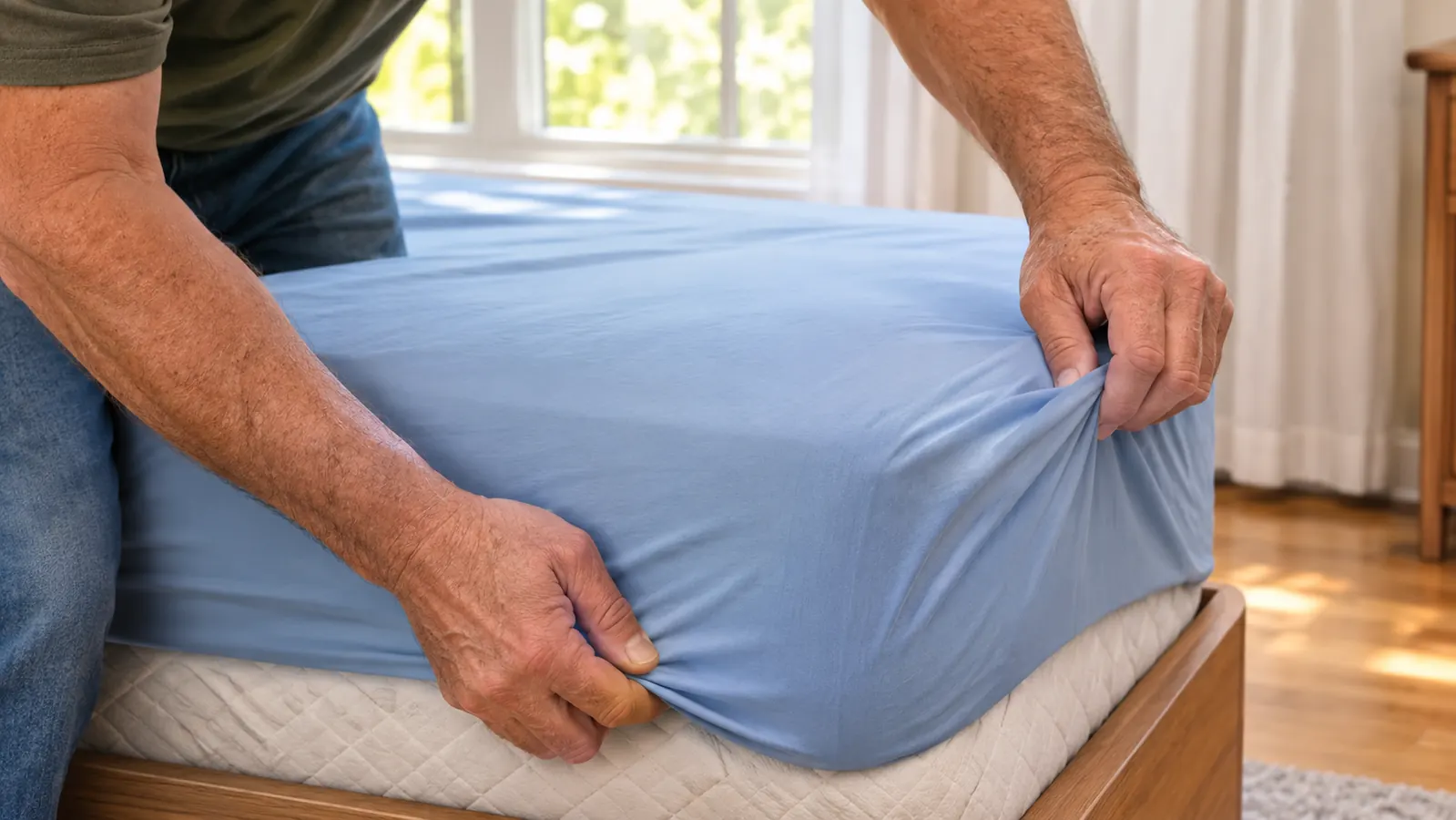
Fit matters more than I expected. The fitted sheet has a 14 inch pocket depth and an elastic edge, and it goes over our mattress without a corner popping at 2 AM. The flat sheet is 108 by 102 inches and the pillowcases are 20 by 40, which is the right size for king pillows. I have had sheets that fit loosely and gathered underneath me, and that alone will wake you up. Check the pocket depth before you order, because a fitted sheet that will not stay on is not a cooling problem, it is a sizing problem.
Here is the honest limit. Paul runs hot, and I bought these for him more than for me. What changed was not that he stopped being warm. It was that he stopped throwing the covers off onto my side at one in the morning. Fewer nights of being woken up by a moving blanket. On the worst nights in July and August, the air conditioning and the fan are still doing most of the work. The sheets are not cooling the bed. They are simply not adding to the heat.
Step 3: Make the Bed So Air Can Move
Most people make a bed the way they were taught to make a bed, which is to tuck everything tight and pile on a comforter. That is fine for a guest room and bad for a hot sleeper. Air has to be able to move between the sheet and the blanket, and a tightly tucked flat sheet with a heavy quilt on top seals you into a pocket of your own warmth.
Do this instead. Leave the flat sheet loose at the foot of the bed so it can lift. In summer, skip the comforter entirely and use the flat sheet plus a light blanket, then let the blanket live on the cool sleeper's side. If one of you runs hot and one of you does not, the bed needs two zones. Paul reads in bed for about twenty minutes with a small lamp on his side, and he sleeps warm, so his side gets the lighter layer. Mine gets what I need, which in January is a good deal more than his.
One small thing that gets overlooked is the pillowcase. A pillowcase that is too big bunches under your face and traps heat against your cheek. The 20 by 40 cases in the Bedsure set fit a king pillow properly, and a pillow that stays smooth is easier to turn over to the cool side at three in the morning.
Step 4: Get Your Own Heat Down Before You Get In
You can do everything right with the room and the bedding and still get into bed overheated. I stopped taking a hot shower right before bed. A warm shower is pleasant, and it leaves you warmer than you want to be for the first half hour, which is exactly the half hour you are trying to fall asleep in. I shower earlier now, and I read in the chair in the living room instead of in bed, so the bed stays tied to sleeping rather than to waiting to feel tired.
Clothing matters as much as sheets and almost nobody talks about it. A heavy cotton nightgown will hold heat against you no matter what is under it. I wear a light cotton one with nothing high at the neck. Paul sleeps in a t-shirt, and on the worst nights he does not. The other change I made was years ago, moving my caffeine cutoff to noon, which has nothing to do with temperature and everything to do with how quickly I drop off once I am cool.
Give yourself twenty minutes. If you get into bed at 10:30 still warm from the day, you will lie there and blame the sheets. Get the room cool first, let your body settle, then get in. It is the same principle as not eating a large meal right before you lie down.
Step 5: Keep It Working Week After Week
Cooling performance dies in the laundry, not in the sheets. Two things kill it. The first is fabric softener, which coats the fibers in a film and cuts down what the fabric can move. The second is a hot dryer, which is hard on the brushing and on the elastic. I wash the Bedsure set cold and dry it on low, and I do not use softener on anything that touches skin.
I own two sets and rotate them weekly. That is not indulgence, it is how you keep a set alive, because a set washed and dried twice a week wears out inside a year. Rotating two sets means each one gets a week off, and the fitted sheet keeps its elastic. The listing says the fabric is fade resistant and shrink resistant. After seven months of cold washes and low heat, the color has held and the set still goes onto the same mattress the same way, so I have no reason to doubt either claim so far.
One warning. Microfiber holds oil, and if you use a heavy body lotion at night it will build up. A cold wash with a normal amount of detergent handles it. Overloading the machine does not. I wash the sheets and pillowcases on their own cycle and nothing else goes in with them.
Seven months, two sets, washed cold and dried on low, and the fitted sheet still pulls over the corners without a fight.
What Else Helps
Sheets are one layer. The others, in the order I added them: a contoured sleep mask, which was the first thing I tried about fourteen months ago for the morning light and which now mostly handles Paul's reading lamp and gets packed when I visit my kids; blackout curtains, about a year ago; a white noise machine on my nightstand for the last ten months, which covers his light snoring and the neighbor's early truck and does not stop either one; and a sunrise alarm clock, the newest, which I bought because the curtains made the room dark enough that I was oversleeping my walk. None of these is a cure for anything. They are the same idea as eating vegetables and walking three miles: boring, daily, and they prevent problems later.
If I had to give one piece of advice to someone who wakes up hot at 3 AM, it would be to change one thing at a time and give it two weeks. I changed four things in a month once and had no idea which one helped. When I added the Bedsure sheets, I waited three weeks before deciding, and what I noticed was not that I was cold. It was that I was no longer waking up with a damp neck and a blanket on the floor.
The one part of the bed you can change tonight
King size, four pieces, 14 inch pockets, two 20 by 40 pillowcases, double brushed microfiber, machine washable. Do the fan and the curtains first. Then make this the next thing.
Amazon Check Today's Price on Amazon →