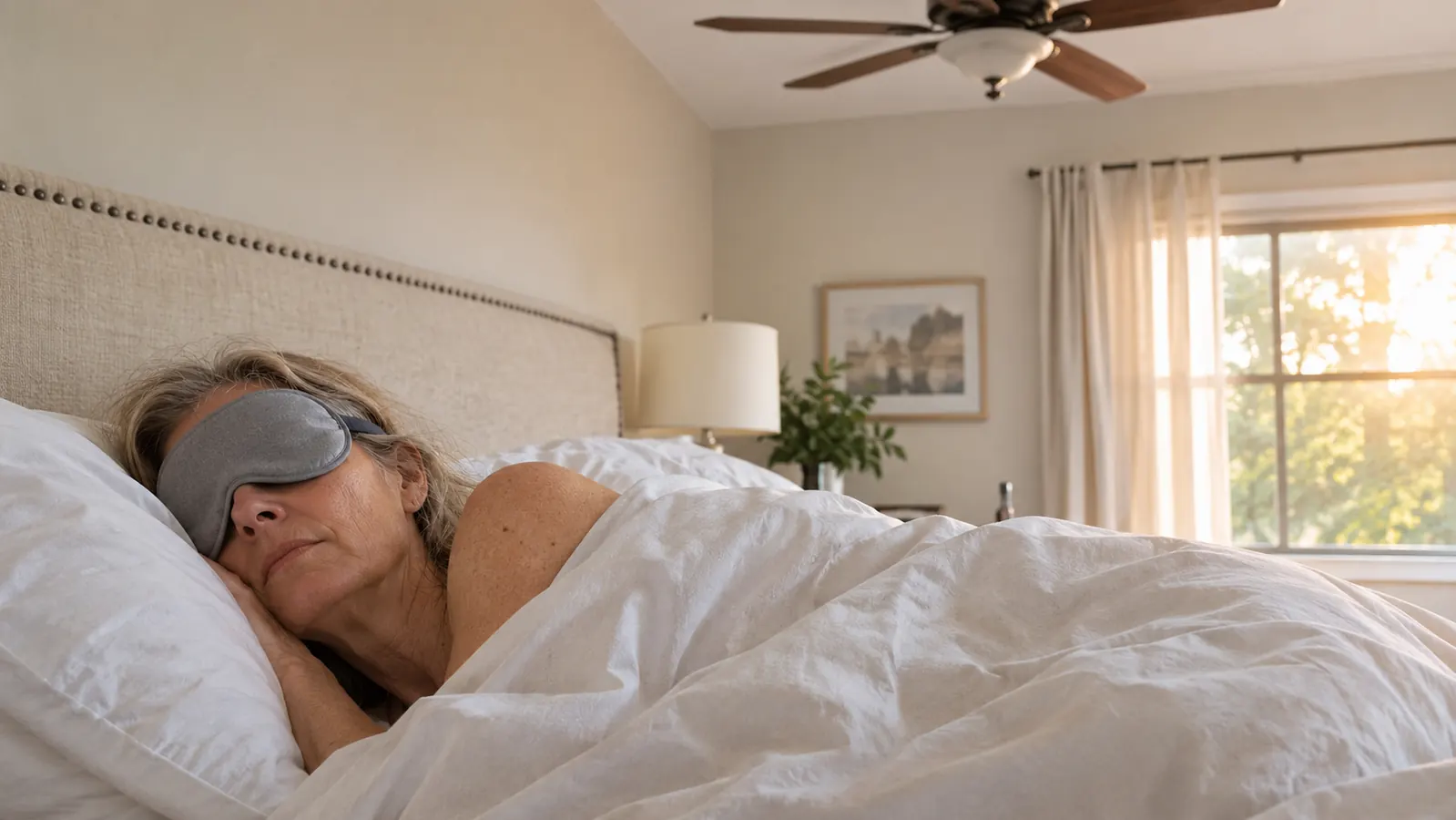
The sun clears the trees on the east side of our house at about 6:45, and for two years that was the end of my night whether I was ready for it or not. I had just retired after twenty-four years in a school health office, and I assumed I would finally sleep in. Instead my sleep got lighter, my wake-ups drifted earlier, and by the time the light reached the blinds I was already lying there with a list running in my head.
I tried the obvious things first. Earlier bedtime. No caffeine after noon, which I still do. The ceiling fan on low. And for a while I told myself the light was not really the problem, since I was awake before it arrived anyway.
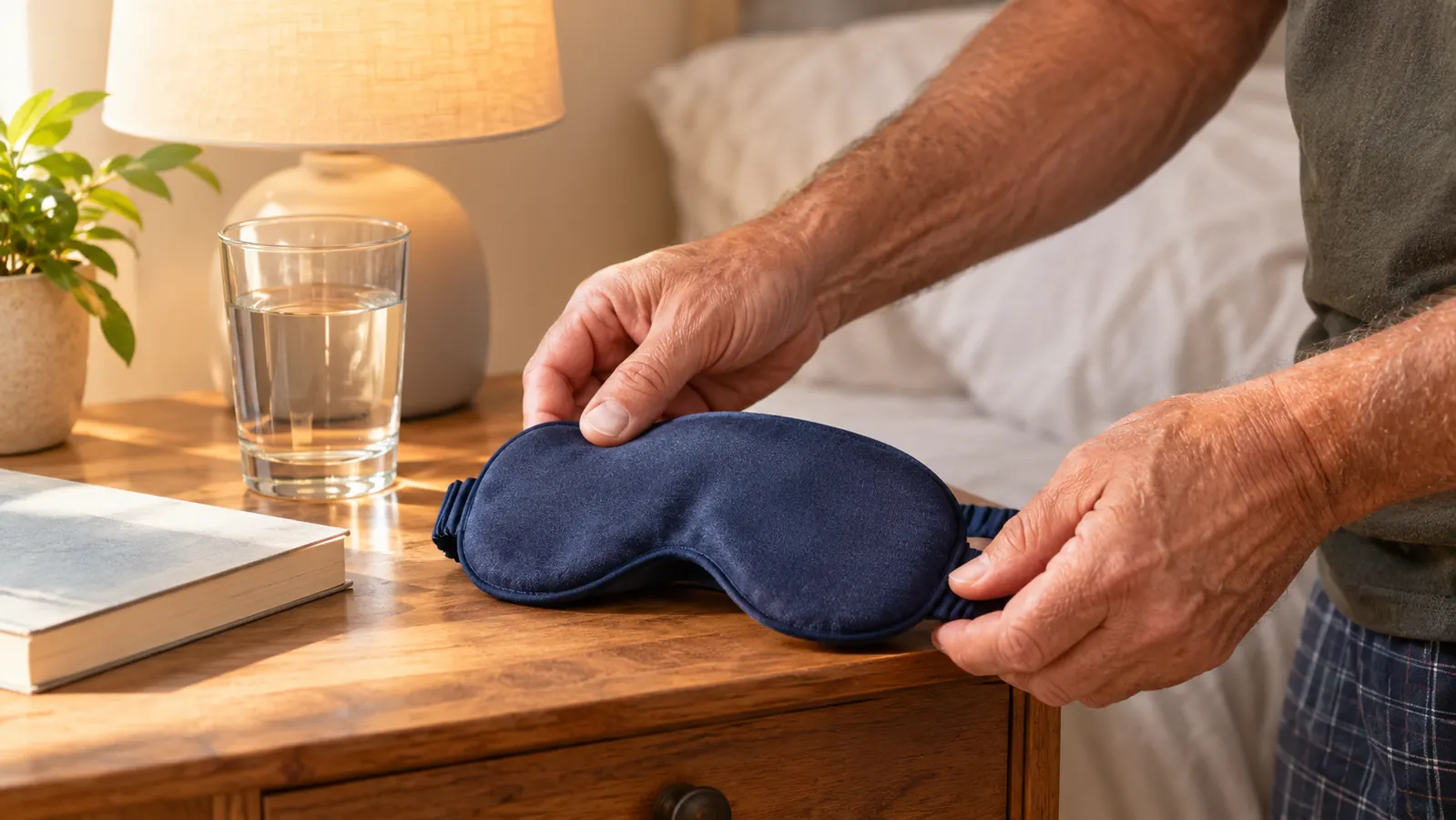
It was the problem. Not the whole problem, but the piece I could actually do something about. The MZOO sleep mask was the first thing I bought when I stopped treating sleep as something that happened to me and started treating it the way I treat walking three miles and eating vegetables: a boring daily habit I show up for on purpose.
I have worn it every night for about fourteen months, which is longer than I have stuck with most things. It is contoured memory foam, not the flat cloth kind, with a buckle on the adjustable strap and a listed weight of 5.29 ounces. The eye cups are the part that matters. They are arc shaped and deep enough that my lashes sit inside them, so I can open my eyes and blink without my face touching anything. On a flat mask, opening your eyes means pressing into fabric. On this one, it means nothing at all.
The other piece is the nose, which is where every mask I had tried before leaked. The MZOO has padding shaped around the bridge, about 22mm deep, and it sits close enough that no stripe of light comes up from underneath. I noticed the difference on the second night rather than the first, because the first night I was busy noticing whether it felt strange. It did not. By the second night I noticed an absence instead, that thin bright line across my cheek that used to be there at dawn.
I sleep on my left side, mostly, and that is usually where masks fail me. The sides of this one are thinner and curved, so the pillow presses it into the mattress without the strap digging into my temple. The first week I kept reaching up to check it was still on. It was.
The first night I noticed whether it felt strange. The second night I noticed the bright line across my cheek was gone.
The eye cups are the whole reason this one works
Arc-shaped memory foam cups deep enough to blink inside, padding that seals under the nose, and a buckle strap you can adjust without looking. That is the difference between this and a folded t-shirt.
Amazon Check Today's Price on Amazon →About two months after I started wearing it, Paul and I put up blackout curtains over that window. I want to be straight with you about what that changed. The curtains do most of the work on the morning sun now, and a little light still gets in at the edges and along the top of the rod. The mask did not become pointless. It became the thing that covers the rest of the room.
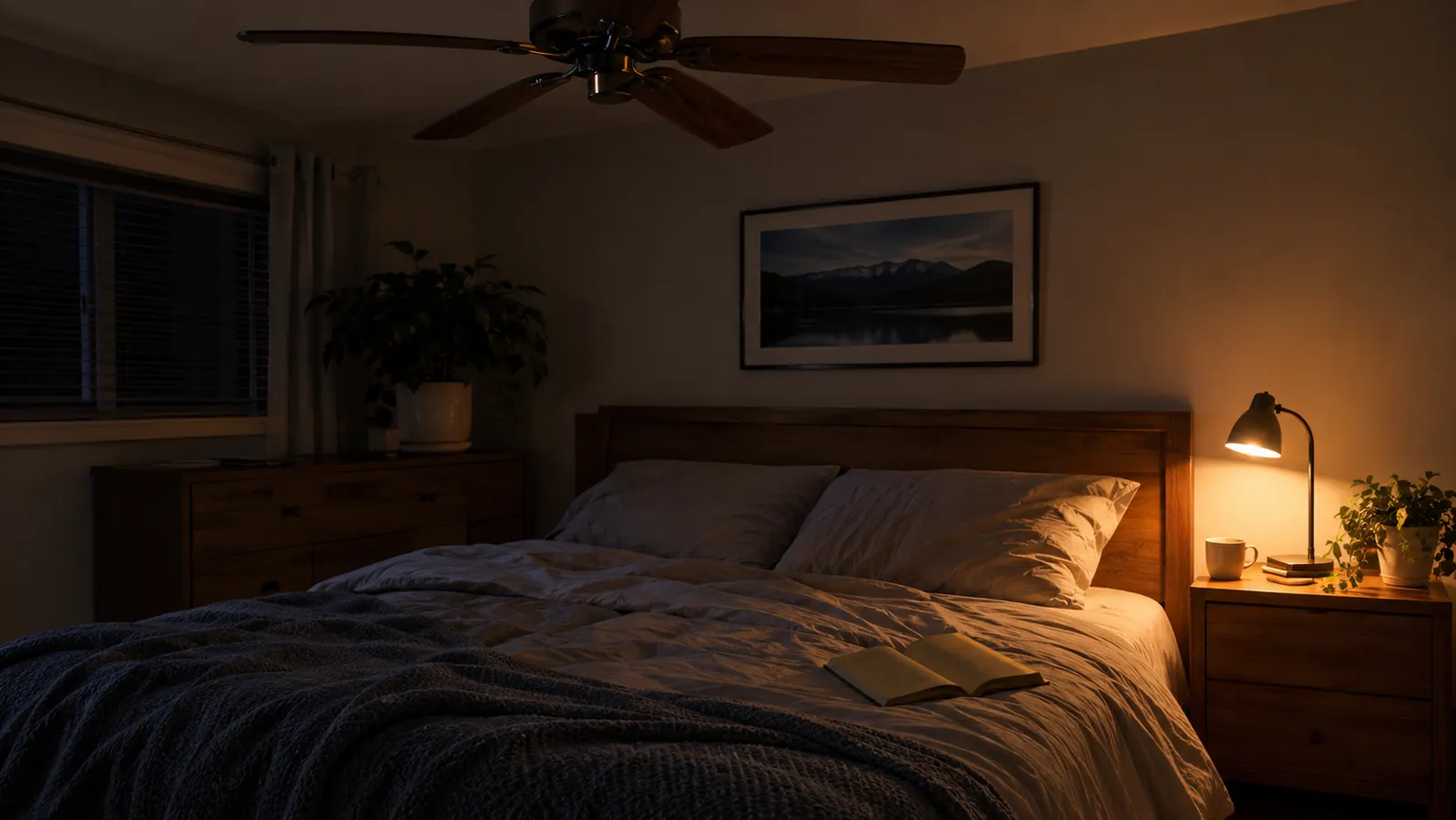
Paul reads for about twenty minutes after I turn in, with a small lamp on his side, and he is not doing anything wrong. He is reading. But twenty minutes of light on the ceiling is twenty minutes of light on the ceiling, and the mask handles it without either of us negotiating. He also snores lightly, which the mask does nothing about and I would not claim otherwise. That is what the sound machine on my nightstand is for.
I pack it, too. Both of our kids live out of state, and guest rooms are worse than our bedroom for light. It goes in the outside pocket of my bag without taking up room, and I have yet to arrive somewhere and wish I had left it home.
One practical thing: the MZOO is hand wash only. I wash it in the sink on Sunday with a drop of dish soap, rinse it, and lay it on a towel over the dryer. Fourteen months of that and the foam has not gone flat. The strap has not stretched. The only wear I can find is a slight softening at the edge where my cheek rests, which I would expect from anything you press into a pillow every night.
What it does not do: it does not stop snoring, it does not talk me back to sleep at 3 AM, and it does not cool the room down. My early waking has gotten somewhat better over the past year, but I changed several things in that time and I cannot tell you which one deserves the credit.
What I'd Tell You If We Were Sitting at My Kitchen Table
I would tell you that the light is worth taking seriously, and that the fix is duller than the internet makes it look. I would tell you to change one thing at a time so you can actually tell what worked, instead of buying four things in a weekend and guessing for a month. And I would tell you that a mask has to fit your face. If you have a wide nose or you sleep on your side, look for the contoured kind with deep eye cups and a padded bridge, because that is the shape of the problem.
Our bedroom is not complicated. One east window, a ceiling fan, the air at 72, a husband who reads. If yours is anything like it, you probably do not need a system. You need to take away the things that are waking you, and light is the easiest one to take away and the one your body answers most reliably. That was the order I did it in. It is the order I would hand to you.
Start with the window. Then start with the mask.
Fourteen months of nightly use, one hand wash a week, and the foam still holds its shape. If early light is what ends your night, this is the simplest fix on my list and the one I would try first.
Amazon Check Today's Price on Amazon →