
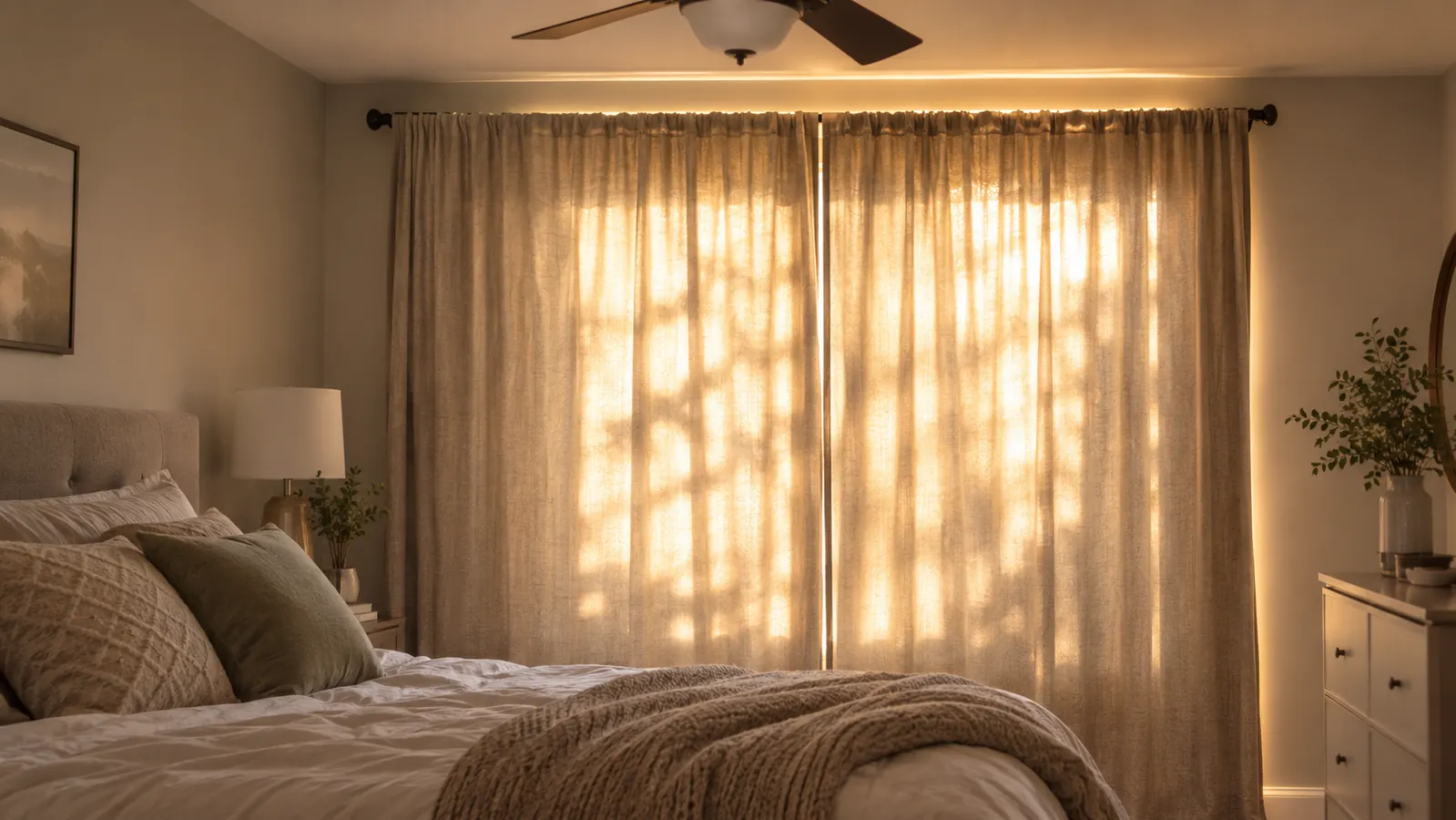
The sun comes over the east side of our house at about 6:45 in the morning, and for a long stretch of years it came over the east side of my face. I retired after 24 years in an elementary school health office, and the first thing I noticed about retirement was that my sleep got lighter. I would wake around 3, drift for a while, and then get hit with that first hard stripe of Florida daylight through the gap in the blinds. Paul, my husband, sleeps on the right side and can sleep through nearly anything. I could not.
I tried the obvious thing first, a contoured sleep mask, about 14 months ago, and it taught me how much of my problem was simply light. But a mask is a personal fix for a room problem. It does not stop the bedroom from heating up like a parked car by 8 AM, and it does nothing for the person next to you. So about 12 months ago Paul and I put up the NICETOWN Blackout Curtains on the one east window in our bedroom: two panels, 42 inches wide by 63 inches long, grommet top. It took the two of us one afternoon and one drill.
The Quick Verdict
The most useful thing I have done to a bedroom in years, and it is not total darkness. They cut the morning sun and the heat off one window, and they left three thin lines of light that I stopped noticing by the second week.
Amazon Check Today's Price →The window that woke me at 6:45 is now the darkest wall in the house
Two panels, 42 inches wide by 63 inches long, six grommets across the top of each. This is the exact size we hung over our east window twelve months ago and have not taken down since.
Amazon Check Today's Price on Amazon →How I've Used It
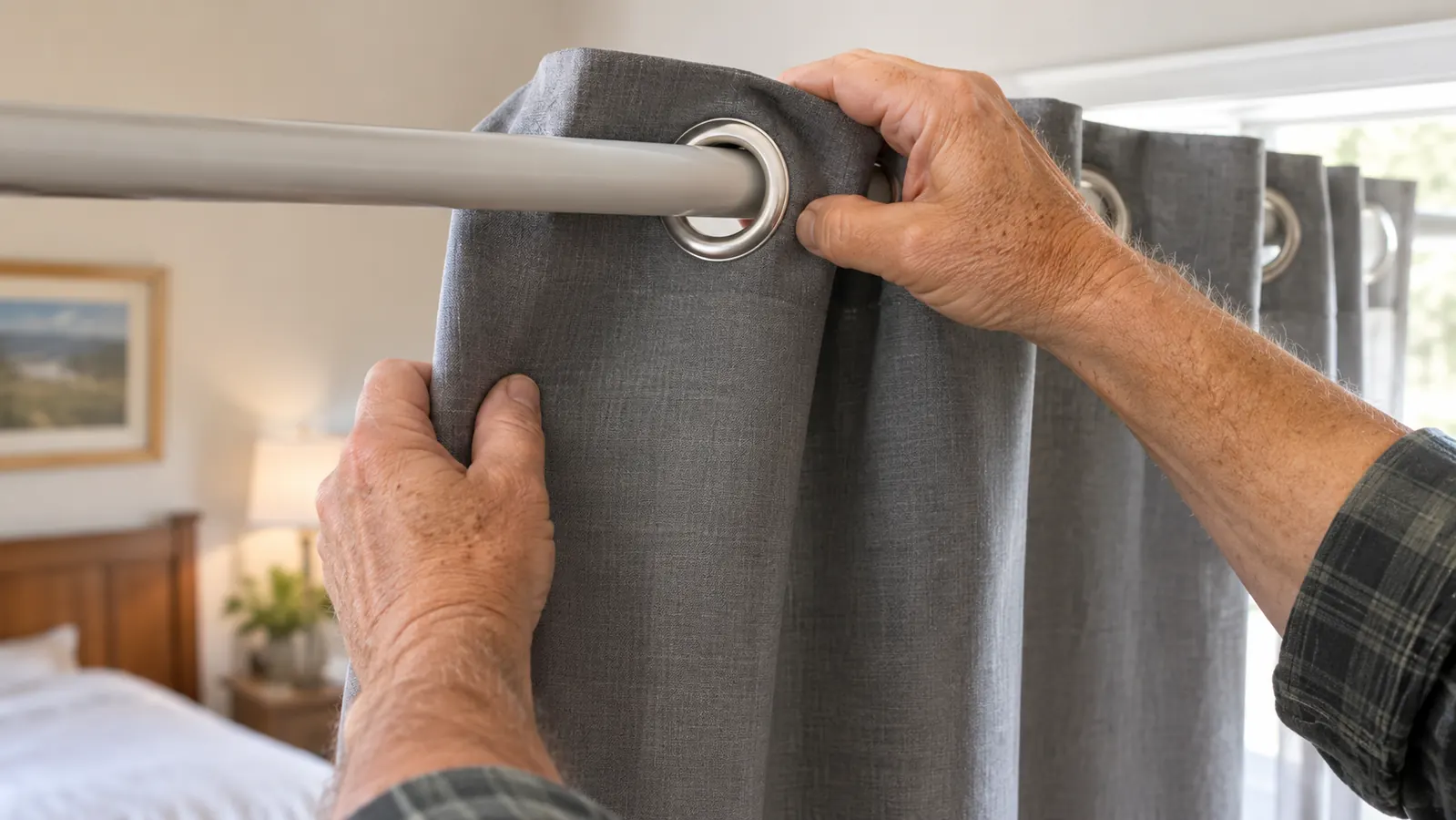
We hung them on the plain rod that was already over the window, and that is the first thing worth knowing. Each panel has six grommets across the top, with openings that measure 1.6 inches, which is the standard size for a curtain rod. They slide on without adapters, without the little hooks and rings a pleated curtain needs, and without the swearing that comes with those hooks. I have hung that other kind before. I do not want to do it again at 54.
The pair is 42 inches wide by 63 inches long. Our window is a standard bedroom window, so two panels close with a real overlap in the middle and still leave a few inches of fabric stacked at each side when they are open. The one thing I would tell anybody to do before they pick up a drill is to hang the rod wider than the window frame on both ends and higher than you think. We did that, and it is the reason the light leak down the sides is a thin line instead of a bright stripe.
The pair weighs 2.1 pounds and the fabric is a polyester triple weave, unlined, about 0.2 inches thick. That reads like nothing on a product page. In the hand it feels like a good winter coat, not a bed sheet. They hang straight, they do not billow when the ceiling fan is on high, and they have not pulled the rod out of the drywall, which was my real worry the whole time Paul was up the ladder.
Before I bought anything, I tried the free version. I draped a spare bath towel over the rod for two nights. It blocked the direct line of sun and nothing else. Light came up around the top of it, it slid off the rod by morning both times, and it made the window look like the back room of a laundromat. Paul's only comment was that he was not going to be the one to explain it if somebody rang the doorbell. That experiment is why I stopped looking for a workaround and started looking for fabric with some weight to it, and it is also why I was not surprised when the curtains fixed most of the problem and not all of it.
What the Triple Weave Does With Light and Heat
The listing says the fabric impedes 85 to 99 percent of light and UV, with a note that darker colors work better than light ones. That range is honest, and it is the most useful sentence on the page. It means the same curtain can perform very differently depending on which version you order. On our east window we land near the top of that range, and the difference is not subtle. The room at 6:45 went from bright gray to something close to dusk. I can see my hand in front of my face. I cannot read without a lamp.
The other half of the job is heat. The triple weave is described as insulating against summer heat and winter chill, and I am not going to pretend a curtain replaced our air conditioning in a Tampa August. It did not. What it did was take the edge off. The window sill on that side used to be warm to the touch by mid morning, and the strip of floor beneath the window used to feel like a heating vent. Both of those stopped. Between the NICETOWN panels on that window and the cooling sheets we bought later for Paul, who runs hot, the bedroom quit being the warmest room in the house.
I have one concrete observation to offer, and it is not a laboratory number. Before we hung the curtains, I put my palm flat on the window sill at 8:30 on a morning in late August. It was warm the way a car roof is warm by mid morning. Not hot enough to hurt, warm enough that you notice. A week after the NICETOWN panels went up I did the same thing out of pure habit and the sill was cool. The floor strip underneath it was cool too. That strip used to be the first place my bare feet landed when I got up at 3, and I had spent two summers assuming the heat was coming down from the attic. It was coming through the glass.
That matters more than it sounds for someone my age. Heat and light are the two things that reliably pull me out of sleep at 3 AM, and I had been treating both of them as weather. They are not weather. They are a window, and a window can be covered.
The Grommets, the Rod, and the Light That Still Gets In
Here is what I will not tell you: that these curtains make a room black. They do not, and no grommet top will. A grommet panel hangs under the rod, so the rod sits above the fabric and light comes around it. Ours leaks a thin line along the top, a sliver down each side where the panel meets the wall, and a bright strip at the bottom, because 63 inches is a short panel. That length is made to reach a sill or just below it. It is not made to reach the floor, and on our window it does not.
I measured twice before Paul got the drill out, because I did not want two holes in the drywall and a rod in the wrong place. Our window frame is 36 inches across at the outside edge. The rod we used is an inexpensive one that runs about 54 inches, and we set it four inches above the top of the frame and let it overhang four or five inches past the frame on each side. That overhang is doing more work than the fabric is. A panel that stops exactly at the frame edge leaves a bright vertical seam down each side, and no amount of tugging will close it. Ours still leaks a little, but a little. On the morning after we hung them I stood in the middle of the room at 7 and could see exactly three things: a thin bright line along the rod, a faint sliver at each side, and the strip at the bottom.
We cut the top leak by moving the rod up and out, and if you take one thing from this review, take that. But I want to be straight with you. If your goal is a room where you cannot tell whether it is day or night, curtains alone will not get you there. That is what the sleep mask is for. The curtain handles the room. The mask handles the last two percent, and it is also the only thing that helps when Paul turns on his lamp to read for twenty minutes after I have turned in.
Twelve Months and One Machine Wash
The NICETOWN panels have been machine washed once in twelve months, cold, on a gentle cycle, and hung back up damp. They came out with creasing along the folds that mostly fell out over the next two days. The listing calls them thread trimmed and wrinkle free, and out of the package that was accurate. After a wash I would call it close. The seams have held, and the grommets have not pulled loose, which is the failure I expected, since the grommets take all the stress of sliding open and shut twice a day for a year.
The fabric has faded a little along the leading edge of the panel that faces the glass. That is normal for polyester in Florida sun and you cannot see it unless you are looking for it. The pair still hangs straight. I have not had to iron them and I would not. The listing carries a 4.6 star average across more than 134,000 reviews, and I read the three star ones first, because they tend to say the same three things I say below.
The wash itself made me nervous, because a curtain with six metal grommets is a curtain that can come out of a machine in pieces. I ran both panels together on cold with a couple of bath towels to cushion them, and I pulled them out before the spin finished. The grommets came through with their finish intact and no rust marks on the fabric around them, which was my main worry. What I did get was a set of soft creases running the full length of each panel where they had folded in the drum. They hung out over two days. By the third morning the creases were gone everywhere except the bottom third of one panel, and that one has since relaxed too. I put them back on the rod damp and let the weight of the fabric do the rest.
The Part Nobody Warns You About
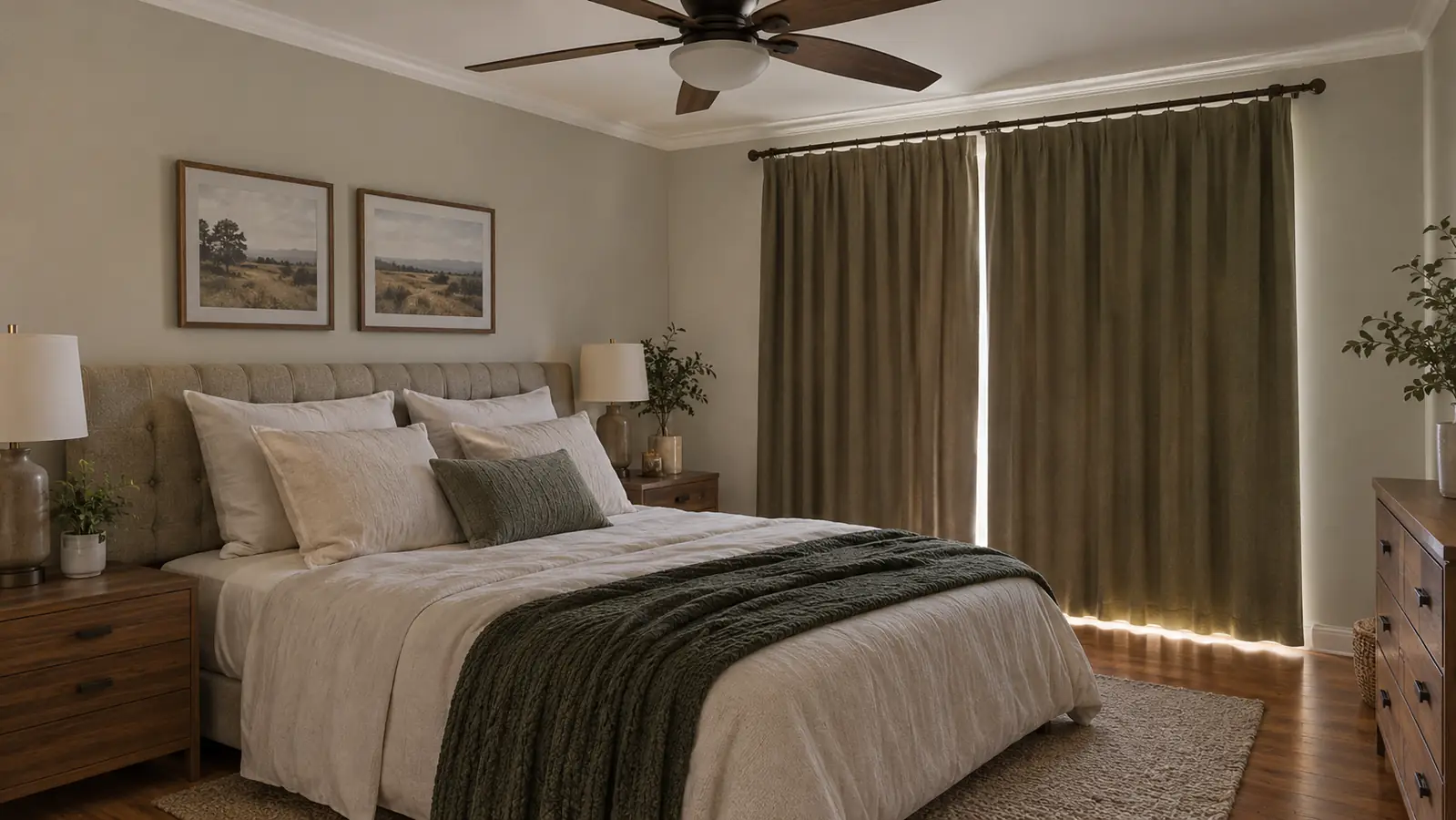
There is an unintended consequence that no listing mentions. When you take the 6:45 sun out of a bedroom, you also take out your backup alarm. About six months ago I started sleeping through my 6:30 walk, which had never happened in my life. The room was dark, the fan was on, the white noise machine was running, and my body had no idea what time it was. That is exactly what I had asked for, and it caught me flat anyway. I added a sunrise alarm to the nightstand, set to start brightening at 6:00 with a gentle sound at 6:20, and that fixed it.
The point is not the clock. The point is that if light was doing part of the work of getting you out of bed, and you remove the light, you have to give that job to something else. Curtains are a tool for the middle of the night and the early morning. They are not a tool for the morning you actually have to be somewhere.
What I Liked
- Blocks the 6:45 east window sun well enough that I stopped waking with it
- Takes the heat off the glass, so the sill and the floor strip under the window are no longer warm by mid morning
- Six grommets per panel with 1.6 inch openings slide onto a standard rod with no hooks
- 2.1 pounds for the pair, hangs straight, and has not pulled on the rod
- Survived a machine wash with seams and grommets intact after twelve months
Where It Falls Short
- Not total darkness. Light gets in under the rod, down both sides, and along the bottom
- 63 inches is short, so the panels do not reach the floor
- Unlined, and the light blocking depends on how dark the fabric is
- They will make you oversleep if light was part of what got you up
The first morning after we hung them I slept until 7:20. I had not slept until 7:20 in years, and my first thought was that I had missed my walk.
Who This Is For
This is for someone with one or two problem windows, most likely a bedroom that faces east, who wants the room darker and cooler and does not need it to be a cave. It is for a renter or a homeowner with a standard rod, since the grommets fit anything with a normal diameter. It is for someone willing to spend twenty minutes measuring and to move the rod up and out before hanging. If you wake with the sun and you are tired of it, this is the simplest structural change I know of, and the one I would make again first.
The other reason I would recommend them is how easy they are to undo. A curtain is not a commitment the way a new mattress is. If the panels had not worked, I would have taken them down, put the old blinds back up, and been out one afternoon and two small holes in the drywall. That is a much easier thing to try than most of what gets sold for sleep. I have spent more on things that did less. If your bedroom faces the sunrise and you have never properly covered the glass, this is where I would start, before the masks and before the machines.
Who Should Skip It
Skip these if you need genuine blackout. A grommet panel over a standard rod will not give it to you, and a lined, floor length drape or a proper blackout shade will do that job better. Skip them if your window is tall, because 63 inches will leave a large bright gap at the bottom. Skip them if you want a curtain that puddles on the floor. And skip them if light is currently the only thing getting you up in the morning, unless you are prepared to add an alarm to the plan. That is the trade, and it is a real one.
The sun comes up at 6:45 whether the curtains are up or not
Two panels, 42 by 63 inches, six grommets each, on a rod you probably already own. Twelve months in, ours are still hanging and still doing the job they were bought for.
Amazon Check Today's Price on Amazon →