
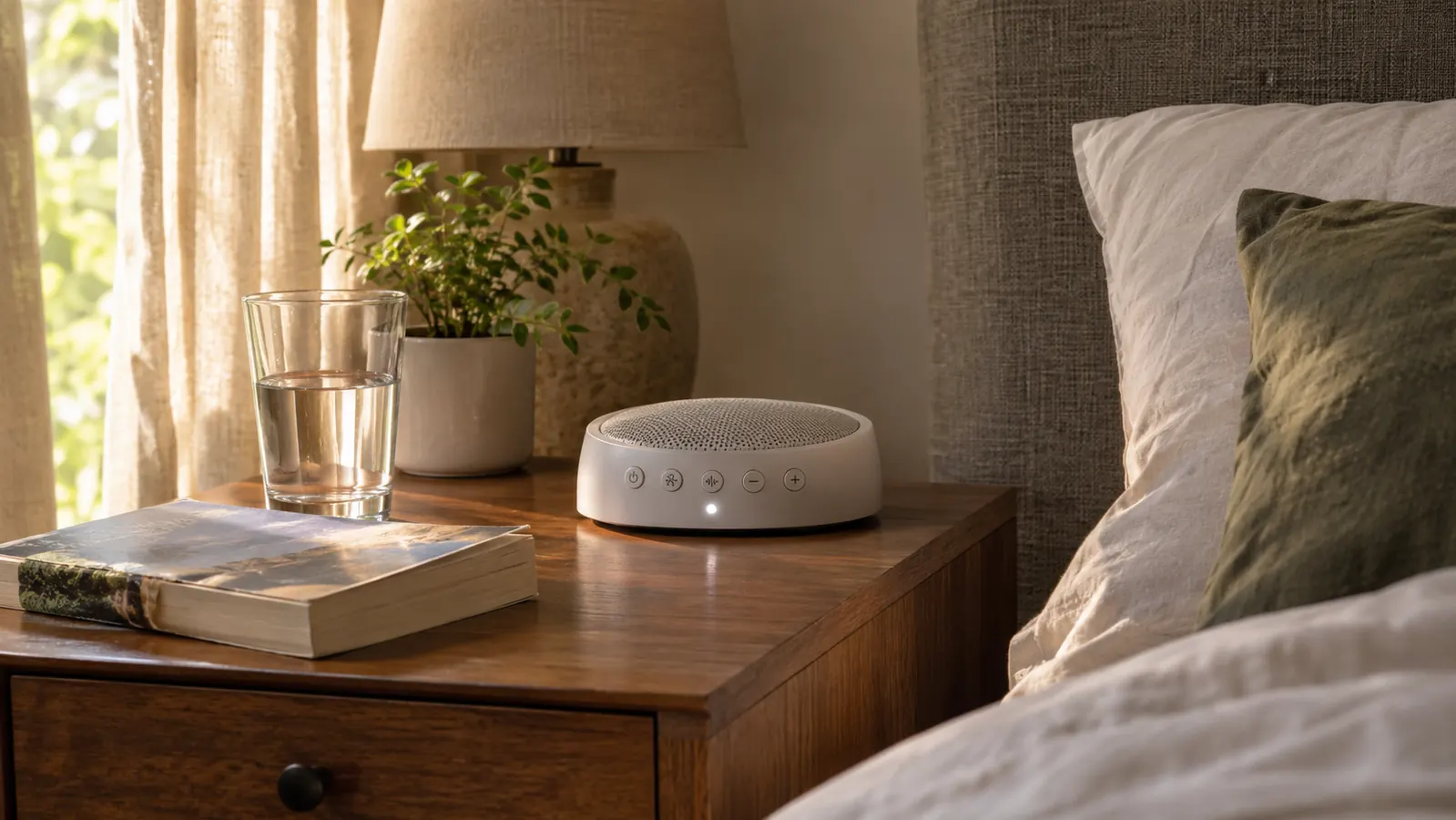
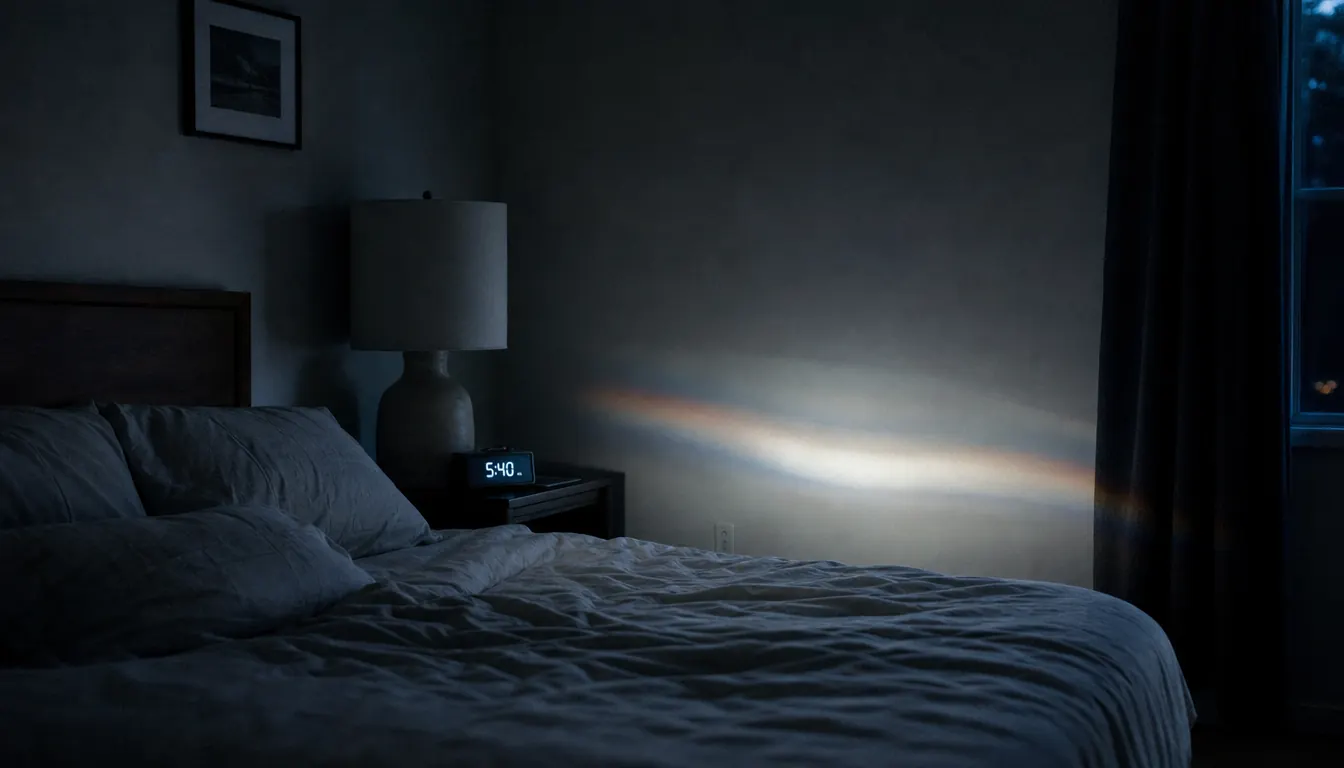
The Homedics SoundSleep has been on my nightstand for about ten months, plugged in, running white noise from the moment I get into bed until the moment I get up. I did not buy it because I thought a small plastic box would fix my sleep. I bought it because my husband Paul snores lightly, and because the delivery truck that services the neighbor's garage starts up around 5:40 most mornings, and I was tired of being woken by things I could not control.
So this is the honest version of the review, not the version where a machine changed my life. I am 54, a retired school nurse, and I have spent the last two years treating sleep like the rest of my prevention routine: one change at a time, no drama, keep what works. The Homedics SoundSleep is one of the five things in my bedroom that stayed. Here is what it does, what it does not do, and the parts of the listing that took me a few weeks to understand.
The Quick Verdict
It masks the two sounds that were waking me and it has not failed once in ten months. It does not treat anything, it does not schedule itself, and one of its six sounds is the only one most people will ever use.
Amazon Check Today's Price →It covers the noise. It does not cover the problem.
Ten months of nightly use, one AC adapter, and a set of batteries for travel. If the thing waking you up is a light snorer or a truck at dawn, this handles the masking part of the fix.
Amazon Check Today's Price on Amazon →What the Homedics SoundSleep Actually Is
Strip the packaging away and it is a small plastic box, 6.5 by 6 by 2 inches and 8 ounces, that plays six digitally recorded sounds through a speaker. It runs on the included AC adapter or on 4 AA batteries, which is the reason it ends up in a suitcase more often than most bedroom gadgets. There is a volume control and an auto-off timer, and it carries a one year manufacturer warranty. The listing calls it the SoundSleep. The box that arrived at my door says SoundSpa. Same machine.
That is the whole product. No app, no screen, nothing to pair, nothing that will want a software update in two years. I make a point of that because so much of what is sold as sleep technology now needs a phone, an account, and a tolerance for menus. This does not. You plug it in, you turn it on, you hear noise.
How I've Used It for Ten Months
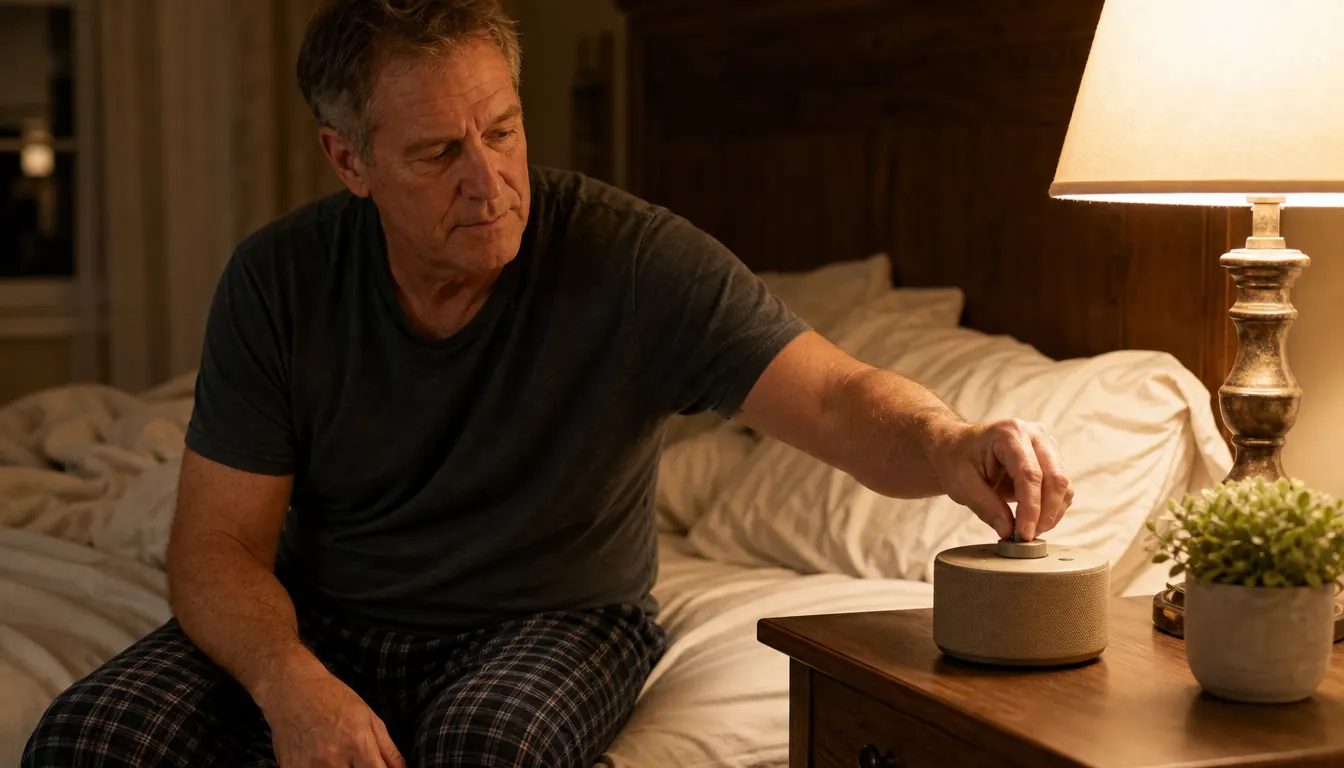
I sleep on the left side of a king bed in a single story house in Tampa, with a ceiling fan overhead and central air set to 72 at night. Paul is on the right. He reads with a small lamp for about twenty minutes after I turn in, and he snores lightly once he is asleep. The machine sits on my nightstand, plugged in, no timer, running the white noise setting from about 10:15 until my alarm at 6:00.
I chose white noise on the first night and never really left it. On the bad nights, the ones where the neighbor's truck and Paul's snoring seem to be competing, I switch to the ocean setting instead. That is the sum of my expertise with this machine after ten months: one setting, one backup, and a volume low enough that I can still hear the fan.
What I noticed first was not that I fell asleep faster. I did not. What changed was the number of times I woke up. Before the machine, a truck at 5:40 meant I was awake for the day at 5:40. With white noise running, the truck is still there, but it does not reach me. The room has a steady floor of sound, and my brain stops treating every outside noise as worth investigating. That reads like a small thing. It is not a small thing at 5:40 in the morning.
The Parts of the Listing Nobody Explains
The auto-off timer is the feature people ask about most and the one I use least. The machine will play continuously or shut itself off after a set period, and both of those live on the machine rather than in a schedule. If you want it running at ten every night, you will be the one starting it at ten every night. I leave mine on continuous, partly because I want it going if I wake at 3 AM, and partly because the machine switching off is itself a noise.
The volume control matters more than the sound selection, which surprised me. Most of the six sounds are useful at a low setting and irritating at a high one. Mine runs low enough that Paul sleeps through it from his side of the bed. If you turn it up to bury something louder, you are now sleeping beside a louder thing, and you have traded one disturbance for another.
The batteries deserve a note before you buy. It takes 4 AA batteries and it will run on them, which is the entire reason it travels well and fits in a bag. I have not tested battery life because mine has lived on the nightstand on the AC adapter since the first week. Nightly use at home: plug it in. Hotel rooms and visits to family: the batteries are the point.
And one thing that appears nowhere in the listing: this machine masks sound, it does not remove it. Paul still snores. The truck still comes. What changes is how much of either reaches me. I say that plainly because I have read enough reviews written as though the snoring stopped. It did not. The snorer is asleep and fine. The person beside the snorer is the one who needed something.
Six Sounds, and the One You Will Actually Use
The machine carries six digitally recorded sounds. I tried all six, mostly out of a nurse's habit of checking everything once. White noise is the one that stayed. It is the flattest and least interesting of the group, which is exactly what I want at eleven at night. The ocean setting is my backup and it does what it says, though if you listen closely you can hear where the recording loops back on itself. That is true of every recorded sound on every machine of this kind, and after a week your brain stops noticing.
The other four are variations on the same idea and none of them survived the first month in this house. That is not really a criticism. Six sounds cost nothing to add and one of them will be the one you like. I just do not want you buying this expecting six distinct experiences. You get one good one, one decent one, and four you will try once.
How It Fits With the Rest of the Room
A sound machine is not a bedroom plan on its own, and that is where I think most people go wrong with them. In my room the work is divided. The ceiling fan moves air and adds its own low hum, which the machine blends into rather than fights. The curtains over the east window deal with the 6:45 sun. The machine deals with the truck at 5:40 and the light snoring from the right side of the bed. Three problems, three fixes, and none of them doing another's job.
That is also why I would not tell you to buy this first. If your room is bright at dawn, curtains will do more for you than any speaker. If it is hot, the fan and the air conditioning are the answer. The machine earns its place only when the thing waking you is a sound, and when that is the case it earns it well.
One thing about volume that took me a month to learn. Louder is not better. The aim is not to cover a sound completely, it is to make the room steady enough that a new sound does not register as new. Mine runs at a level where I can still hear the fan, the air conditioning click on, and Paul turn over. Turned up past that, I sleep worse, not better.
The First Two Weeks, Which Nobody Warns You About
The first three nights were worse, not better. Any new sound in a quiet room is a new thing to listen to, and I lay there cataloguing it the way you catalogue a new refrigerator. That passed. By the end of the first week I had stopped hearing the machine as a machine and started hearing the room as steady. By two weeks I noticed it only when I switched it off to change the setting.
If you try one and give up on night two, I would ask you to give it a week and keep the volume lower than feels natural. My guess is that most of the people who say sound machines do not work turned theirs up too high and spent the night listening to a waterfall.
What I Liked
- Masks a light snorer and the 5:40 truck well enough that I stopped waking for them
- Runs on the included AC adapter or on 4 AA batteries, so it travels
- Small and light at 6.5 by 6 by 2 inches and 8 ounces
- Simple enough to run half asleep, with no app, account or pairing
- Ten months of nightly use with nothing failing, backed by a one year manufacturer warranty
Where It Falls Short
- The auto-off timer is a shutoff, not a schedule you can set and forget
- It masks noise rather than addressing what is making the noise
- You can hear the loop on the recorded sounds if you listen for it
- Four of the six sounds went unused after the first month
- Turned up high, it becomes its own disturbance
The truck still comes at 5:40. I just do not hear it anymore. That is the whole claim I am making for this machine.
What It Does Not Do
It does not treat insomnia, and I would be wary of anyone who says a sound machine does. I spent 24 years in an elementary school health office, and I watched a lot of people look for a device to do the work of a habit. What this machine does is remove one obstacle. It does not make you sleepy, it does not reset your schedule, and it will not help if what keeps you awake is your own head or a room that is too warm.
It also does not cool anything. Our bedroom is warm eight months of the year and the fan and the air conditioning carry that load. If heat is your problem, this machine will not touch it. Same with light. The sound machine handles sound, and the bedroom only works now because I stopped expecting one device to handle all of it.
Why Not Just Use the Phone
People ask why not just use a phone. I tried it for a while. The phone is already in the room and it does play noise. It also brings the screen, the notifications, and a battery that is flat by morning, and it sits within reach on the nightstand, which is the last thing I want at eleven at night. I wanted one object in the room that does one job and cannot do any other.
The other argument for a separate machine is simpler. It is always where I left it and it always works. No update, no pairing, no moment where the sound stops because something else wanted the speaker. Ten months in, that reliability is most of what I would be recommending, and it is not a feature you can print on a box.
Durability, Warranty, and the Boring Parts
Ten months of nightly use and nothing has failed. No rattle, no dead speaker, no control that stopped responding. It is plastic and it feels like plastic, which I do not hold against a device that never leaves the nightstand. It comes with a one year manufacturer warranty. I have not needed it.
The honest limitation is that this is not built to be repaired. If the speaker goes in year three, you replace the machine rather than fix it. I would rather say that out loud than have you discover it. What I can tell you is that mine has run somewhere around 300 nights and it sounds the way it did in week one.
Placement matters more than I expected, and it is not in the listing because it is not a feature, just physics. Mine sits on the nightstand at roughly the height of my ear when I am lying down, which puts the sound between me and the bedroom door. A machine across the room does noticeably less. Try the near side of the bed before you decide it does not work.
What I'd Tell a Friend Who Asked
I would tell her to name the problem first. Not my sleep is bad, but the truck wakes me at 5:40. A sound machine is a narrow tool and it works on narrow problems. I would tell her to buy it somewhere she can return it, run it low for two weeks, and count how many times she wakes rather than how fast she falls asleep. Falling asleep faster is not the thing this does well.
And I would tell her the part I would want told to me. This is not a purchase that improves your health. It removes an annoyance. The walking, the coffee cutoff at noon, the same wake time every morning, those do the actual work. The machine just keeps the neighborhood from undoing it.
Who This Is For
It suits someone with a specific noise problem they can point at. A partner who snores lightly. A street that wakes before you do. A hotel hallway. If you can name the sound that gets you up, a machine like this is a reasonable thing to try before anything more complicated. I would also suggest it to anyone sharing a bed with a person who needs a lamp after they are ready to sleep, since steady background noise covers small sounds surprisingly well.
It also suits the person who has already fixed the obvious things and is left with the one they cannot fix. I could put up curtains. I could not ask the neighbor to move his truck or ask Paul to stop snoring. Twenty minutes of reading with the lamp on is not a problem I wanted to argue about either. The machine was the only piece of this I could actually change.
Who Should Skip It
Skip it if you need silence to sleep. Some people do, and a machine will feel like one more object in the room. Skip it if what wakes you at 3 AM is heat, light, caffeine, or a schedule that has drifted, because none of those are sound problems. And skip it if you want something that starts itself at bedtime, because this does not. It is a switch and a speaker, and it is built like one.
Start with the noise you can actually name
If you can point at the sound that gets you up, this is the simplest thing to try first. Plug it in, keep the volume lower than feels right, and give it a full week before you judge it.
Amazon Check Today's Price on Amazon →