
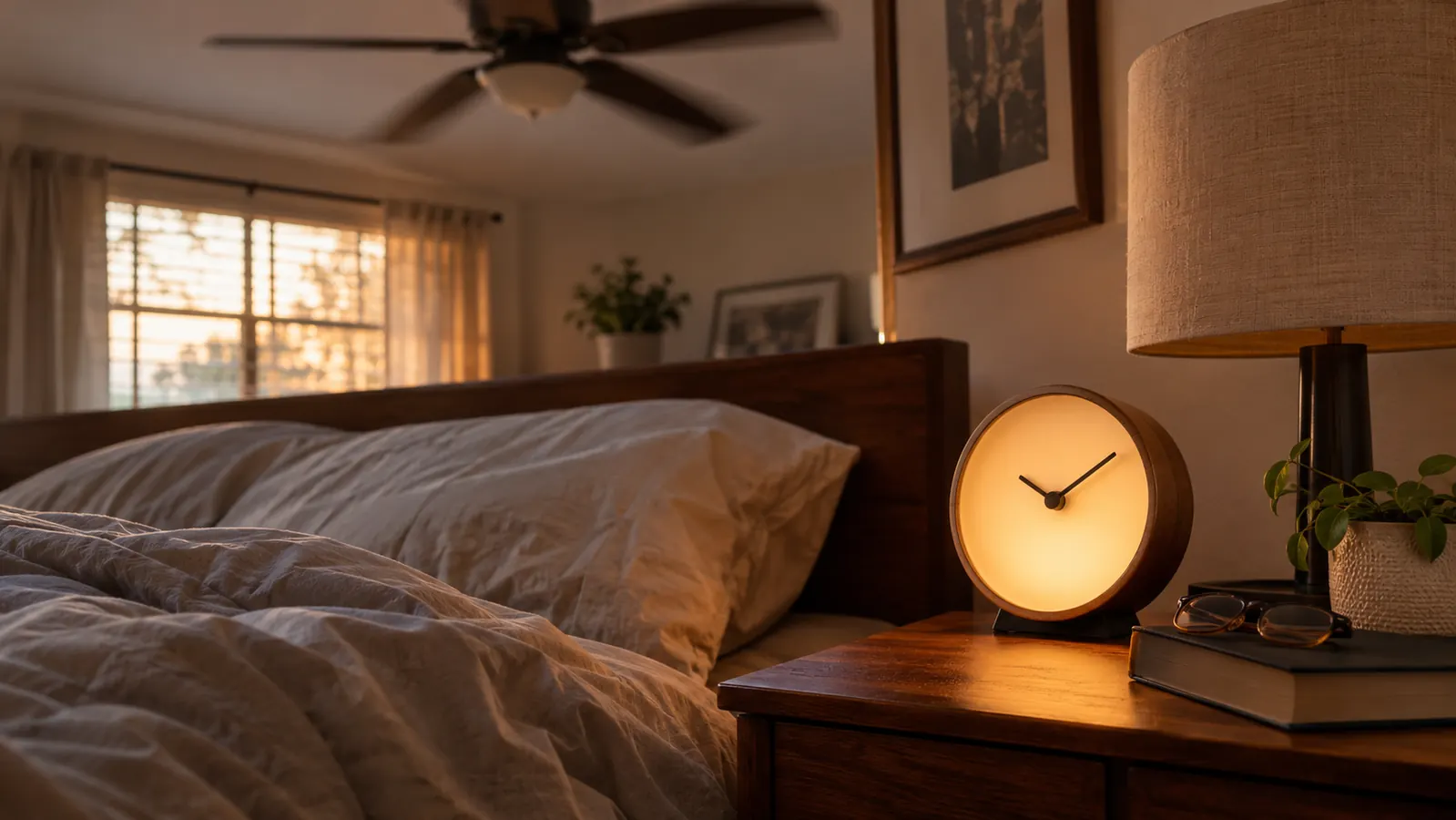
The clock on my nightstand starts to glow at 6:00. Not all at once. A low amber first, then a little more, spreading across the whole face until the bedroom has a small false dawn sitting on the table beside me. At 6:20 there is a chime, soft enough that Paul sleeps through it on his side of the bed, and I am awake without the jolt I used to get from a phone alarm an inch from my face.
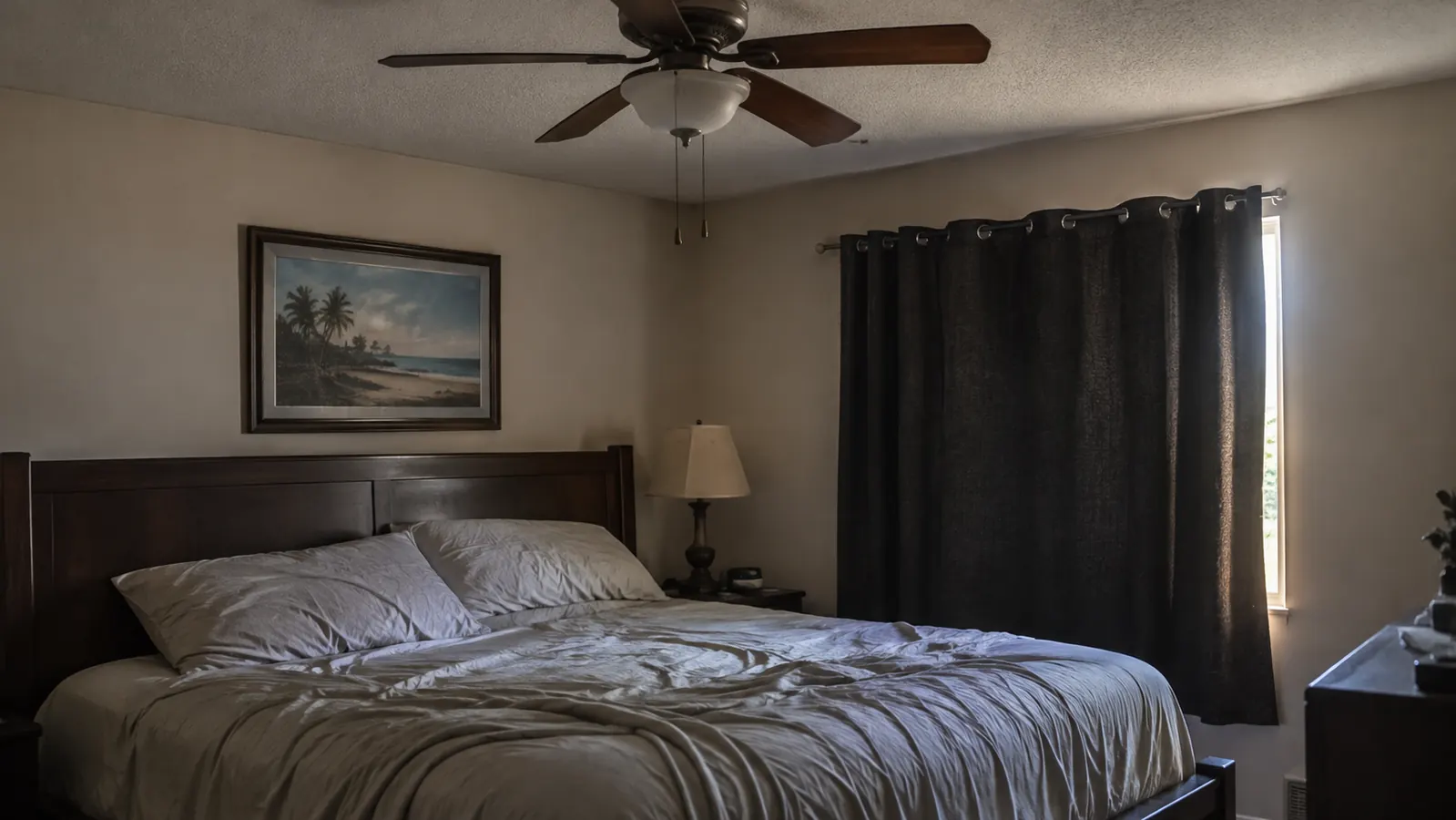
I am 54, a retired school nurse, and I have spent the last two years treating sleep the way I treat walking and vegetables: as a boring daily habit that prevents problems later. I bought the JALL Sunrise Alarm Clock about six months ago for one specific reason. The blackout curtains I put up to keep the Florida sun out of the bedroom had done their job too well, and I was sleeping through the 6:30 walk I actually enjoy. I needed a way to wake up that did not involve a screen. This JALL clock has been on my nightstand every night since.
The Quick Verdict
A genuinely useful light-based wake-up for people whose bedroom has gone too dark, with honest limits: it needs an outlet, the sound still does the actual waking, and it is not a treatment for anything.
Amazon Check Today's Price →The clock that wakes you with light instead of a jolt
Six months of setting it once and letting it do the same quiet thing every morning. Full-screen sunrise, 25 sounds, dual alarms for weekdays and weekends.
Amazon Check Today's Price on Amazon →How I've Used It
The JALL sits on my nightstand, plugged into a USB adapter, just to the right of the white noise machine I have used for about ten months. I set the light to begin brightening at 6:00 and the sound to come on at 6:20, so there are twenty minutes of light before anything makes noise. That twenty-minute gap is the whole point of the thing for me, and it is the setting I would tell anyone to start with.
Before this, I tried two things that did not work. The first was my phone, face up on the nightstand, alarm set for 6:15. The problem was never the alarm. It was that I would reach over to silence it and be reading email in the dark before my feet touched the floor, which is a worse start to a day than the noise itself. The second was a small bedside lamp on a plug-in timer, set to click on at 6:10. That one came close, and it failed for a boring reason: it went from off to on in a single jump, so it was really just a brighter alarm with extra steps.
I have run it every night for roughly six months, which is somewhere around 180 mornings. My husband Paul gets up later than I do most days. He reads in bed with a small lamp on his side for about twenty minutes after I turn in, which is a separate problem the sleep mask handles. His light snoring is the sound machine's job. I am laying that out because I want to be clear about what I am crediting this clock with and what I am not. The JALL's one job is the waking up.
The setup took me about ten minutes on the first evening, mostly because I was pressing through menus to find the light mode I wanted and the alarm schedule I wanted. Once it was set, I have not had to touch it except when the time changed. That is the correct amount of interaction I want with a clock. Nothing on it needs my phone, and nothing on it needs me to think at 6:20 in the morning.
What the Sunrise Setting Actually Does
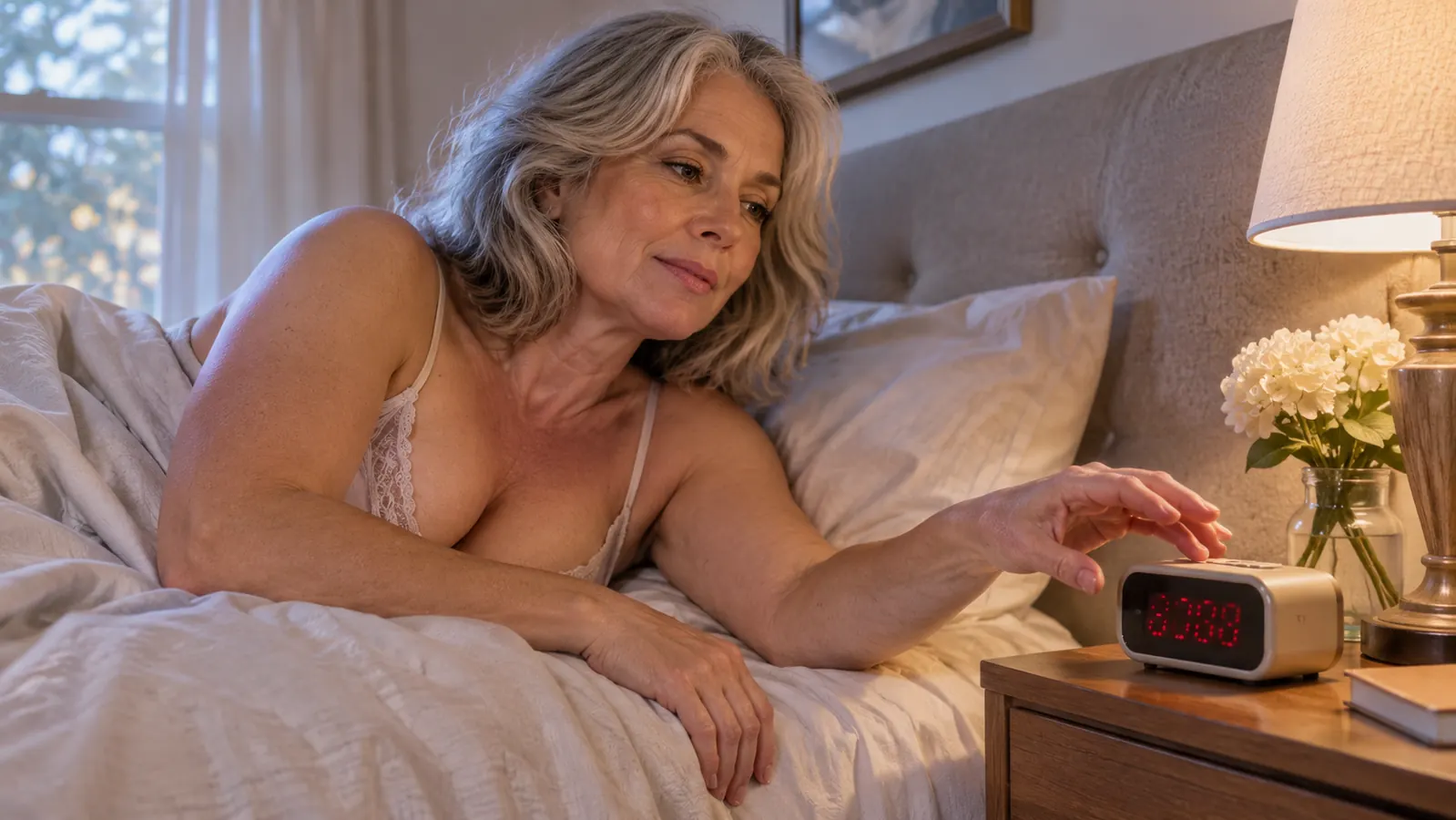
The face of the clock is the light. It starts dark and fills gradually, so the glow comes from the whole panel rather than from a small bulb or a lamp across the room. My side of the bed gets that soft wash of warm light while the rest of the room stays dim. Paul, on his side, says he notices it maybe half the mornings, usually only if he is already stirring.
I measured it once, out of curiosity, the way I used to check a thermometer in the school health office. The listing puts the face at 7.2 inches wide and the whole unit at 1.2 pounds, and it sits roughly two feet from my pillow. At 6:00 the light is barely enough to see the outline of the ceiling fan. By 6:10 I can read the numbers on the sound machine across the gap. By 6:20 the face is fully lit and there is enough light in the room that I can find my shoes without turning anything else on. That last part is the practical benefit. The room is usable before the sound arrives, and that is what keeps the waking from feeling like an ambush.
Here is the honest part. On a dark Florida winter morning, or on any morning when I am sleeping hard, the light by itself does not pull me out. The 6:20 sound does that. What the light changes is the quality of the waking. I am not coming up out of nothing into a noise. I am coming up out of a room that has been getting brighter for twenty minutes, and my body has had some warning. Six months in, I can count on one hand the mornings I have woken up irritated at the clock, and before this I was irritated most mornings.
The clock has 17 light modes. I have used four, and I settled on one warm low setting that I have not changed since the second week. The others are there if you want a reading light or something brighter for a bedside table, and I do cycle through them sometimes by accident when I am setting an alarm, which is mildly annoying. It is a small complaint about a device that otherwise stays out of my way.
The 25 Sounds, the FM Radio, and the Sleep Timer
The JALL has 25 built-in nature sounds and white noises, and one of them is what wakes me at 6:20. I picked a bird-and-forest sound and set the volume low. It comes on at the volume I chose, not gradually, so the volume setting matters. Mine is quiet enough that I hear it from two feet away and Paul does not hear it at all from the other side of the king bed. If you need a loud alarm to get up, this will do that too, but you will lose the gentle part of the whole idea.
The sound machine stays on my nightstand anyway, and I want to explain why, because it says something about what this clock is. The JALL's sounds are perfectly good. But I have ten months of habit built around the sound machine covering Paul's snoring and the neighbor's truck that starts early, and I did not want to rebuild that. The JALL's sounds are for waking. That is a clean division of labor and it is how I would set it up again.
There is a sleep timer that runs from 10 to 480 minutes, which is a wide range, and it works the way you would expect. It runs the sound, not the light. I have used it a handful of times when I wanted rain noise to fall asleep to, and I never set it for less than half an hour because a timer that shuts off while I am still awake is worse than no timer at all.
One night in October I set it to 60 minutes and let the rain sound run while I read, with Paul's lamp still on and the ceiling fan going. Somewhere in there the sound stopped and I never noticed it happen. That is the highest compliment I can pay a bedside device: nothing about it announced itself. I have used the timer maybe a dozen times since, always somewhere between 30 and 60 minutes, and it has behaved exactly the same way every time.
The FM radio I have tried twice. Reception inside my house is mediocre and I got more static than station, so I have not gone back to it. If FM radio is why you are buying this, test it in your own room before you decide, because my experience was not good.
The Alarms, the Snooze, and the Weekend Problem
You get two alarms, and each one can be set for every day, weekdays only, or weekends only. I set one for weekdays and left the other off entirely, which is my own preference rather than a limitation of the clock. If you are the kind of household that wants a later, gentler wake-up on Saturday, the second alarm does that, and it is the reason the dual setup is worth having rather than a marketing line.
The snooze is adjustable from 5 to 20 minutes. Mine is set to 5 and I use it maybe twice a month, usually when I have stayed up too late reading. Because the light has already been up for twenty minutes before the sound, the snooze does not have that awful quality of dropping me back into a dark room and then ambushing me again. The room is already lit. That sounds like a small thing and it is not.
Setting it is done with the controls on the unit, which took me a few minutes the first time and about thirty seconds the second time. The listing also calls for one AA battery, and I put one in. I could not tell you with any confidence what it backs up, because I have never had the power go out at 6 a.m. to test it. It also has to be plugged in to run. Mine is on a USB adapter by the bed, which was easy. If your only outlet is across the room from where you want the clock, plan for that before you order.
The morning that taught me the most was a Sunday in February, after a late night at a neighbor's birthday dinner. I got into bed around midnight, which for me is late, and I expected to sleep straight through the light and wake up irritated. I did sleep through the light. But 6:20 came with the sound at the volume I had set, and I was up and out the door for the walk by 6:35, tired but not resentful. That is the whole difference in one sentence: I can be tired and still not be angry about it.
What I Liked
- Twenty minutes of light before any sound, which changes how the waking feels
- Soft enough at low volume that my husband sleeps through it
- Two alarms with weekday, weekend, and everyday schedules
- 25 sounds plus a sleep timer that goes up to 480 minutes
- No phone involved at any point, which was the entire reason I bought it
Where It Falls Short
- It has to be plugged in, so it needs an outlet or USB adapter near the nightstand
- 17 light modes is more than I need and cycling through them to get back to mine is fiddly
- FM radio reception in my house was poor
- On dark mornings the sound does the waking, not the light
- It is a clock, not a treatment. It will not fix a sleep problem on its own
Twenty minutes of light before the sound, and I have not once woken up angry at the clock in six months.
Where It Falls Short
The cord is the first practical issue. This is a tabletop clock that runs on USB power, so it lives where an outlet lives. My nightstand is a foot from a wall outlet and it was a non-issue. In a hotel room, or in a bedroom where the outlet is behind the dresser, it would be more of a project than it should be for a clock this simple.
The second issue is the light modes. Seventeen of them, and I want one. Pressing through the sequence to get back to my setting after a miscount is the only time in six months I have been annoyed at this device. I would happily trade ten of those modes for a single button that returns to my last used setting. That is a preference, not a defect, but it is the sort of thing that adds up over years of nightly use.
The last thing is the one I most want to be clear about. This is a clock. It brightens and it makes a sound and it has a radio and a sleep timer, and it does those things well. It is not a medical device, it does not treat insomnia, and it did not fix the 3 a.m. waking that started after I retired. What it fixed was narrower and real: the room had gone too dark for my own good, and this gave me back a gentler way to come out of it. My sleep improved because of a stack of small boring changes, and this is one of the five.
Who This Is For
This is for the person who has made their bedroom dark on purpose and then discovered they cannot get up in it. If you put up blackout curtains for the heat or the early sun and now sleep through your own morning, a sunrise clock is the natural next step, and the JALL does the job at a size that sits on a nightstand without taking it over. It is also for anyone who wants the phone out of the bedroom entirely. That was half my reason and it has held up.
Who Should Skip It
Skip it if you need a loud alarm to function, because the gentle version of this product defeats the point. Skip it if your nightstand has no outlet within reach and you are not willing to run an extension cord. Skip it if you want an app, a phone connection, or a device that learns your schedule, because this is not that, and it is better for it. And skip it if you are looking for something that will cure a sleep problem. A retired nurse will tell you plainly that a clock is a clock. Talk to your doctor about the 3 a.m. wakings and let the clock handle the morning.
If your bedroom got too dark to wake up in, this is the fix
Full-screen sunrise, 25 sounds, dual weekday and weekend alarms, and no phone anywhere near your pillow. Six months in, it is still on my nightstand.
Amazon Check Today's Price on Amazon →