
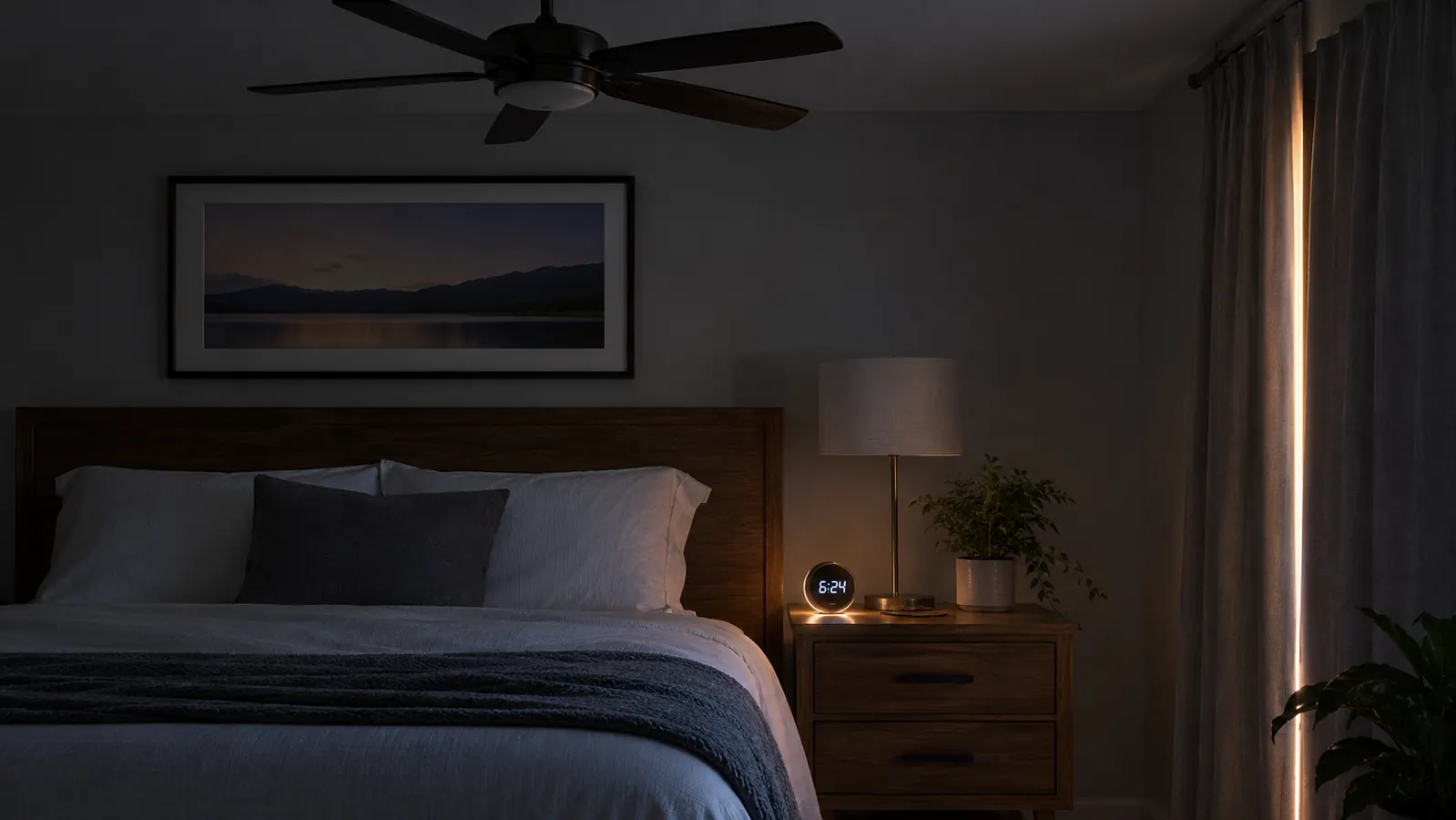
Short answer: for the last twenty minutes of the night, the JALL sunrise alarm clock is better than a phone alarm, and it is not close. For everything else a bedside device does, the phone wins, and I am not going to pretend otherwise. Which one is better for your sleep comes down to a single question. Do you wake up gently, or do you get pulled out of sleep?
I am 54, retired after 24 years in an elementary school health office, and I live in Tampa with my husband, Paul. We have one east-facing window in the bedroom that gets direct sun from about 6:45. For years that window was my alarm. Then we put up blackout curtains, the room finally went properly dark, and I started sleeping straight through my 6:30 walk. That is how the JALL ended up on my nightstand about six months ago, next to the sound machine, set to start brightening at 6:00 and play a low tone at 6:20. Paul sleeps on the other side of the bed and most mornings he does not stir.
The Short Answer, Set Out in a Table
I have used both of these alarms daily for years, so this is not a guess about how they compare. The table below is the version I would want if I were reading this instead of writing it, including the rows where the phone wins.
| JALL Sunrise Alarm Clock | Phone Alarm | |
|---|---|---|
| How it wakes you | Light builds across a full screen before any sound plays, mimicking dawn | Silence, then full volume, from the first second |
| Sound options | 25 nature sounds and white noise settings, plus FM radio | The tones it ships with, or an app you go and install |
| Snooze | Adjustable, set anywhere from 5 to 20 minutes | One fixed interval, no say in the length |
| Falling asleep | Sleep timer from 10 to 480 minutes, then it goes quiet | Works only if the app you are using has its own timer |
| Setting it up | A few minutes of button pressing and one pass through the manual | Already done, and you have known how for years |
| Travel | Stays home. It is a plug-in tabletop unit. | Already in your pocket |
| Nightstand space | Adds a unit roughly 7.2 inches wide and 7.2 inches high | Takes up no new space at all |
| Best for | Heavy sleepers who come awake groggy and startled | People who wake easily and just need a reminder |
Where the JALL Sunrise Alarm Clock Wins
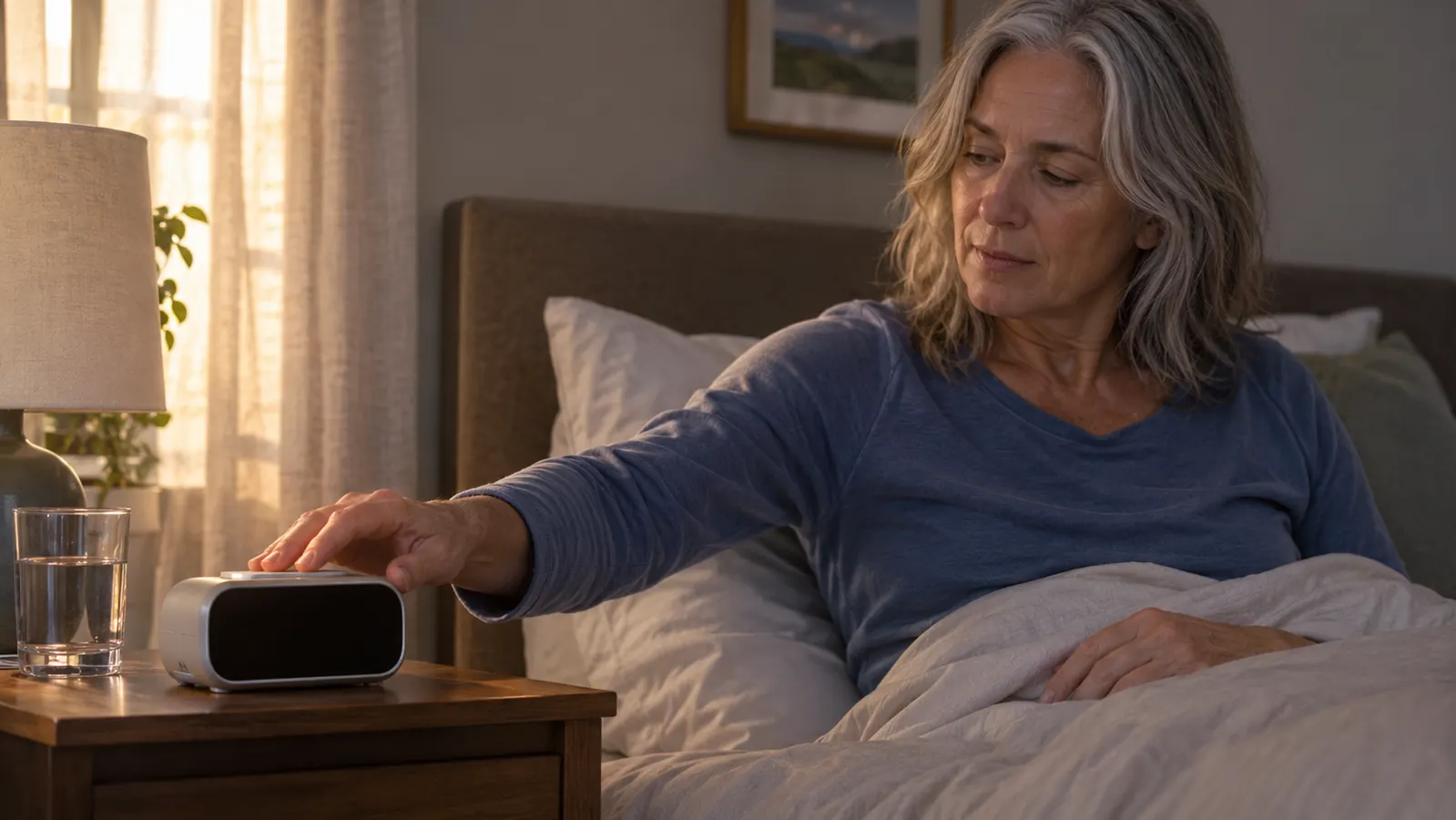
The light. That is the whole argument, and it matters more than it sounds. My phone alarm goes from silence to sound in one step. There is no ramp, no warning, nothing to soften the edge of it. I would come awake with my heart going and a small flash of irritation, then lie there for ten minutes trying to work out whether anything was actually wrong. The JALL starts dim and builds across a full screen over roughly twenty minutes, with the sound arriving near the end of it, and by the time the tone plays I am already most of the way up. Waking up and being woken are different events. The clock does the first one.
Before I bought it I tried the cheap version of this idea: a plain bedside lamp on a mechanical plug-in timer, set to click on at 6:10. It lasted four days. The lamp went from off to on in one jump, which is not a sunrise, it is a light being switched on in a dark room, and it woke me more sharply than the phone ever had. It also clicked loudly enough that Paul heard it from his side of the bed. A gradual build is the entire point, and a plug timer cannot do gradual.
The rest of it is control. There are 25 nature sounds and white noise options, plus FM radio for the mornings I want a voice instead of rain. The snooze can be set anywhere from 5 to 20 minutes, which matters if you are the sort of person who needs nine more minutes and not a fixed nine exactly. The sleep timer runs from 10 to 480 minutes, so the thing puts itself to bed after you do. None of that is why I bought it. All of it is why I kept it.
Where the Phone Alarm Wins
Setup, travel and space. A phone alarm is already configured, already familiar, and already in your pocket when you go to a hotel. The JALL is a tabletop unit about 7.2 inches wide and 7.2 inches high that plugs in and stays where you put it. It takes real estate on the nightstand, and on a small nightstand that is a real cost. The only reason I had room is that the sound machine was already living there and I had given up keeping a glass of water on that side.
And if you wake easily, you do not need this. I want to be plain about that, because it is the kind of purchase that looks like a solution and quietly becomes clutter. A phone alarm is a perfectly good alarm. It is bad at exactly one job: pulling a heavy sleeper out of deep sleep without a jolt. If you already wake a few minutes before your alarm goes off, adding a sunrise clock will not improve a morning that is not broken.
If Your Mornings Start With a Jolt, Start With the Light
The JALL is the only alarm I have owned that woke me without startling me, and it covers the other end of the night too, with 25 nature sounds, FM radio and a sleep timer that runs up to 480 minutes.
Amazon Check Today's Price on Amazon →What Six Months of It Actually Looked Like
The first week was strange, and I would rather tell you that than pretend it was seamless. I woke at about 6:05, five minutes into the light, because the change in the room registered before the sound ever did. That is not a complaint. That is the mechanism working. By the second week I was sleeping until roughly 6:15 and coming up through the light instead of through noise, and my 6:30 walk stopped being a negotiation I had with myself every morning.
One morning in the second month I slept straight through the tone and woke at 6:28 on the light alone, which is either a success or a warning depending on how you read it. The walk that day started eleven minutes late and I spent most of it cross with myself. I moved the tone two minutes earlier after that and it has not happened since, but I still count that morning as the clock doing exactly what it promised rather than as a failure.
Six months on, this is the routine. Light begins at 6:00. Low tone at 6:20. Snooze set to 8 minutes, used maybe twice a week. The weekend alarm is set separately and later, which is a small feature I did not expect to care about and now do. Nothing about my sleep is transformed. I still wake around 3:00 some nights, and the clock has nothing to do with that. What changed is the last twenty minutes of the night, and it turns out that is the part that sets the tone for everything after it.
So, the limits. It does not make you fall asleep faster. It does not stop a snoring husband. It does not replace a dark room, and it will not out-shout a streetlight. Mine works because the room was already dark enough that the light is the first thing my body notices. If your bedroom is bright at 5:00 in the morning, fix that first. A sunrise clock competing with daylight is just a lamp with extra steps.
Paul has been woken by my alarm about three times in six months. With the phone alarm it was every single morning.
The Display Question
The display is the thing people ask me about most, so here it is. It is an LED display and it does sit there lit. On the setting it arrived with, I found it too bright for the first two nights. I cycled through the light modes until I found one dim enough to live with, and it has not registered since. It is not a black void at midnight. If you need the room completely dark, this is not that, and no amount of adjustment will make it that.
It took me three nights to land on the setting I actually use. I went through the light modes one at a time, in the dark, at eleven at night, because that is the only honest way to judge how bright something is going to look at two in the morning. There are 17 light modes in total and I have used perhaps four, which tells you something about how much of this clock most people will ever touch. The rest are there if you want them.
The other half of the display question is whether the wake-up light starts too early for the person next to you. In our room it has not, mostly because the light builds slowly enough that Paul is never facing a sudden change. The bigger risk is summer. Tampa mornings are bright early, and a room that is not properly covered will be lighter than the clock at 5:30 no matter what you set. The clock only has the room to work with. It cannot make the room darker than the room already is.
The Part That Surprised Me
I did not buy the JALL to get my phone out of the bedroom. That is what happened within about two weeks anyway. Once there was a clock that showed the time, played a sound and ran a timer, there was no reason left to keep the phone within arm's reach, and it moved to the dresser to charge. I would like to tell you that improved my sleep in some measurable way. What I can say honestly is that I stopped checking it at 3:00 in the morning, and the 3:00 waking got shorter because of it.
The other surprise was Paul. He runs hot, he reads in bed for about twenty minutes with a small lamp on his side, and he is a lighter sleeper than I am. I expected the light to bother him. It has not. The clock sits low on my nightstand and brightens slowly, so by the time it is bright enough to matter he is already asleep. He has been woken by it maybe three times in six months. With the phone going off beside the bed it was every morning, and he never once complained about that, which is its own kind of information about how people put up with a bad alarm.
How I Would Set It Up If You Buy One
Give the light more runway than you think it needs. It builds over about twenty minutes, so if you want to be up at 6:20, the light starts at 6:00 and the tone plays at 6:20. People set both to their wake time and then complain they are being woken by the sound. Set the light earlier than the tone, let the room do the first half of the work, and let the sound be the finish rather than the start.
Then leave it alone for two weeks. I fiddled with sound settings for the first four nights, which was pointless, because the sound is not what does the waking. Pick one low, even tone. Set the light once. Stop adjusting. The entire value of the thing is that it is identical every morning, and every adjustment is a small step back toward an alarm you have to think about.
I broke my own rule once. In March I switched the sound to FM radio because I thought a voice would be gentler than a tone, and I lasted five mornings. The trouble is that radio is never identical twice. A quiet host at 6:20 is fine. A commercial for a car dealership at 6:20 is not, and I found I was coming awake annoyed at something I had chosen myself. I went back to the same low tone and have left it there since.
Who Should Buy Which
Buy the JALL if you are a heavy sleeper who comes awake startled, if your bedroom is dark enough now that you oversleep, or if you have already tried moving the phone across the room and ended up shouting at it from bed. Buy nothing if your phone alarm already gets you up without a fight. That is a solved problem, and a new device will not improve it. And if you share a bed with someone who wakes easily, the JALL has one advantage that is hard to argue with: it wakes one person. In this house, that alone was worth the space on the nightstand.
What I Liked
- Wakes you with light before any sound plays, which made the waking itself gentler
- 25 nature sounds and white noise settings, with FM radio built in
- Snooze is adjustable anywhere from 5 to 20 minutes
- Sleep timer runs from 10 to 480 minutes
- Separate weekday and weekend alarms, which I use more than I expected
Where It Falls Short
- A plug-in tabletop unit, so it stays home
- Takes up real nightstand space at about 7.2 inches square
- The first week of adjustment is genuinely odd
- Will not fix a bedroom that is already bright at dawn
- Does nothing at all for the 3 AM wake-ups
The Alarm Does Not Have to Be the Worst Part of the Morning
Six months, one clock, and I have not been startled awake since. If your mornings start with your heart going before your eyes are open, this is the simplest change I have made to a room in years.
Amazon See the JALL Sunrise Alarm Clock on Amazon →