
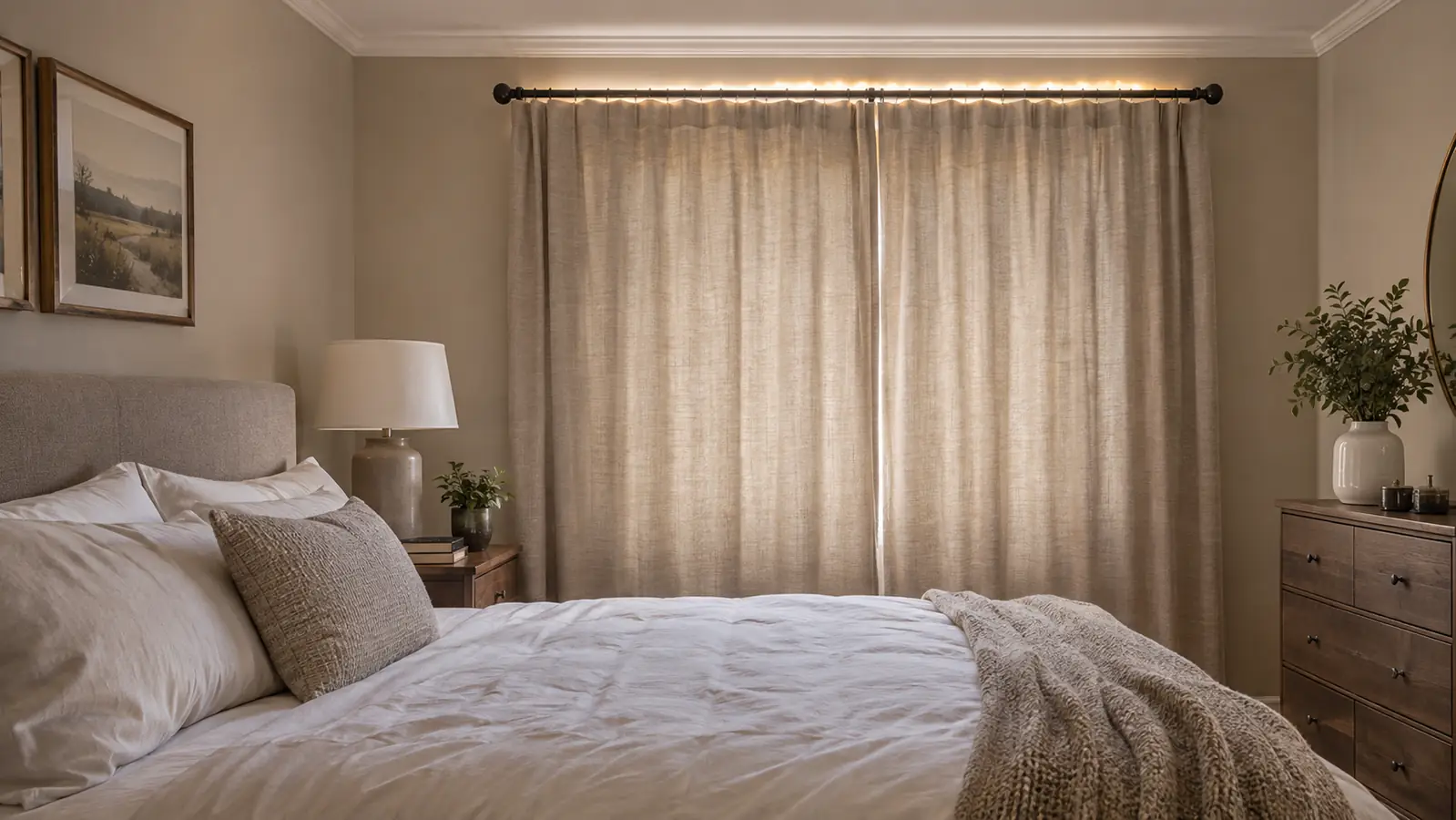
I did not buy blackout curtains because I wanted a darker bedroom. I bought them because the sun came up over the east side of our house in Tampa at about 6:45, and by 7:10 the room was bright enough to read a label from across the bed. I am 54, retired after 24 years in a school health office, and I spent most of that career telling other people to keep a steady sleep schedule. It was a little embarrassing to find that my own schedule started with a window. The NICETOWN blackout curtains went up twelve months ago on a plain rod above that one window, and I have had a year to find out what they do well and what the listing does not bother to mention. This is the version I would give a friend, including the parts that annoyed me, because the annoyed parts are the ones you cannot get from the photos.
A short answer before the details. They block most of a hard morning sun, they do nothing at all about a snoring husband, and two panels of this size cover less window than most people picture when they order. None of that is a reason to skip them. All of it is a reason to measure first, and to stop expecting a piece of fabric to act like a wall.
The Quick Verdict
A plain, unlined panel that takes the edge off a bright morning for very little effort. It is not total darkness, and the 42 inch width is the number that trips people up.
Amazon Check Today's Price →The window that woke me at 6:45 is the one thing these panels fixed
Two panels, grommet top, no separate lining. Check the width against your own rod before you order, not after.
Amazon Check Today's Price on Amazon →What Nobody Tells You Before You Buy Blackout Curtains
The word blackout does a lot of quiet work in a listing like this, and the honest information is in the fine print. The NICETOWN listing says the fabric impedes 85% to 99% of light and UV, then adds the part that matters: dark colors work better. That range is not a marketing hedge. It is an accurate description of how a woven fabric behaves, and where your window lands inside it depends on the color of the panel you choose and on how much light comes around the edges rather than through the cloth.
The second thing nobody says clearly enough is that blackout is a property of the cloth, not a property of your room. These panels are unlined. There is no backing layer, no coated film, no second sheet of fabric behind the face. What you get is a triple weave polyester, 0.2 inches thick, 2.1 pounds for the pair. That is plenty to stop the sun from turning a bedroom into a light box. It is not enough to make the room dark at the edges, at the top of the rod, or along the sides where the panels meet the wall. If you have ever slept in a hotel room that was truly dark, you know the difference in your body. This is close, with a bright outline.
The third thing is the width, and it is where most of the disappointment lives in the reviews I read before ordering. This set is 42 inches wide per panel and 63 inches long, two panels to a pack. Read that as a room instruction rather than a product specification. Two 42 inch panels are 84 inches of fabric in total, and once they are gathered on a rod with grommets they do not lie flat. My east window is an ordinary bedroom window and the pair covers it with a modest gather on each side. If your window is a wide double or a sliding door, this size will look like two hand towels hanging in the middle of a wall. That is not a defect in the curtain. It is a mismatch between the panel and the opening, and catching it is the buyer's job.
How I've Used Them for the Past Year
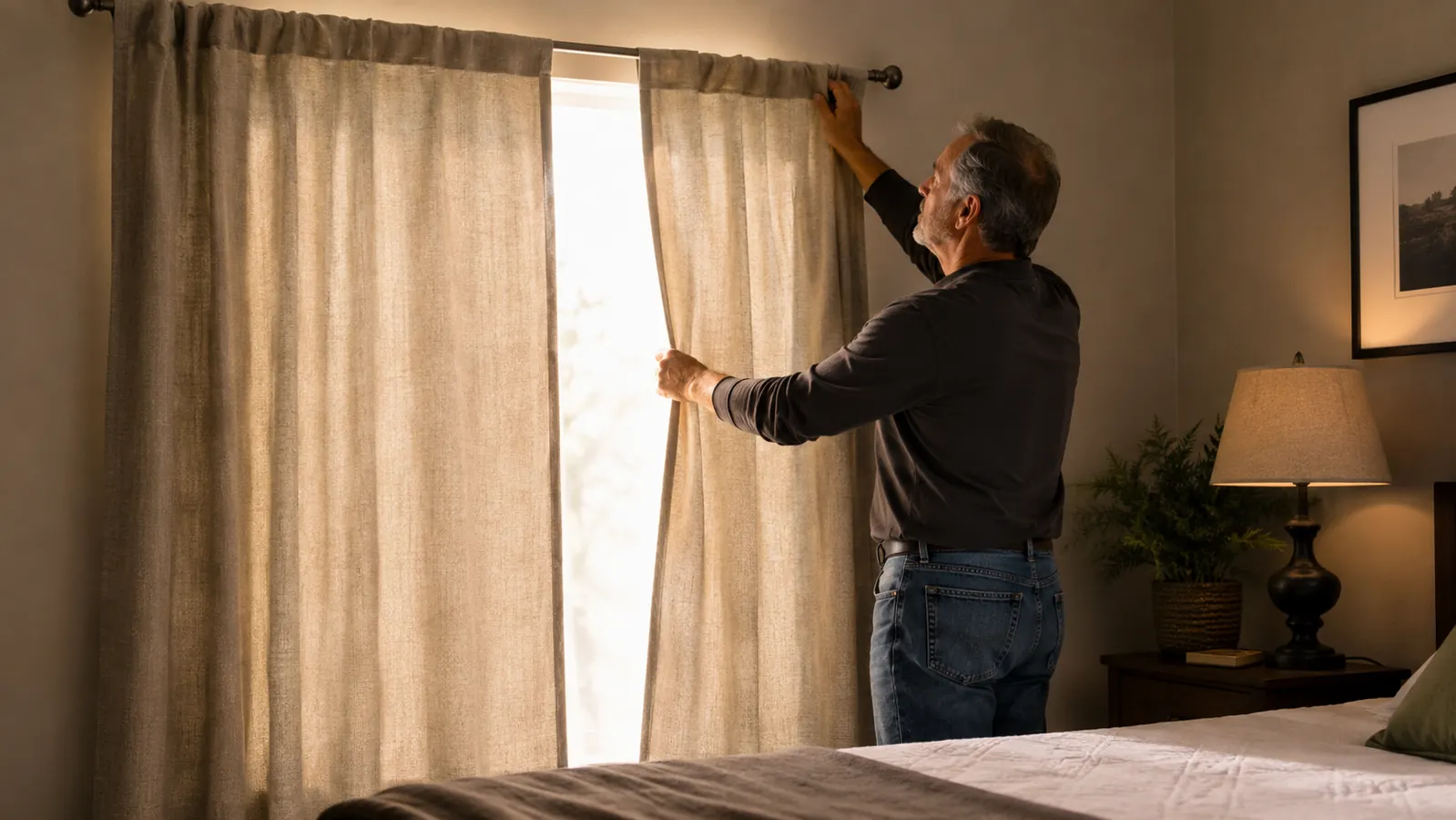
Paul and I put them up on a Saturday afternoon and it took under an hour, most of which was spent finding the drill. The rod was already on the wall. Each panel has six grommets across the top, with an inner diameter of 1.6 inches, and they slid onto our existing rod without an argument. That is the entire installation. No hooks, no rings to thread, no clips. If you have ever fought with a pinch pleat panel, you will appreciate how little there is to this.
The first morning after they went up I woke at 7:20 instead of 6:45, and my first thought was that something was wrong with me rather than with the window. That is the honest measure of whether a blackout curtain works. It does not make you sleep better on its own. It removes a cue that was waking you, and then your body does whatever it was going to do anyway. In my case the room stayed dim enough that the light stopped acting as an alarm, and once that was out of the way the real disturbance at 3 AM turned out to be something else entirely.
They have been washed once in twelve months and came out looking like they went in. The listing calls them thread trimmed and wrinkle free, and for my one wash that held. I hung them back on the rod slightly damp and the creases from the laundry dropped out on their own. I would not call the fabric soft. It is a sturdy plain weave that hangs in fairly stiff folds and does not drape the way a light sheer does. That stiffness is doing the work. It is also why they read as a functional window covering rather than a decorative one.
The Honest Numbers: Light, Heat, and What the Fabric Actually Does
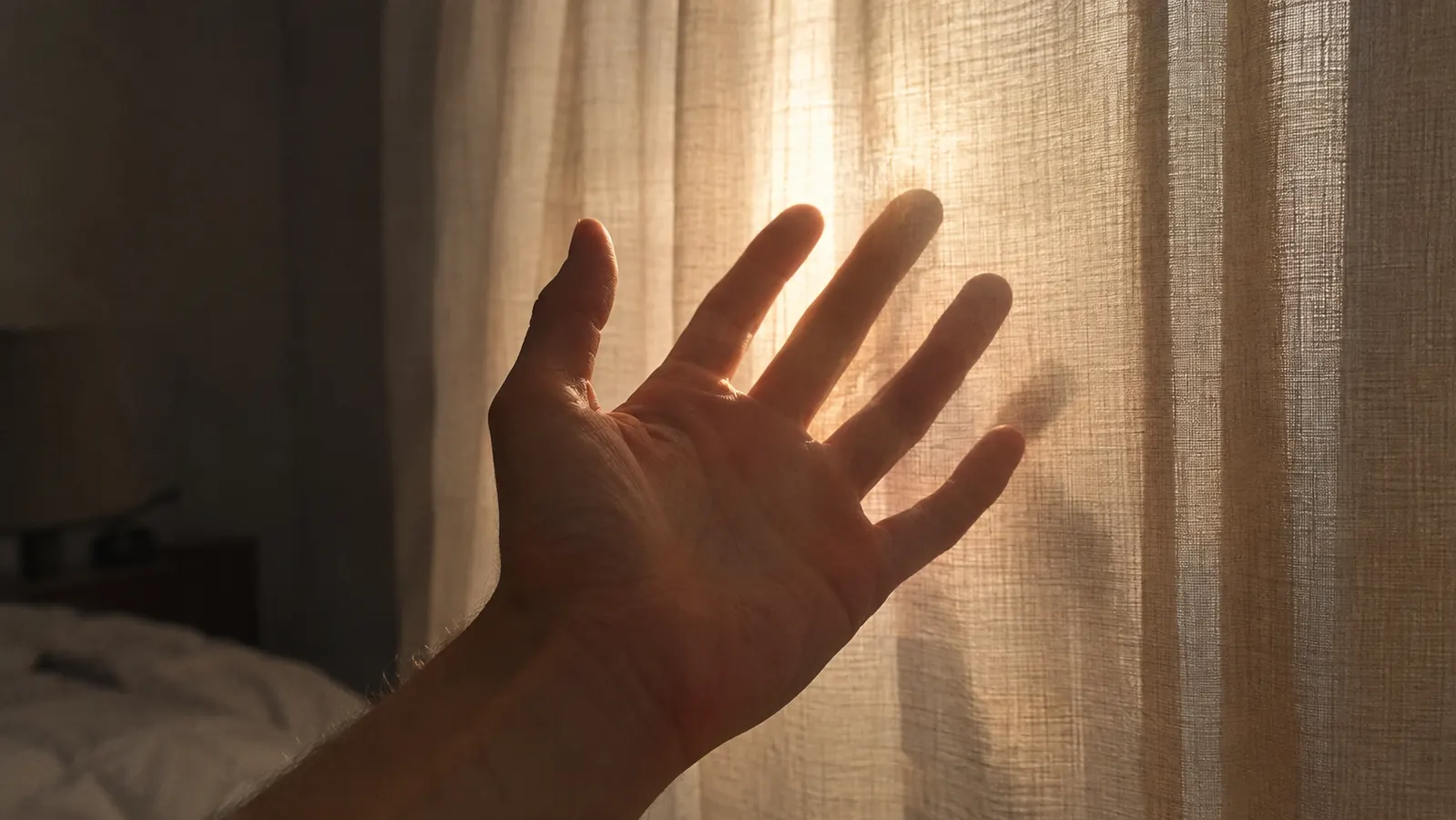
I ran the unscientific version of a test. On a clear morning I stood in the room with the panels closed and held up a hand. I could see the shape of my fingers against the fabric glow, and I could see a bright line where the two panels meet in the middle and again along the top of the rod. Then I opened the door to the hallway, which has no curtain at all. The difference was not subtle. The bedroom was dim enough that I would call it dark if I did not know better. The hallway was a light box.
Heat is the part of the listing I trusted least and noticed most. The description says the triple weave balances room temperature by insulating against summer heat and winter chill. Put more plainly: the fabric is a barrier, and a barrier between a sun struck pane of glass and a room full of air does something. Our bedroom faces east, and in July the wall around that window used to feel warm to the back of my hand by mid morning. With the panels closed, that wall feels like the rest of the wall. The room still warms up during the day. It warms up later and less sharply, which in a Tampa summer is the difference between a room that is stuffy at noon and one that is stuffy at two.
It does not make you sleep better on its own. It removes a cue that was waking you, and then your body does whatever it was going to do anyway.
Where the listing oversells, gently, is in the implication that any of this is total. The 85 to 99 percent range is honest precisely because it is a range. You do not know which end of it you will get until the panels are on your rod in your room. A dark panel on a recessed window with an overlapping rod will land near the top. A lighter panel on a window with the rod mounted tight against the trim will land near the bottom, and you can see the difference from the bed without measuring anything.
The Setup Details That Made the Difference
If I were doing this again, I would move the rod before I ever unwrapped the panels. Ours sits close to the trim, and that is why the top gap lines up with the brightest part of the morning. A rod mounted higher and wider, ideally past the trim on both sides, would have closed most of that gap and let the panels hang flatter against the wall. It is a fix that takes nothing but a second set of holes and a bit of spackle.
The other detail is the gather. Panels are usually cut wider than the window on purpose so they can hang in folds instead of stretched flat like a shade. Two 42 inch panels are not generous for anything beyond a single standard window. On mine they gather nicely. On a window 20 inches wider they would hang almost flat, and a flat blackout panel looks like a sheet pinned to a rod. Take the width of your window, add a few inches on each side for coverage, then ask whether two 42 inch panels will still fold. If the answer is no, buy a wider set or use this one on a smaller window.
What the Grommet Top Does and What It Does Not Do
Grommets are the reason these go up in ten minutes and the reason light gets in at the top. The rod passes through the openings and the fabric hangs below it, which leaves a small gap between the top of the panel and the ceiling, and a smaller one where the fabric folds back over the rod itself. On a rod mounted tight to the window trim, that gap lines up with the brightest part of the sky. The panels also slide easily, which cuts both ways in a house where one person gets up in the night. Paul can push them aside with one hand without waking me and they do not screech along the rod. The trade is that they do not stay exactly where you put them.
One more thing about the top. If your window sits in a deep recessed frame and the rod is mounted inside the recess, expect the gap to be worse rather than better. The fabric has nowhere to hang past the edge of the opening, so the light finds the shortest path around it. Move the rod out to the wall, or accept a lit line across the top of the window at dawn.
Wrinkles, Weight and the Look of Them
Out of the package they had the folded creases you would expect from anything compressed into a bag. Hanging them for a few days handled most of it. If you are the type to notice, hang them a week before guests arrive. The weight is 2.1 pounds for the pair, light enough that a tension rod would probably hold them, though I would not trust a tension rod with anything where I cared about clean lines all year.
Visually they are plain. Solid color, no pattern worth describing, no lining peeking out at the hem. In a bedroom that reads as calm and, honestly, as unremarkable, which is what I wanted. In a living room it might read as unfinished. The listing's own room list runs from conference room to kitchen, which tells you the seller is not going to help you decide. My advice is to treat these as the panel you put behind a blind or under a valance if the look of the room matters, and as the whole solution if only the light matters. The NICETOWN panels are not trying to be furniture. They are trying to be a barrier, and they are good at that.
Where They Fell Short for Me
Two honest complaints. The first is the edges. On the brightest mornings in April and September there is a visible outline of light around the whole window, bright enough that I still reach for the sleep mask I have worn for years if I am trying to sleep past seven. The curtains cut the problem down. They did not remove it. Anyone who tells you a pair of unlined grommet panels made a sun facing bedroom pitch dark is either in a room with no direct sun or is not looking at the edges.
The second is a consequence rather than a fault. They made the room dark enough that I stopped waking at 6:45, which sounds like the whole point until you notice you have stopped waking at 6:45 for your walk. About six months later I added a sunrise alarm clock on my nightstand for exactly that reason. Nobody puts that in a listing. A product that solves one problem quietly creates the next one, and you should plan for it.
What I Liked
- Takes most of a hard east facing morning sun out of a bedroom
- Six grommets per panel with 1.6 inch openings, slides onto a standard rod in minutes
- Triple weave polyester, unlined, so there is no separate backing to sag or peel
- Noticeably reduces the heat coming off a sun struck window wall in summer
- Came through one wash without wrinkling or fraying
- Plain enough to disappear into a bedroom
Where It Falls Short
- Light still comes in around the edges and over the top of the rod
- 42 inches per panel is narrower coverage than most buyers expect
- Unlined fabric, so how dark the room gets depends on the color you choose
- Stiff drape, closer to a working curtain than a decorative one
- 63 inch length leaves a gap below the hem on tall windows
Who This Is For
This set suits a bedroom with one ordinary window and one specific problem: morning light that arrives before you are ready for it. It suits renters, because it needs nothing beyond a rod and leaves nothing behind when you go. It suits anyone who wants the light handled without a custom blind, a dark lining or a handyman. And it suits the person willing to measure both the window and the rod, buy a size that actually covers the opening, and accept that the edges will still glow a little at dawn.
It also suits a household where one person reads in bed after the other has turned in, which is Paul's habit and not mine. Light from his small lamp used to bounce off the window glass and back across the room toward my side. Now it lands on fabric and stays there. That was a small unexpected benefit and I will take it.
Who Should Skip It
Skip these if you need a room that is genuinely dark, meaning dark enough that you cannot see your own hand. That calls for lining, an overlapping track and side returns, and it is a different product at a different level of effort. Skip them for a sliding door or a wide double window, where 42 inches per panel will not cover the opening with any gather at all. Skip them for a tall window, since 63 inches will leave a strip of glass showing below the hem. And skip them if what wakes you is noise or a snoring husband, because fabric does nothing about either.
Skip them too if you want a panel that drapes. This is a working curtain. It hangs in folds that hold their shape and it does not pool on the floor or fall in soft columns. If the look of the window is the point, buy something else and put a blind behind it.
If your bedroom has one window and one early sun, this is the simplest fix I have found
Measure the rod before you order, not just the window. Two panels at 42 inches each cover a standard bedroom window and very little else.
Amazon Check Today's Price on Amazon →