
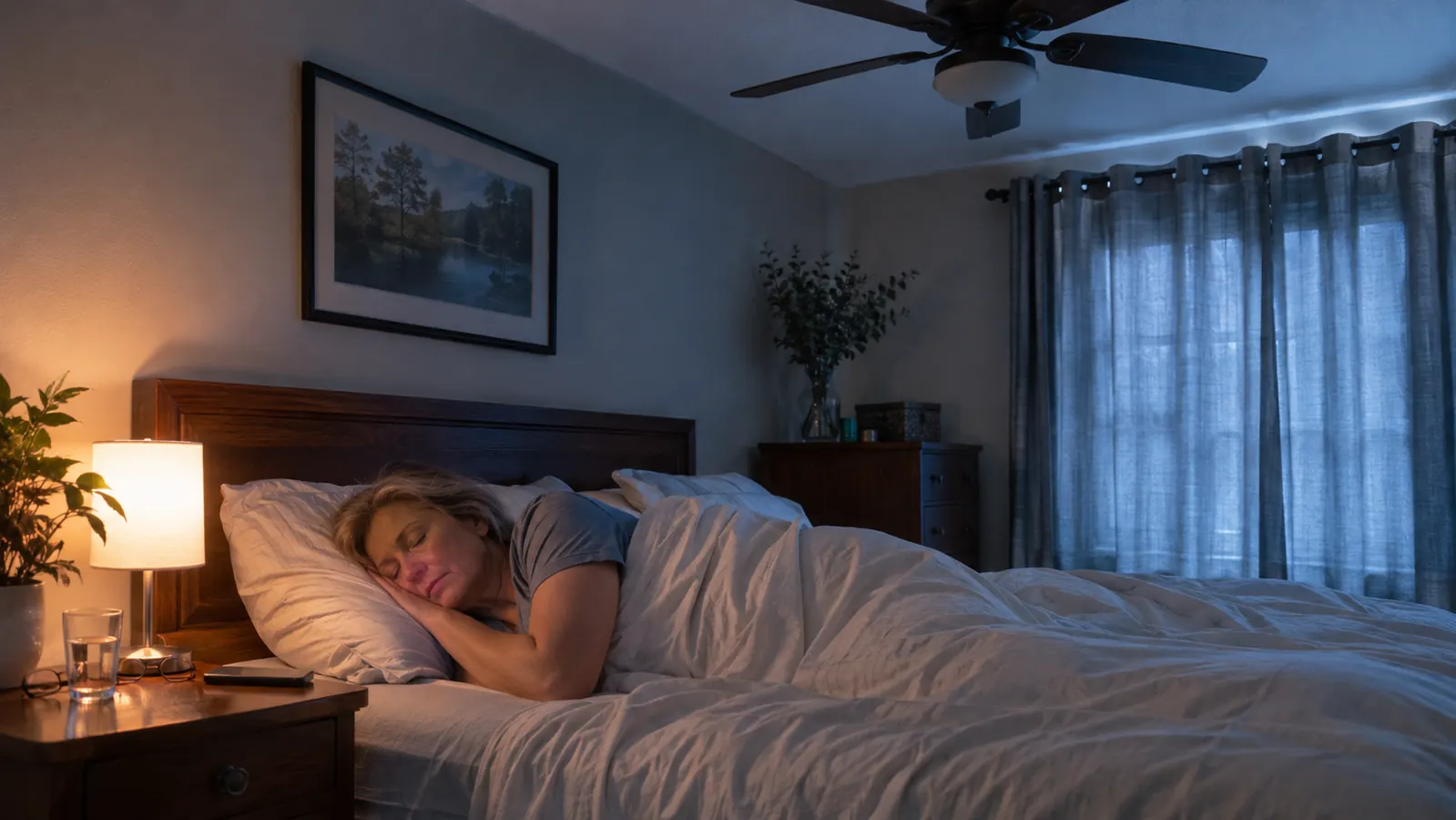
Waking up in Tampa in July is not a gentle event. The sun hits the east window before 7:00 already carrying heat, and if the curtains are drawn the room stays dark enough that 7:20 feels like 6:00. I spent 24 years in an elementary school health office, where a bell told me what time it was. I retired, the bell went away, and my mornings turned into guesswork.
What I tried first was the obvious thing. Phone alarm, full volume, face down on the nightstand. It got me out of bed, and it also got me out of bed irritated, and Paul, who sleeps on the right side and snores lightly, got the same treatment. So I went back to the approach I use for everything else now, which is to treat sleep like the rest of the prevention routine and change one thing at a time. What I ended up with is a sunrise alarm clock. The one on my nightstand for the past six months is the JALL full-screen wake-up light, set to start brightening at 6:00 with a sound at 6:20. The steps below are the part that mattered. The clock is patient. The order is not obvious.
One thing to be clear about up front, because the packaging oversells it. A wake-up light does not treat insomnia and it does not replace sleep you did not get. It changes how the last twenty minutes of the night end. That is a smaller claim than the box makes, and it is the one I can actually stand behind after six months.
The light that starts before the alarm does
The JALL sunrise alarm clock brightens gradually from dark to full before any sound plays, with dual weekday and weekend alarms, 25 nature sounds, and a sleep timer for the other end of the night.
Amazon Check Today's Price on Amazon →Step 1: Get the room dark first, then add the light back on purpose
Here is the counterintuitive part. A sunrise clock works best in a room that is genuinely dark, because the whole effect depends on light being the only thing that changes. If streetlight and 6:45 sun are already leaking in, a lamp that ramps from dim to bright has nothing to ramp from. You are competing with a star, and the star is brighter.
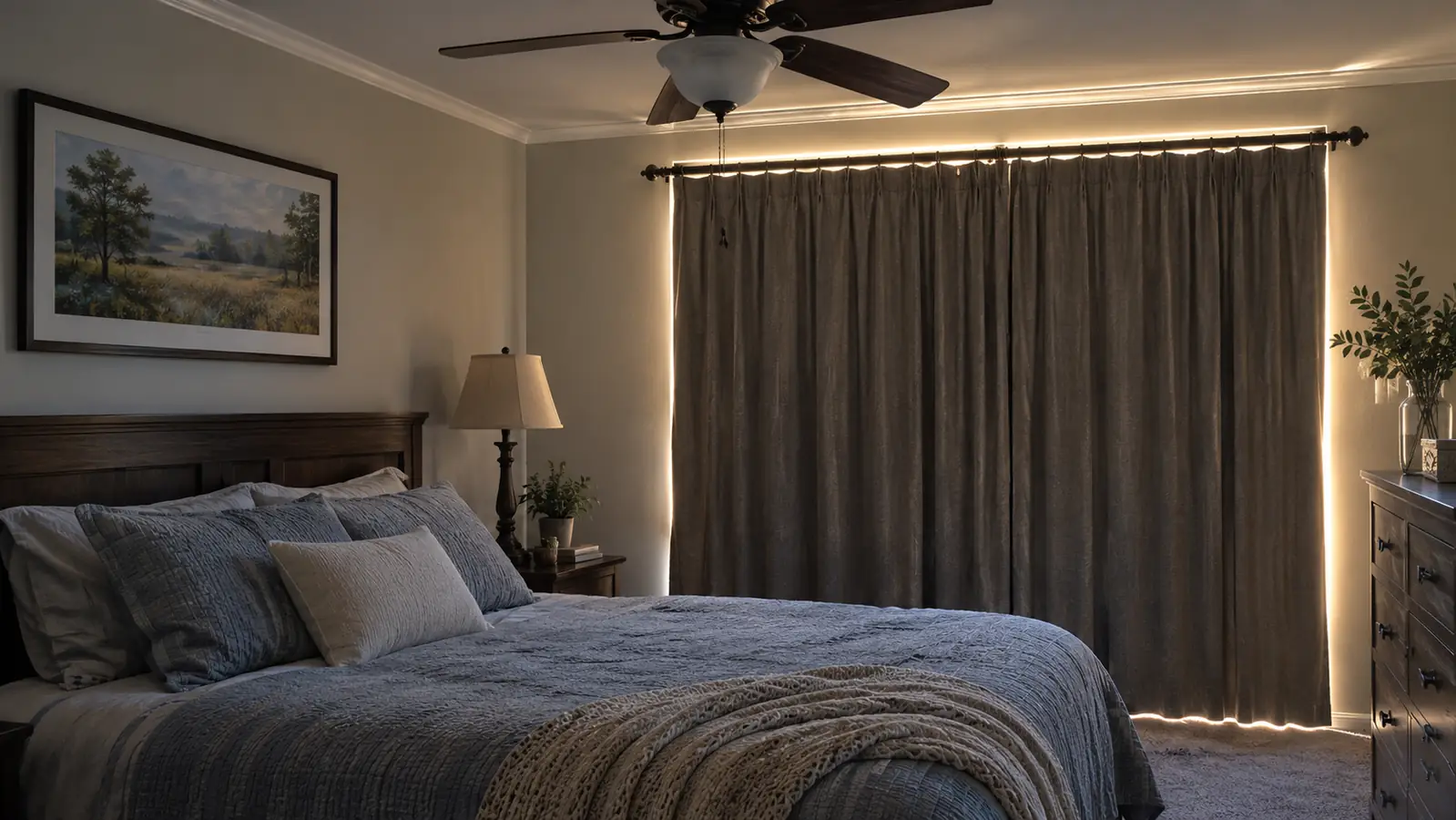
On our east window that meant blackout curtains, which Paul and I put up together in one afternoon about a year ago. The panels are 42 inches wide by 63 inches long, two of them on a plain grommet rod, and they cover the glass with a few inches to spare at each side. It is not a perfect darkroom. Light still creeps in at the edges and over the top of the rod, and I have stopped pretending otherwise. The first morning after we hung them I stood on the bed at 6:30 to see exactly where it came through. It came through at the top corners and along the left edge where the bracket holds the rod off the wall. I folded a dark towel over the rod for a week while I decided whether I cared. I did not, mostly. But it is dark enough that at 5:55 in the morning I cannot read the clock face from the bed, and that was the standard I was aiming for.
Only after that did the sunrise make sense. When the window stopped doing the waking, the lamp had a job. Set it up the other way around, lamp first and curtains never, and you will spend two weeks wondering whether the thing works, because you will never once see it work.
Step 2: Start the light well before the sound, not with it
Most people set the sunrise to begin at the same moment the alarm goes off. That turns a twenty minute ramp into a twenty second one, and then it is just a lamp with an alarm attached, and you have paid for a lamp.
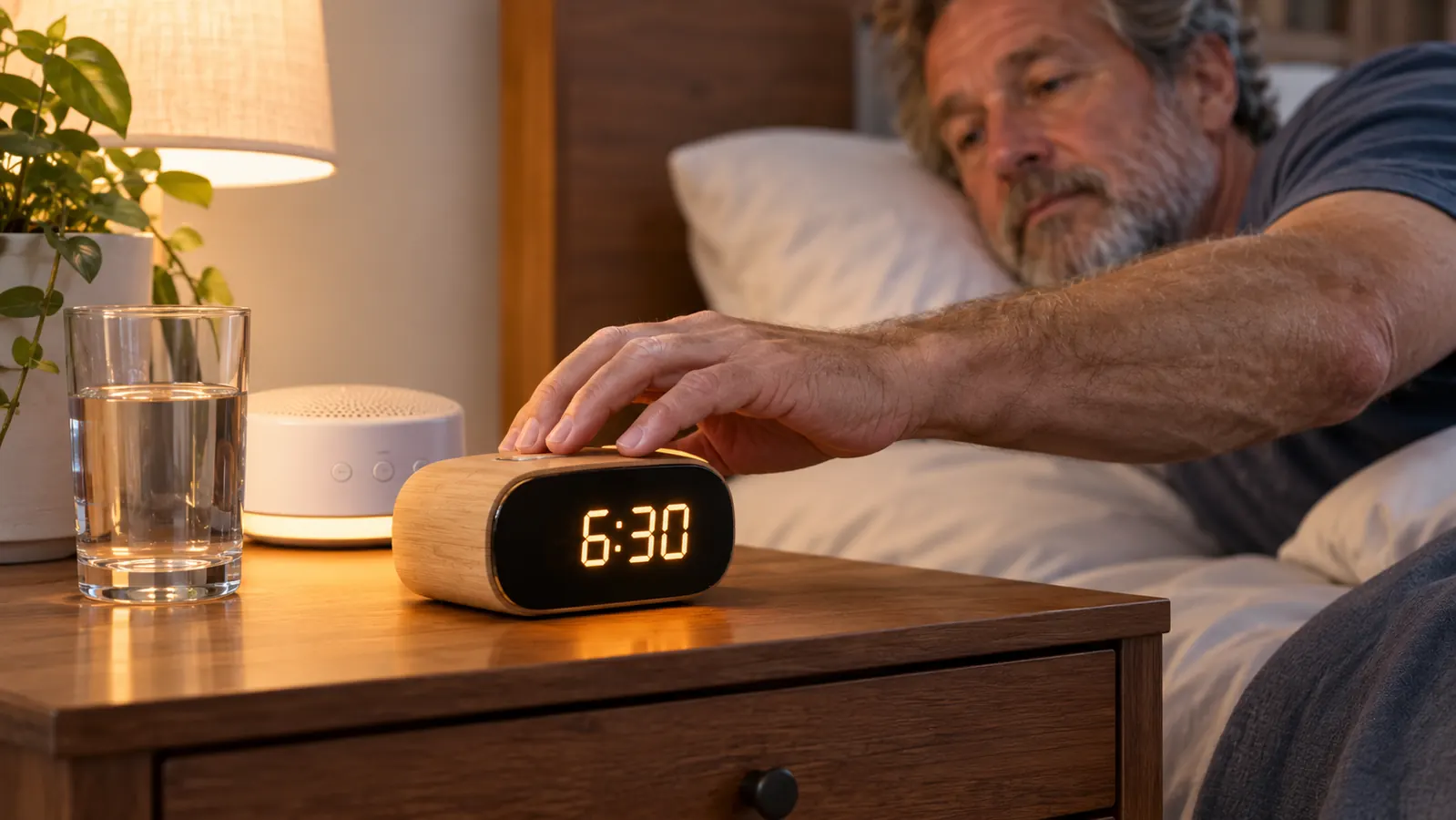
Mine starts brightening at 6:00 and the sound arrives at 6:20. Twenty minutes is enough for the light to climb from barely visible to something my closed eyes register, and it is enough for me to surface slowly, decide I am awake, and get up before the sound ever plays. On most mornings I am out of bed at 6:18 with the alarm still waiting. I remember one Tuesday in particular because I woke at 6:11, looked at the light, and realized I had been listening to the room for a while without any sound at all. I started coffee and was out the door at 6:32 for the walk. That is the whole trick, and it took me three weeks to believe it.
Your timing will be different. If you sleep through everything, give the light more of the last half hour. If you wake at the first hint of light and then lie there stewing, shorten the gap so you are not conscious and annoyed for twenty minutes. The JALL lets you set the alarm time, and the light builds before it, so that timing is the one setting worth thinking about. The 17 light modes are mostly cosmetic by comparison. I found one that looks like early morning and stopped shopping.
Step 3: Choose a wake sound you can tolerate, not one you love or hate
The JALL carries 25 nature sounds plus an FM radio. I have used maybe four of them. What I learned is that the sound should be pleasant enough that you do not resent it and distinct enough that it actually registers. Those two things pull against each other, and the sweet spot is narrow.
I started with birdsong, which I liked too much. It blended into a dream about a porch and I slept straight through it. I moved to something with a bit more edge, still tonal, not a beep. The beeps are what made the phone alarm feel like a fire drill, and I was not going back to that.
One practical note if you are tempted by the radio: it is a radio, which means at 6:20 it plays whatever is on, including ads. I tried it for a week and went back to the sounds. If you do want it, check the station the night before, because a frequency that is fine at nine in the evening is a completely different station at dawn.
The light does the persuading. By the time the sound arrives, I have already been half awake for twenty minutes, and getting up is a decision instead of a jolt.
Step 4: Set the weekday and weekend alarms once and stop touching it
The reason most alarm setups fail is not the alarm. It is that you are renegotiating with it every night, in bed, in the dark, half asleep. Any clock you have to reset on Friday night is a clock you will eventually stop resetting, and then it becomes a lamp with opinions.
The JALL has dual alarms with everyday, weekday, and weekend schedules, so I set one for weekdays at 6:20 and one for weekends at 6:50, and then left them alone. That took about ten minutes, once, on a Sunday afternoon with the manual open on the bed. The menu is not elegant. It is a sequence of button presses and a small screen, and I got it wrong twice before the weekday alarm actually held. The fix was a sticky note on the nightstand with the two times written on it until they were in my head. I have not touched either since, except to change the light setting in week two. Paul is not woken by it most mornings, which surprised me and mattered more than I expected it to.
There is a snooze you can set between 5 and 20 minutes. I will be honest about mine: I use it maybe once a week, on the morning after a bad night. What changed is that I now use it on purpose instead of by reflex. When the light has already been up for twenty minutes, pressing snooze is a choice I make. It is not the first thing my hand does while the rest of me is still deciding whether to be alive.
Step 5: Give it two weeks, and change one setting at a time
The first four mornings with a sunrise clock are not a fair test. You will wake up, notice the light, and think about the light. That is not the same as waking up to it. It takes roughly two weeks for the ramp to stop being an event and start being the ordinary condition of the room, and until then you are reviewing the product instead of using it.
During those two weeks, resist the urge to adjust everything at once. Change the alarm time or the sound or the light mode, one at a time, and give each change three or four nights. Otherwise you end up with a clock you have tuned into a mess and no idea which setting did it. I did this with the light mode in week one and had to start over. I also kept a note on the back of an envelope for the first ten days: the time I woke, whether the sound had played, and how I felt on a one to five scale. The pattern was not what I expected. The mornings I rated best were not the mornings I woke latest. They were the mornings I woke before the sound, which happened on six of the ten days by the end.
I also want to be straight about what this did not do. It did not stop me waking at 3 AM, which is still the main thing wrong with my sleep and still the thing I am working on. It did not stop Paul snoring. It did not make me a morning person. What it did was make the last twenty minutes of the night feel less like an ambush, in a room that had gotten so dark I was oversleeping my 6:30 walk. For a 54 year old with lighter sleep than she used to have, that was worth the shelf space.
What Else Helps
None of this happens in isolation, so a few short notes on the rest of the setup. None of it is the point of this article, and none of it is required for the steps above to work.
Darkness, quiet, and a cool room do more work than any device on the nightstand. Our blackout curtains handle the window. A white noise machine covers Paul's snoring and the neighbor's truck that starts around 5:15. It masks the sound, it does not stop it, and I would rather say that plainly than sell you a machine that ends snoring. Cooling sheets helped with Paul running hot, though on the worst August nights the ceiling fan and the central air set to 72 are still doing most of the actual work.
I also stop caffeine by noon and walk about three miles most mornings, and I mention both only because they changed my sleep more than any purchase did, including this one. The clock fixes the ending of the night. The walking and the coffee cutoff fix how the night starts.
One last thing about placement. The JALL sits on my nightstand next to the sound machine, at eye level when I am lying on my left side, screen facing me. If yours ends up across the room you will get the light but you will not get the slow read of it, that half conscious sense of the room getting brighter. Tabletop, close, facing the bed. That is the entire setup, and it takes one afternoon.
A gentler last twenty minutes of the night
The JALL sunrise alarm clock brightens before it ever sounds, with dual weekday and weekend alarms you set once and a light that builds before the sound arrives.
Amazon Check Today's Price on Amazon →