
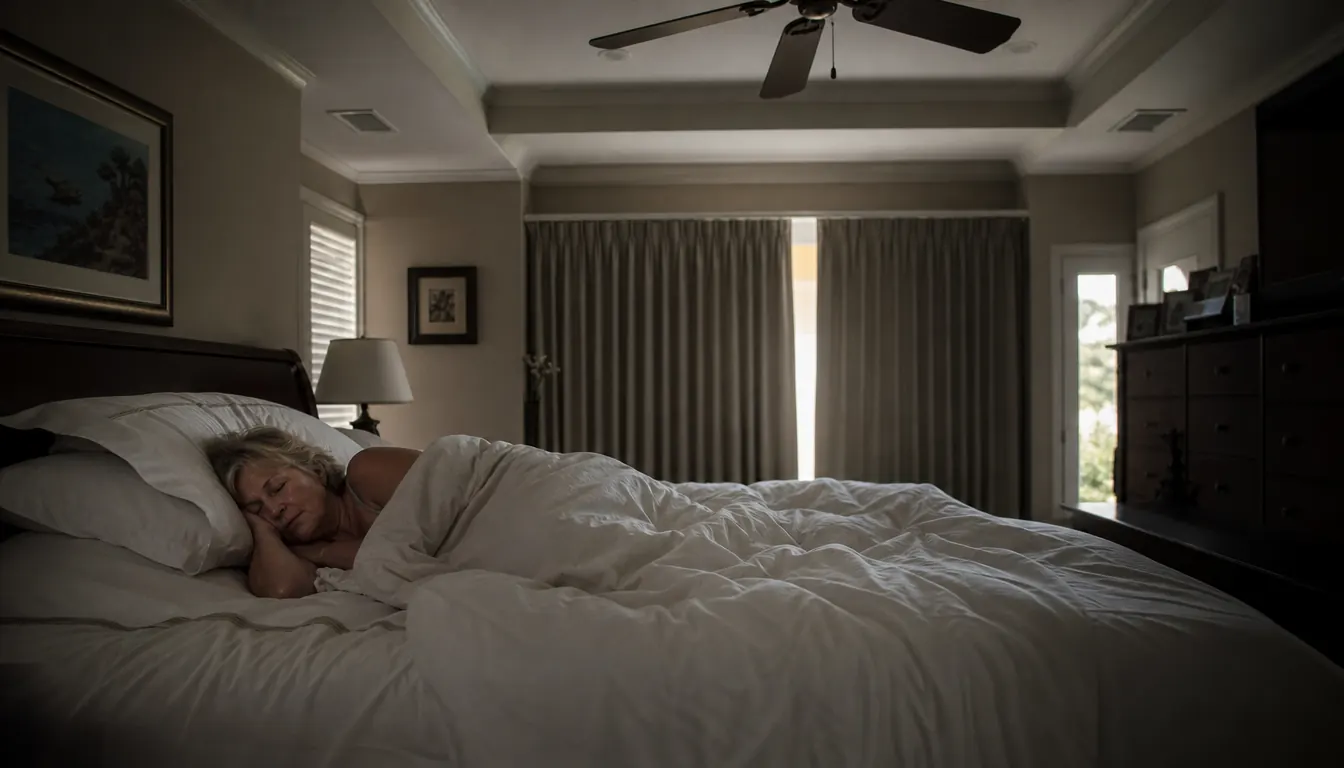
I bought the JALL Sunrise Alarm Clock about six months ago for one narrow reason. The blackout curtains I put up over our east-facing window did their job too well, and I started sleeping through the 6:45 light that used to get me moving. My morning walk slipped from 6:30 to 7:15, then to whenever I finished my coffee. I did not want another phone alarm. I wanted something on the nightstand that would make the room feel like morning before it started making noise. That is the job I asked this clock to do, and this review is about whether it did that job without creating new ones.
Here is the short version. The JALL is a full-screen wake-up light with a built-in sound machine, and it has been reliable for me in a way phone alarms are not. It also has more settings than I need, a few quirks that took a month to learn, and one limitation that matters if your bedroom is not already dark. I am not going to tell you it fixed my sleep. I am going to tell you what changed, what did not, and who should leave it in the cart.
The Quick Verdict
A genuinely useful sunrise clock for a dark bedroom, with enough sound options to replace a second device. It is gentle by design, so it is not the right alarm for every heavy sleeper.
Amazon Check Today's Price →The point is not the gadget. It is getting out of bed before the day decides for you.
I use the JALL on a weekday schedule, with the light building before the sound. If your mornings have drifted later than you want, this is the version I would start with.
Amazon See Today's Offer on Amazon →What I Wish Someone Had Told Me First
The first thing nobody tells you is that a sunrise clock is not a brighter alarm. It is a small light on a table. It cannot turn your bedroom into a Florida sunrise, and it cannot replace the sun coming through a window. What it can do is give your body a consistent signal at the same time every morning, before the sound starts. In my case, that signal was enough to make 6:20 feel less like a negotiation. But I had to stop expecting it to light the whole room. It lights the wall, the ceiling, and the side of the bed. That is all. Once I accepted that, I stopped being annoyed by it.
Before I bought the JALL, I tried the cheap version of this same idea. I put a plug-in lamp timer between the lamp and the outlet and set it to click on at 6:00. It worked for four mornings. Then the lamp came on at full brightness all at once, which is not a sunrise, it is a light being switched on in a dark room. I woke up startled instead of eased, and Paul woke up too, which he made clear with one long sigh. I took the timer back to the drawer where it still sits. The difference between that lamp and the JALL is the ramp, not the brightness. The light builds instead of arriving in one jump. If you have already tried the timer trick and hated it, you are the person this clock was built for.
The second thing is that the clock only works if you give it a schedule you actually keep. I set the weekday alarm for 6:20 and left the weekend alarm later. The dual weekday and weekend alarms are the reason I did not turn the whole thing off on Saturday. If you are the kind of person who changes the alarm every night, a sunrise clock will not save you from that habit. It will just make the habit more elaborate. The JALL rewards consistency and punishes chaos, which is true of most sleep habits and not a special flaw of this product.

What the JALL Gets Right
The gradual light is the main event, and it is done well. The full-screen face glows from dark to full instead of snapping on like a lamp. On the mornings I wake before the sound, I can see the room taking shape, which sounds small until you have spent years being yanked out of sleep by a phone. The light does not feel like a spotlight. It feels like a lamp turned low across the room. That is the closest I can get to describing it without overstating it.
The sound options are more useful than I expected. The JALL has 25 nature sounds and white noise, plus FM radio. I already use a separate sound machine for Paul's snoring, so the built-in sounds were not why I bought this. But I do use the white noise setting when I travel or when I want the alarm to come from the same device as the light. The sleep timer runs from 10 to 480 minutes, which is a wider range than I need. I set it for 30 minutes most nights and let it fade out. If you like a fan sound or rain sound to fall asleep, you will find something in the list. If you are picky about sound quality, you may not.
The snooze is 5 to 20 minutes, and the alarm can be set for every day, weekdays, or weekends. I use the weekday setting and a later weekend setting. That sounds like a small thing, but it is the difference between a clock that fits my week and a clock that wakes me at 6:20 on a Sunday. The display is LED and the clock is powered by USB, so I moved a charging brick to the nightstand and left it there. It takes one AA battery according to the listing. I put one in and have not had to think about it since.
The footprint is worth mentioning because nightstands are small. The listing gives the face as 7.2 inches wide by 7.2 inches high, with the whole unit measuring 12.4 by 10.2 by 3.2 inches and weighing about 1.2 pounds. On my nightstand it takes up less room than the sound machine sitting next to it. I moved a glass of water and a small lamp to make space and that was the entire furniture project. One morning in the second week I knocked it slightly sideways reaching for my phone in the dark, and nothing reset or went quiet. I straightened it, looked at the time, and went for my walk. For a device I touch twice a day before my eyes are open, that small bit of steadiness matters more than it sounds.
A sunrise clock does not make you a morning person. It makes the morning you already planned a little easier to accept.
The Honest Drawbacks
The biggest drawback is also the most obvious. This is a bedside light, not a window. If your room is not already dark, the JALL will not make much difference. I am lucky because the curtains handle the outside light, so the clock is the only thing telling my brain that morning is coming. If you have a streetlight pouring through the blinds or a partner who reads with a lamp, you may find the sunrise gets lost in the mix. The JALL is not a blackout solution. It is a wake-up solution, and it works best when the room is already under control.
The second drawback is the number of choices. There are 17 light modes and 25 sounds. That is a lot of cycling for a device you use twice a day. I found my settings in the first week and have not changed them since, but getting there felt like programming a microwave. If you want a clock with one button and one light, this will feel fussy. If you like options, you will probably enjoy it. I land somewhere in the middle. I appreciate the choices, and I wish the ones I use were easier to reach.
The third drawback is that the light is gentle by design. That is the point, but it means the JALL is not a harsh wake-up for someone who can sleep through a fire drill. The sound helps, and the light builds, but if you are a very heavy sleeper you may still need a second alarm across the room. I would not call that a failure. I would call it an honest limit. The listing says it is for heavy sleepers, and I think it is a good tool for heavy sleepers who are willing to work with it. It is not a guarantee.
There is also a timing problem I did not expect, and it is the one nobody puts in a listing. Because the light starts so early, I sometimes wake at 6:05 and lie there waiting for the sound, which is not rest. I fixed it by moving the start time later rather than moving the alarm earlier, and it took me three weeks to think of something that obvious. If you surface at the first hint of brightness, expect a stretch of lying awake at the beginning. It gets shorter as your body learns the signal. It did for me, mostly, and it still happens on the nights I have had a bad one.
The Setup Nobody Warns You About
The setup is not hard, but it is not nothing. You have to pick a wake time, decide how much light you want, choose a sound, and set the sleep timer if you want one. Then you have to do it again for the weekend alarm if you use separate schedules. I did all of this on a Sunday afternoon with the manual on the bed. It took me about half an hour because I kept changing my mind. The second week took five minutes. If you are the person who sets up a new device in the store and never opens the manual, give yourself a quiet half hour.
The other thing nobody tells you is that you will notice the light before you notice the sound. For the first few mornings I woke up because the room was getting brighter, not because the alarm went off. That was the whole point, and it was still strange. I would open my eyes, see the glow on the ceiling, and remember where I was. By the time the sound started, I was already mostly awake. That is a different experience from being pulled out of a dream by a ringtone. It is not instant, but it is better.

A Normal Week With It
On a weekday, the JALL starts before I am ready and I usually see the light around 6:10. I get up at 6:20, put on my walking shoes, and head out by 6:30. Paul is still asleep on his side of the bed most mornings. He has stirred on the days I let the light run all the way up, but he has not asked me to move it. That matters because the clock sits on my nightstand, about an arm's length from his side. If your partner is sensitive to light, test it on a morning when nobody has to be anywhere.
On a weekend, I use the later alarm and the JALL stays quiet until 7:00. I still see the light build, but I do not get up right away. That sounds like a small luxury, and it is. The clock has not made me a perfect sleeper. I still wake around 3:00 some nights. I still have mornings when I hit snooze for the full 20 minutes. The difference is that the start of the day is softer and more predictable. I am not jolted awake, and I am not sleeping through my walk as often. That is the whole return on a bedside device.
There was one Tuesday in the rainy season that stuck with me. Paul had been up with a cough most of the night and I had already been awake since 3:00. When 6:00 came I did not want to move. The room started to brighten anyway, slowly, without any drama about it, and by 6:15 I was sitting up without having argued with myself first. I still did not want to walk. I walked anyway, three miles in air you could drink, and I was glad by the time I reached the corner. That is not a dramatic story and I am not selling it as one. It is the actual mechanism, though. The light does not persuade you to get up. It just makes the decision less abrupt, and on the bad mornings that is enough difference to matter.
How It Fits With the Rest of My Routine
I did not buy the JALL to replace the other things I use for sleep. I bought it because the blackout curtains made my room dark enough that my old wake-up system stopped working. The curtains still handle the morning sun and the heat from that window. The sound machine still covers Paul's snoring and the neighbor's truck. The sleep mask is still in my travel bag. The JALL does one job: it wakes me up with light before sound. I mention the other pieces only because a bedside clock does not live in a lab. It lives in a room with other people and other noises.
That framing matters if you are thinking about buying one. If your room is bright and noisy, a sunrise clock may be the last thing you need. If your room is dark and quiet and you still cannot get up, it may help. If your room is dark and quiet and your partner is a light sleeper, it may help you and bother them. The JALL is not a complete sleep system. It is one more signal in a room that already has a few.
What I Liked
- Full-screen sunrise builds gradually instead of snapping on
- Dual weekday and weekend alarms fit a real schedule
- 25 nature sounds, white noise and FM radio in one device
- Sleep timer from 10 to 480 minutes
- Snooze can be set from 5 to 20 minutes
- Small footprint on a nightstand at 7.2 inches wide by 7.2 inches high, and USB powered
Where It Falls Short
- The light is gentle, so it may not be enough for very heavy sleepers on its own
- 17 light modes and 25 sounds take patience to set up
- It does not darken the room, so it works best with blackout curtains
- It takes one AA battery according to the listing, which is one more thing to keep on hand
- The built-in sounds will not replace a dedicated sound machine for everyone
- The light starts well before the sound, so light sleepers may lie awake waiting
Who This Is For
This is for the person whose bedroom has become too dark in the morning and whose phone alarm has become too easy to dismiss. It is for someone who wants a fixed wake time, a gentler start, and a device that does not need a subscription or a phone app. It is also for the person who likes a sound machine at night and does not want two boxes on the nightstand. If you are trying to build a more regular morning, the JALL is a reasonable tool. It is not exciting. It is useful.
Who Should Skip It
Skip it if your bedroom is not dark. Skip it if you need a loud, harsh alarm to get out of bed. Skip it if you hate cycling through settings or if you want a clock with one job and one control. Skip it if you share a bed with someone who wakes at the first hint of light and you cannot test the brightness before the return window closes. And skip it if you are looking for a medical answer to a sleep problem. This is a lamp with an alarm. It is not a treatment.
A gentler morning is a small thing until you have one
The JALL has earned its place on my nightstand. If you are ready to stop letting a phone decide how your day starts, look at the current listing and check the return terms.
Amazon See Today's Offer on Amazon →